The city of Indian Wells is treating a long-discussed flood-control project as a critical step in determining whether one of the city’s last major undeveloped corridors can finally move forward.
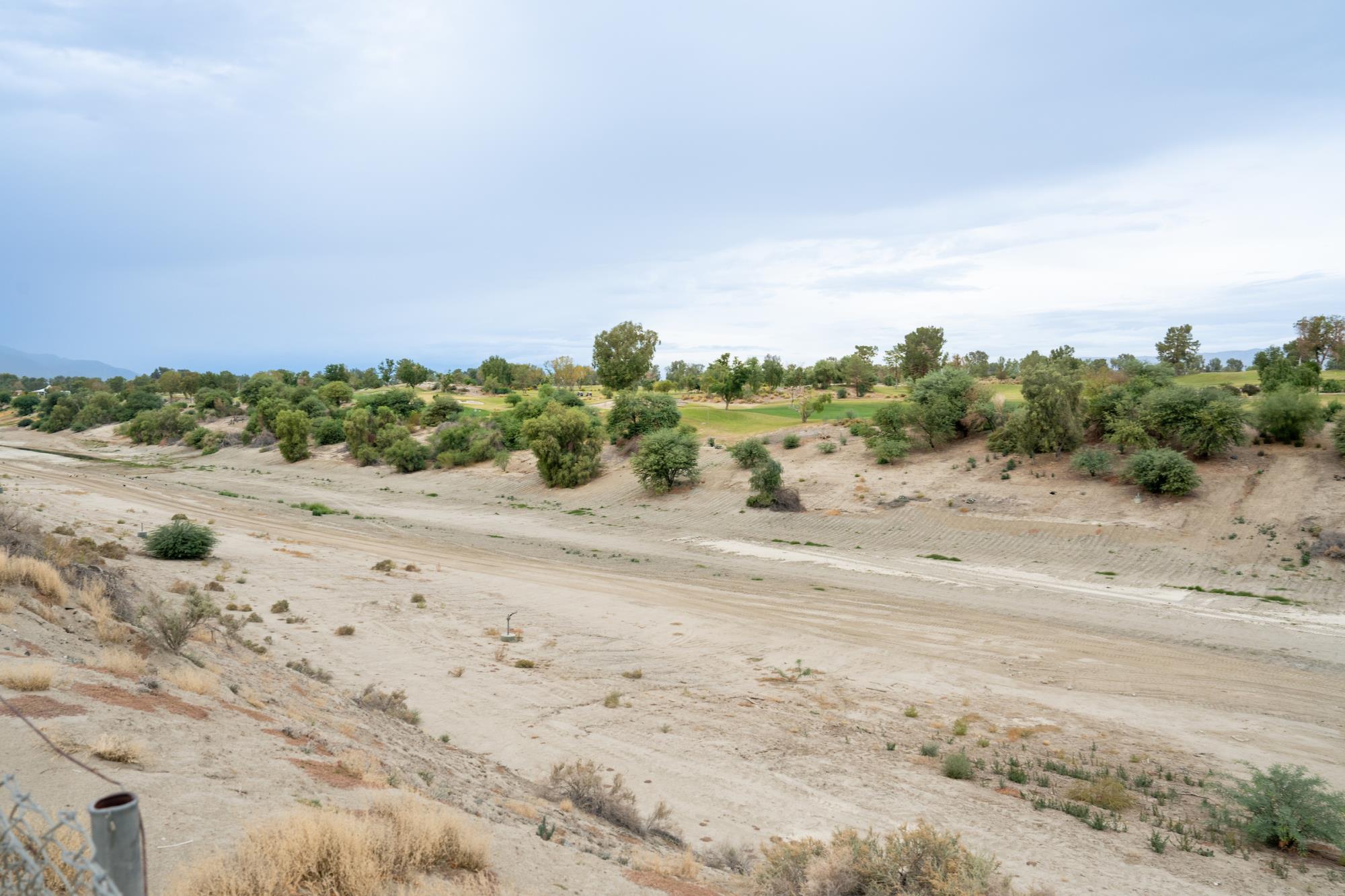
At the center of that effort is the Whitewater Channel Lining Project, an infrastructure upgrade city officials increasingly point to as essential not only for flood protection, but also for unlocking future development near Highway 111 and Miles Avenue. That includes the proposed Cocun Wellness Resort and the possibility of additional affordable and workforce housing in a city with very little vacant land left.
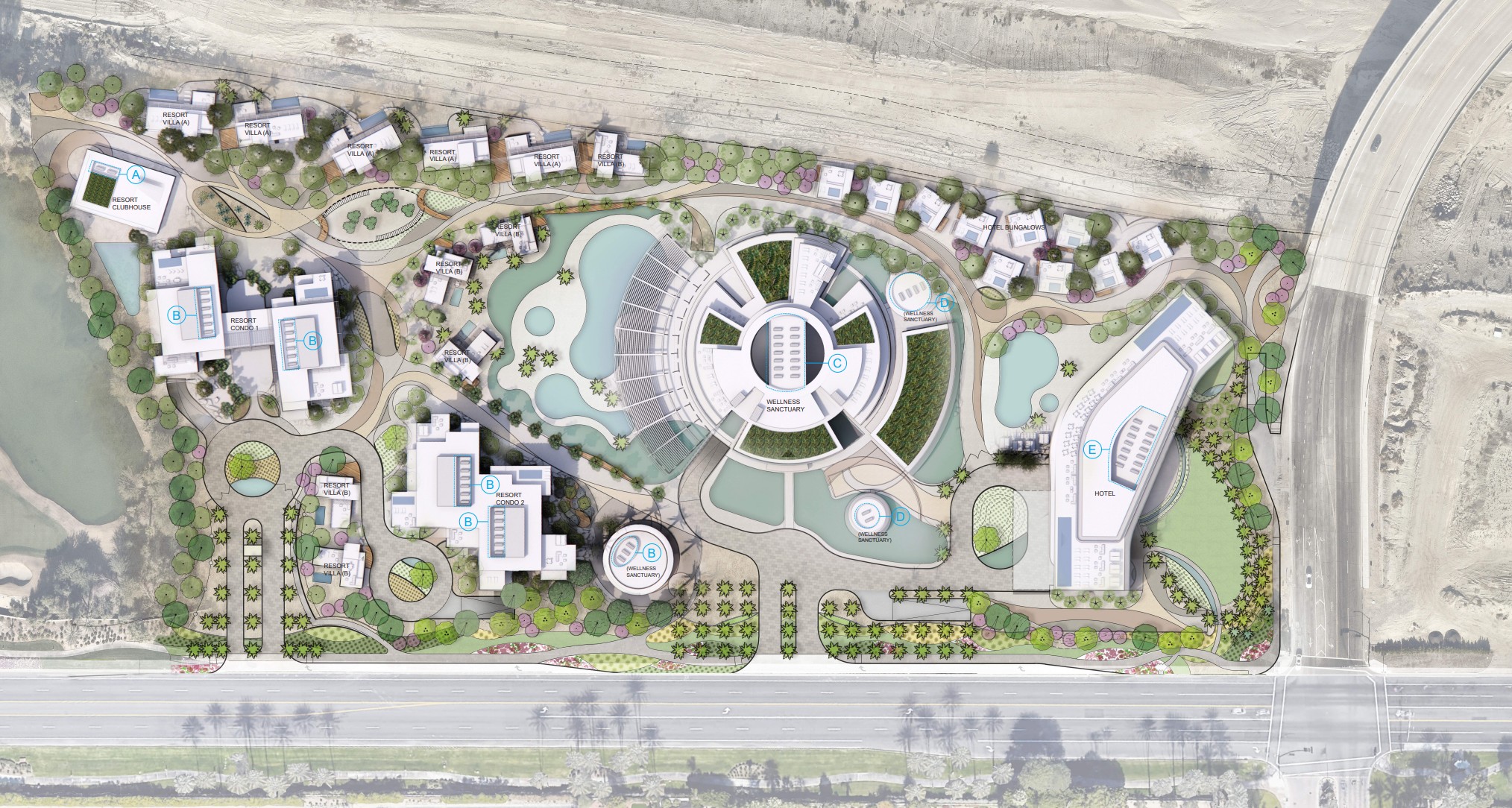
The site plan for the Cocun Wellness Resort project in Indian Wells.
The project has gained new momentum with the city’s announcement of an additional $5 million in federal funding in 2026, on top of the $5 million secured in 2024. Officials have estimated the total cost at roughly $20 million, meaning federal support now covers about half the anticipated price tag.
For Indian Wells, the significance goes well beyond public works.
The stretch of land south of the Whitewater Channel, running east from the Renaissance Esmeralda area toward Mountain View Villas, represents one of the few remaining places where the city can still meaningfully add new development. But without reinforced channel protection, city officials have long said the area cannot safely support the kind of projects now being contemplated there.
That makes the canal lining project a prerequisite for growth.
The city’s portion of the work includes improvements to the East Drop Structure, West Drop Structure and Low Flow Channel, with about 7,400 linear feet of reinforced slope protection planned. Officials say the work is intended to strengthen the Whitewater River stormwater channel, reduce the risk of erosion, and protect nearby property from future storm damage.
Those improvements also carry direct land-use implications.
The proposed Cocun Wellness Resort, now under city review, is planned for a vacant 15-acre site at the northwest corner of Highway 111 and Miles Avenue. The project site is part of the Indian Wells Crossing Specific Plan, which was previously entitled for a similar mixed-use resort development anchored by the Delano Hotel. That development was never built due to financing issues during the pandemic.
The Cocun project, as presented in the planning process, would bring a luxury, wellness-oriented resort complex offering state-of-the-art health treatments, a luxury resort hotel with detached bungalows, resort condominium buildings with luxury villas, a resort-style clubhouse, a public/private park, and underground parking with no surface parking.
Indian Wells sees the site as an important economic opportunity. But city leaders have also made clear that major investment in that corridor depends on the supporting infrastructure being in place first.
The same is true for housing.
For years, Indian Wells has discussed the potential for additional affordable housing near Mountain View Villas, including prior talks with Abode Communities regarding a multifamily project on city-owned land. While those plans have not been finalized, the city’s broader argument remains intact: if Indian Wells wants future senior, affordable or workforce housing in this corridor, the flood-control and erosion issues must be addressed first.
That point matters regionally, not just locally.
Like the rest of the Coachella Valley, Indian Wells depends on a workforce that increasingly struggles to find housing near major employment centers. Resort, hospitality, service and support-sector jobs all rely on workers who often must commute from elsewhere because housing supply remains limited and costly. In that context, infrastructure that expands development options has implications beyond a single parcel or project.
Supporters of the canal lining can make a straightforward case. The project would improve flood resilience, protect existing properties, remove a longstanding barrier to development and give the city a better chance to move forward with both economic investment and housing opportunities in one of its only remaining growth areas.
At the same time, the project may sharpen debate over what kind of development should follow. Residents may broadly support flood-control improvements while holding different views about the scale, design and public value of the Cocun project or other future proposals along the corridor.
That makes the next phase especially important.
The city has advanced the project financially, but funding alone does not guarantee completion. The canal lining still must move through the remaining design, permitting and implementation steps that often slow public infrastructure projects even after major announcements are made.
Still, the underlying issue is clear. In Indian Wells, the Whitewater Channel lining project is no longer just a technical infrastructure matter. It has become a gatekeeper project for the city’s next round of development, one that could shape whether Indian Wells can convert a long-constrained corridor into a safer, more productive area for resort investment, workforce housing and future economic activity.

Bob Marra is the CEO/Publisher of GPS Business Insider. He has been studying, writing and giving presentations about business, economic and public affairs news and issues and the local economy in the Greater Palm Springs/Coachella Valley region for more than 20 years.