A proposed merger between two major Southern California real estate associations is asking Coachella Valley Realtors to make a decision that reaches well beyond association governance.
The California Desert Association of REALTORS®, (CDAR) headquartered in Palm Desert, and The Inland Gateway Association of REALTORS® (TIGAR), which serves the Inland Empire and mountain communities, are seeking member approval to form the California Desert and Inland Gateway Association of REALTORS®, or CDIG.
If approved, the merger would create an association with more than 6,500 Realtor members across a geography stretching from Palm Springs, Palm Desert, La Quinta, Indio and Coachella to Corona, Redlands, Lake Elsinore, Banning, Beaumont, Big Bear, San Bernardino, Menifee and other Inland Empire markets.
For supporters, the proposal is a strategic response to a real estate industry being reshaped by lawsuits, MLS consolidation, new technology, shifting brokerage models and mounting pressure on local associations to deliver more services at lower cost.
For skeptics, the merger raises practical and emotional questions: Will the Coachella Valley lose influence inside a larger regional organization? Will CDAR’s Palm Desert office and local identity truly be preserved? Were members given enough time and financial information to evaluate the proposal? And why merge with TIGAR rather than pursue a more locally defined alternative?
Those questions have turned what might otherwise have been a procedural association vote into a broader debate over the future of organized real estate in Greater Palm Springs.
A Vote Set For May 14 To May 21
According to the official merger site, voting opens on Thursday, May 14, at 10 a.m. and closes on Thursday, May 21, at 4 p.m. Eligible Realtor members in good standing from both associations are expected to receive voting instructions via email. Each eligible member receives one vote, and proxy voting is not allowed.
The official pro-merger website frames the proposal around a simple message: “Two Associations. One Powerful Future.”
The site describes the merger as a “historic step forward” intended to create a stronger, more efficient and more member-focused organization. Its principal selling points include no increase in 2026 dues, expanded CRMLS coverage and tools, stronger advocacy at the state and local levels, more staff support, preserved local identity and expanded education and professional development.
The merger would also bring CDAR members into a broader CRMLS tool environment. The FAQ says CDAR members would see MLS fees move from $120 to $126 beginning in the third and fourth quarters of 2026, an increase the merger materials describe as $2 per month. TIGAR members, by contrast, would see MLS fees move from $150 to $126, a reduction.
For 2027, the proposed local dues for the merged organization would be $138 before any CPI adjustment. The official materials state that CDAR’s 2026 local Realtor dues were $156 and that the proposed 2027 dues would represent savings for CDAR members.
The Local Stakes For Greater Palm Springs
The CDAR territory covers much of the Coachella Valley and surrounding desert markets, including Bermuda Dunes, Cathedral City, Coachella, Desert Hot Springs, Indian Wells, Indio, Idyllwild, La Quinta, Mecca, Palm Desert, Palm Springs, Rancho Mirage, the Salton Sea area, Thermal and Thousand Palms.
That makes the merger a significant local business story. Realtors are often among the most visible participants in civic, housing, economic development and land-use conversations across Greater Palm Springs. The structure of their trade association affects not only member services, but also advocacy, market data, professional training and the industry’s voice on housing policy.
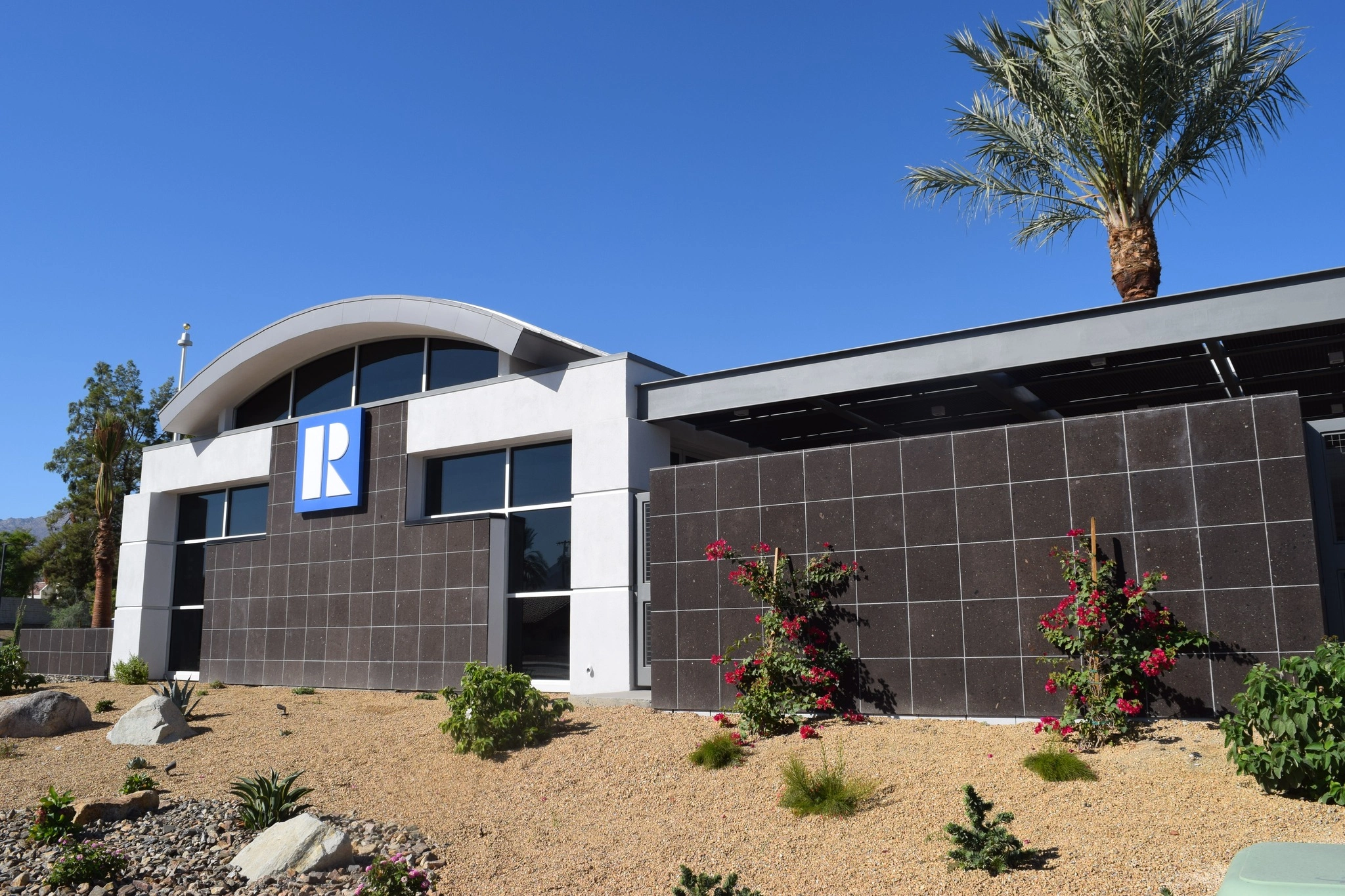
Under the proposal, the merged association’s corporate headquarters would be in Redlands, with a Corporate West office in Corona, a Corporate East office at CDAR’s existing Palm Desert location on Monterey Avenue and a satellite office in Lake Elsinore.
That detail is central to the local discussion. CDAR leaders say the Palm Desert office and staff will remain in place. The FAQ says existing offices will continue to serve their current areas, and that current CDAR and TIGAR staff would become part of the combined organization.
Serena Leiterman, CDAR’s 2026 president, framed the proposal as an expansion rather than a retreat from the desert.
“Our Palm Desert office and staff will remain in place, and members will continue to receive the services they rely on, along with access to additional tools, expanded MLS data through CRMLS, and cost savings for CDAR members,” Leiterman wrote in a message to members.

At C.A.R. Legislative Days during April in Sacramento, CDAR and TIGAR members showed up united in support of CDIG.
She called the merger “a forward-looking step to strengthen what we already do well while expanding what we can offer.”
A Larger Association, A Larger Voice
The testimonials posted on the merger website show a consistent theme among supporters: scale.
Leiterman described the merger as “a strategic decision to better serve our members and meet the current demands of our industry.”
“By bringing CDAR and the Inland Gateway Association together, we strengthen our ability to lead, adapt, and deliver greater value to members,” she said in her posted endorsement. “This was not a reactive move. It was a deliberate choice to prioritize long-term strength, stronger resources, and a more unified voice for our members.”
Steve Keefe, TIGAR’s 2026 president, similarly described the proposal as a move toward “a stronger association for the future.”
“Our industry is changing, in fact, it has changed more in the last five years than it has in the previous 30 years that I’ve been involved,” Keefe said. And in order for real estate associations to remain viable in today’s market, with the various pressures, increases in costs, and agents dropping out of the industry, it’s important that we do this now. We get ahead of it. We’ve got two very strong associations. Neither of them needs to merge. We want to merge because they understand the dynamics of where things are headed, and we want to position ourselves to be strong for our members.
The merger site’s written testimonials, along with the leadership videos and social media video clips tied to the campaign, present the merger as a modernization effort. The visual message is consistent: leaders from both associations speaking directly to members about timing, industry disruption, member value and the need to build a stronger regional platform before outside pressures force change.
Stephenie Zinn, CDAR’s 2025 president, placed the issue in the context of broader industry disruption.
“As our industry faces shifting business models and potential changes to MLS services that could significantly impact association revenue, it’s critical that we strengthen our organizations and plan for long-term sustainability,” Zinn said. “This isn’t just about finances, though, it’s about relevance.”
The Industry Backdrop
The timing is not accidental.
Across the country, Realtor associations and multiple listing services are operating in a more complex legal and business environment. National litigation over commissions, MLS access and industry rules has put new pressure on Realtor organizations. NAR recently announced a proposed $52.25 million settlement in a nationwide homebuyer claims case, following earlier settlements and practice changes that continue to ripple through the brokerage and association world.
At the same time, MLS and local association consolidation has accelerated. Industry reporting and market analysis have pointed to declining counts of local associations and MLSs as organizations seek scale, reduce duplicated operations and spread legal, technology and compliance costs over larger member bases.
That context helps explain why supporters describe the CDAR-TIGAR merger as proactive. The argument is that a combined association would have more resources, more political influence, a broader leadership pipeline and stronger operational capacity.
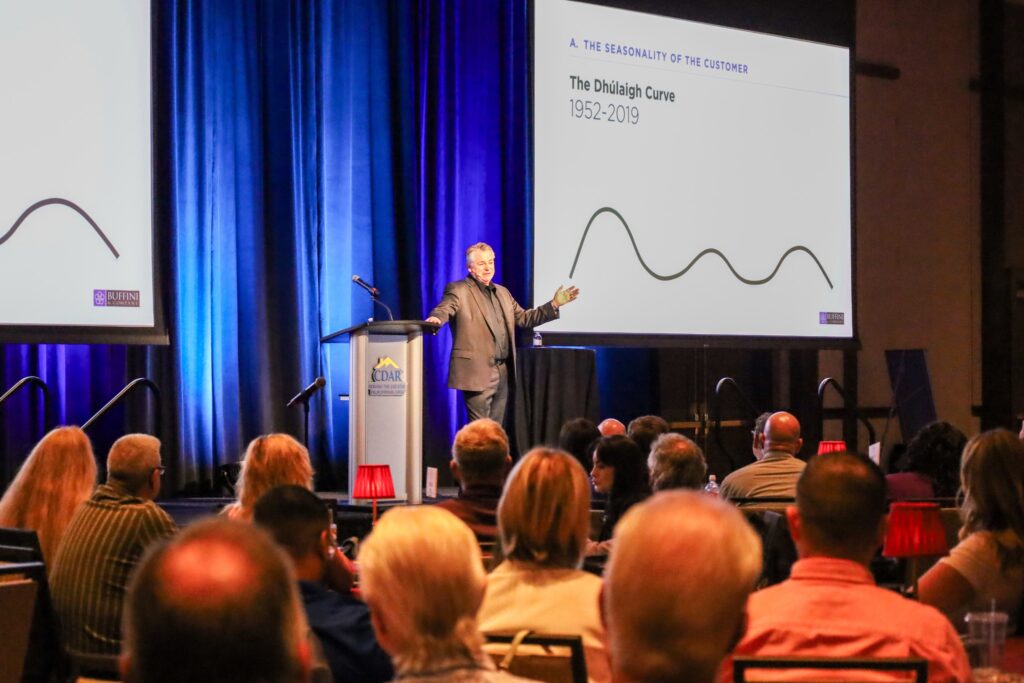
The 2026 CDAR Spring Summit in March, which featured a keynote presentation by Brian Buffini, would be combined into a January summit with TIGAR’s Housing Horizons event.
The merger site says future programming would also change. The CDAR Spring Summit and TIGAR Housing Horizons would be combined into a larger January event beginning in 2027. A Top Producer Recognition Event would be added in March. The Fall Summit would continue, with an expanded format that includes breakout sessions and track-based programming. The 2026 CDIG Fall Summit is planned for Oct. 27, 2026, in Rancho Mirage.
Governance Questions
Governance is one of the most important parts of the proposal.
The merger FAQ says all current 2026 local directors and officers would remain in place. The proposed CDIG board structure would divide the association’s jurisdiction into regions, with board representation allocated based on share of total membership. Regional allocation would be tied to where members live or work.
The proposed structure also includes director-at-large positions, a new first vice president role and a two-year treasurer term. The FAQ says elections would be delayed until after a successful merger vote so the combined organization can elect leadership as one unified body.
Supporters describe the model as proportional and more modern. Opponents and skeptics, based on concerns summarized publicly by the independent Save CDAR site, have questioned whether the Coachella Valley could lose influence inside a larger structure anchored in Redlands and Corona.
The official FAQ responds by saying the model is not designed to preserve legacy CDAR seats or TIGAR seats, but to create a single governance structure with representation tied to membership.
The merged organization would be assigned to Region 15 at the California Association of REALTORS®, aligning with TIGAR’s current structure. Merger leaders argue that alignment would strengthen the combined association’s state-level influence and leadership opportunities.
The Opposition Argument
There does not appear to be a separate, easily accessible public opposition website publishing a full case against the merger. However, the independent pro-merger Save CDAR site, which says it is not affiliated with or funded by CDAR or TIGAR, summarizes several opposition claims it says have been circulating among members.
Those concerns include claims that CDAR is being absorbed into a TIGAR-related corporate structure, that the Palm Desert building’s future is uncertain, that the Coachella Valley could lose local control, that financial transparency has been insufficient, that the process is moving too quickly and that members should consider not voting as a way to prevent the quorum needed for the merger to pass.
The official merger materials address several of those points directly.
They state that the member-facing organization would be CDIG and that the surviving corporate entity would be the East Valley Association of REALTORS® for legal and structural reasons. The FAQ says this is not intended to affect branding. The materials also state that the Palm Desert office will remain open as Corporate East, that the current staff will continue, and that the board structure will include regional representation.
What Comes Next
CDAR has scheduled in-person and Zoom question-and-answer opportunities leading up to and during the voting period, including a member-only town hall on May 12 at its Palm Desert office. The official materials say leadership will answer member questions and provide further explanation of the proposal.
If the merger passes, the next phase would involve implementation, policy integration, governance transition, branding decisions and the merging of committees, events and member services. The FAQ says full policy integration has not yet been completed and would occur after approval through a dedicated task force.