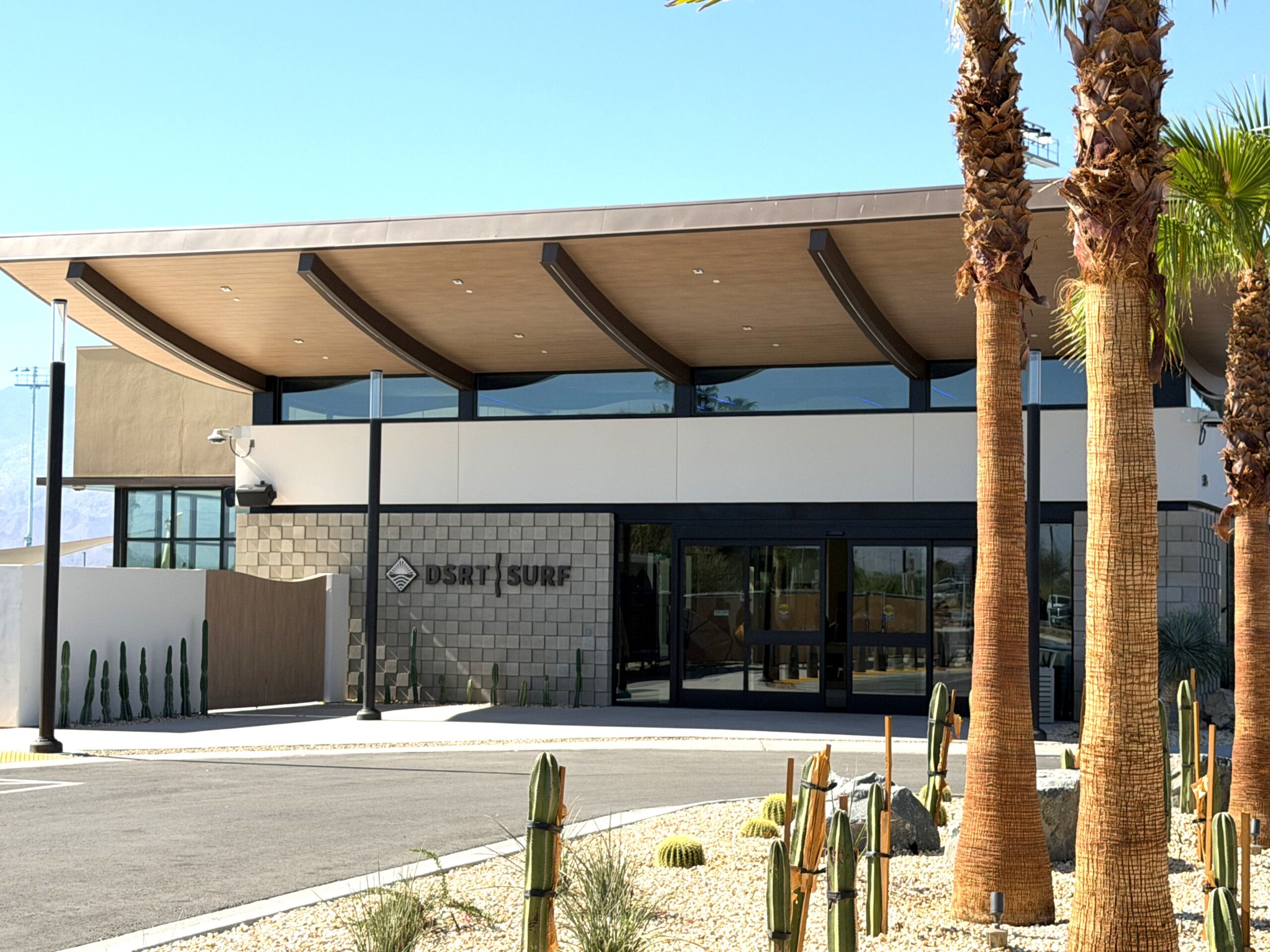
Inside an upscale industrial warehouse/office, studio and event facility on the edge of Palm Springs on May 26, a 27-year-old founder and a 58-year-old operator who reinvented a two-decade business will walk into the same room. If things go as planned, neither will feel like a guest.
That is the bet behind the Coachella Valley Innovation Alliance (CVIA), a new regional organization launching its pilot event at Studio 4707 in Palm Springs on May 26 from 4:30 to 7:00 pm. CVIA, as its organizers call it, is not a chamber luncheon or a startup showcase. It is not, they are careful to say, a tech conference. It is something the nine-city valley has never quite had: a deliberately cross-city, cross-generation, cross-industry stage for the people already building something new in the desert – and a mechanism for connecting them to each other.

The idea is simpler than it sounds, and the problem it aims to solve is older than many people realize.
“Three people who live and work in the Coachella Valley looked at what was happening across nine cities – real companies, real innovation, real momentum – and noticed that none of it was connected,” the organization’s founding documents state. “Builders in Palm Springs didn’t know what was happening in Indio. Entrepreneurs in La Quinta weren’t in the room with civic leaders in Cathedral City.”
The valley, in other words, has always had the type of entrepreneurs and venerable business owners CVIA refers to as “builders.” It just never had a room big enough for all of them.

Sarah Lacy (left) and Mona Babauta are the featured speakers for the CVIA Palm Springs event.
While not the core focus of the event or the CVIA, the pilot event will feature two speakers: Mona Babauta, CEO/GM of the always-innovative Sunline Transit Agency, and Sarah Lacy, founder of PandoDaily, an online platform that published technology news focused on Silicon Valley companies, and now owner of The Best Bookstore in Palm Springs.
Why Here. Why Now.
The Coachella Valley has a well-established public identity that tends to overshadow a quieter but growing reality, according to CVIA: the region has become home to a cluster of clean technology, healthcare innovation, entrepreneurial infrastructure, and remote-work talent that rivals much larger metropolitan areas on specific metrics.
The economic machinery is there. The connective tissue, CVIA’s founders argue, is not.
The People Behind the Alliance
Brian Allman does not present himself as a newcomer who discovered the desert. He is a longtime valley resident and serial founder/operator who has built startups spanning EV infrastructure, K–12 transportation, entertainment, and technology over three decades, several of which emerged from accelerator programs.
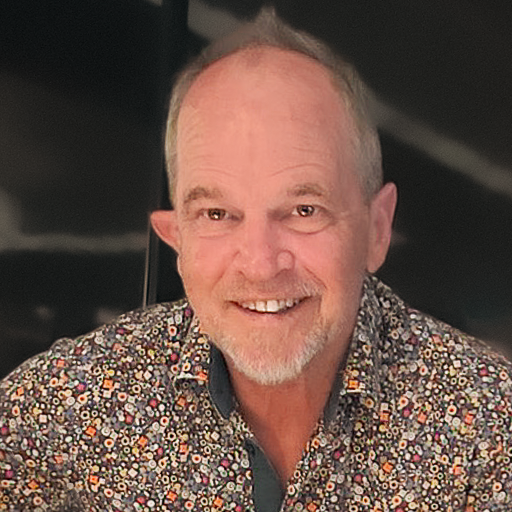
CVIA co-founder Brian Allman.
The most meaningful challenge of his career, he says, is the one happening in his backyard.
“My drive for CVIA is fueled by two things: a never-ending curiosity for what’s next, and a deep-seated desire to ensure the youth of the Coachella Valley have the same opportunities to build and innovate that I’ve had,” Allman wrote in a personal statement shared with early supporters. “I want to leave a lasting infrastructure where a kid from Indio or a founder in Palm Springs doesn’t have to look to LA or San Francisco to find their future – they can build it here.”
The framing matters. CVIA is explicitly not importing a model from Silicon Valley or trying to replicate Austin. It is, at least in theory, about excavating what is already native to this place – the operators who deliberately chose the desert, the civic leaders who changed how a city thinks about growth, the career-changers and retirees with deep global business experience who landed in the valley and stayed.
The organization’s brand documents use a phrase that functions as both mission and challenge: “Why here. Why now. How did you do it differently?”
That question, they argue, is equally interesting for a 27-year-old launching her first venture and a 58-year-old who reinvented a company he started in another century. Getting those two people into the same conversation and doing it across nine cities is what CVIA is endeavoring to build.

CVIA co-founder James Lee.
One of the CVIA co-founders is Indian Wells resident James Lee, an exceptionally successful entrepreneur. Lee is a Princeton graduate who started his career at McKinsey & Company. He’s built ventures across education, healthy meals, and social impact, while also serving as a CEO coach, TEDx speaker, mentor, and Adjunct Professor at the University of San Francisco Graduate School of Business. He also currently serves as an Indian Wells City Commissioner, a role that, in part, ties in with CVIA’s nine-city civic ambitions.
The Pilot as a Posture
What happens on May 26 at Studio 4707 is explicitly framed as a question rather than an answer.
CVIA’s plan is unusually candid about this. “The pilot is not a proof of concept for an event. It is a proof of concept for an alliance,” the brand summary states. “What we learn on May 26 shapes everything that follows.”
The Palm Springs event is the first in what organizers are calling a nine-city series called “Innovation Across the Valley.” Indio is scheduled as the second city, with a date in September to be announced. The remaining seven cities – Cathedral City, Rancho Mirage, Palm Desert, Indian Wells, La Quinta, Desert Hot Springs, and Coachella – are part of the 2026-27 program year.
CVIA operates as a sponsored project of Caravanserai Alliance For Entrepreneurs (Caravanserai), the Palm Springs-based 501(c)(3) nonprofit founded in 2016 that has spent nearly a decade building entrepreneurial infrastructure for historically underserved communities across Riverside and San Bernardino counties.
Caravanserai has supported hundreds of entrepreneurs through its business readiness programs, seed investments, and SBDC coaching with particular focus on Spanish-speaking, women-led, and minority-owned ventures. Its former co-founder and executive director, Mihai Patru, now leads Blue Zones Project Palm Springs, the community well-being initiative backed by Riverside University Health System, Eisenhower Health, Kaiser Permanente, and the City of Palm Springs. Blue Zones is also an anchor sponsor for CVIA’s May 26 pilot.
What the Valley Is Already Building
The timing of CVIA’s launch comes amid a visible uptick in organized innovation activity across the region.
In April, Cal State San Bernardino’s Randall W. Lewis Center for Entrepreneurship hosted the Greater Coachella Valley Innovation Showcase at the Palm Desert Entrepreneurial Resource Center, a regional pitch competition tied to Riverside County Innovation Month, with a county-level winner advancing to the Startup World Cup in San Francisco for a chance at a one-million-dollar investment prize.
College of the Desert, with campuses across the valley, has expanded its connections with regional economic and workforce development partners as the region tries to address what CVIA’s documents call the “learn and leave” problem – the pattern in which talented young people from the valley pursue education but look elsewhere for opportunity. The organization’s stated philosophy on this is direct: if young people can see a path to economic freedom in their own backyard, they will stay to build it.
CV Link, the multi-use path network that now physically connects several valley cities for cyclists and pedestrians, is invoked by CVIA as a model – not a recreational one, but an infrastructural one. “CV Link connected the Valley physically,” the brand documents read. “CVIA connects it economically.”
The Desert as a Competitive Argument
One of CVIA’s more deliberate rhetorical moves is its treatment of the desert itself, not as a picturesque backdrop or a quirky differentiator, but as a genuine competitive asset.
The argument runs roughly like this: the Coachella Valley sits between the Los Angeles and San Diego technology corridors, close enough to both to access their networks but insulated enough to develop its own character. It has 350 days of sunshine annually, a cost of living that is more accessible than coastal California, and a growing population of experienced professionals who have made a deliberate choice to live and build here. It has real infrastructure, including clean transportation technology that functions as a global case study, solar capacity that continues to expand, and a healthcare system of meaningful scale.
In this framing, the Coachella Valley is not a place people build in despite the constraints. It is a place people build in because of specific, concrete advantages that the region has not consistently named or organized around.
Whether that argument lands, and whether it can sustain a nine-city platform built from the ground up, is precisely what May 26 is intended to test.
“We don’t oversell what we don’t yet know,” the founding documents say. “We are not proclaiming that CVIA is the answer. We are proposing that this valley is ready for the question.”
Register for the pilot event at CVIA’s website: cvia.ai.

Bob Marra is the CEO/Publisher of GPS Business Insider and GPS Market Intel. He has been studying, writing and giving presentations about business, economic and public affairs news and issues and the local economy in the Greater Palm Springs/Coachella Valley region for more than 20 years.