The corporate names attached to 1100 Bird Center Drive have changed again and again. The street name has not.
For decades, the industrial campus near Palm Springs International Airport has been tied to respiratory medicine and to Forrest Bird, the aviator, inventor and biomedical engineer whose compact green respirators helped change critical care. Bird’s products carried Palm Springs’ name into hospitals around the world long before the Coachella Valley began talking about advanced manufacturing as an economic-development goal.
Now that lineage appears to be nearing its end.
ZOLL Medical Corporation notified California on Aug. 11 that it will permanently close its Palm Springs operation on Feb. 1, 2027, eliminating 78 positions. The filing follows an earlier ZOLL notice covering 96 positions at the same address, scheduled to end Dec. 15, 2025. Across the two state WARN filings, 174 positions have been identified for elimination at the Bird Center Drive operation.
The closure is especially consequential in a regional economy with very few companies in the manufacturing sector. It also raises an obvious question: ZOLL acquired the Palm Springs-centered ventilator business from bankrupt Vyaire Medical for $37 million less than two years ago. Why buy it, then close the plant?
The public record does not provide a ZOLL statement naming the facility that will receive the Palm Springs work. But it provides a fairly clear answer to the larger question. This does not look like a companywide collapse or an exit from ventilation. The evidence instead points to the rationalization of an inherited, substantially underused manufacturing operation as ZOLL integrates Vyaire’s products into its much larger global business.
A plant inherited from a bankrupt company
When Vyaire Medical sought Chapter 11 protection in June 2024, its ventilation business was already under severe pressure.
The pandemic had briefly transformed ventilators into one of the world’s most urgently needed medical products. Vyaire’s ventilation revenue surged from $215 million in 2019 to $620 million in 2020. By 2023, it had fallen to $156 million as the pandemic buying wave receded.
The company’s bankruptcy filings described a business strained by post-COVID overinvestment, slower sales, supply-chain problems, rising material costs and lost market share. Most tellingly for Palm Springs, the manufacturing and repair facility here was operating at about 20 percent of capacity when Vyaire entered bankruptcy.
ZOLL emerged from a three-day bankruptcy auction as the winning bidder for select ventilation assets, agreeing to pay $37 million in cash plus certain other obligations.
The business was centered on manufacturing and repair in Palm Springs and research and development in Irvine, with additional third-party manufacturing relationships outside the United States.
At the time, ZOLL made clear that it wanted the products. In its announcement completing the Vyaire acquisition, the company said respiratory care was central to its strategy and that the acquired ventilators, consumables, service parts, accessories and service programs would continue to be offered.
That remains true today. ZOLL continues to market a broad portfolio of ventilation products, while the FDA continues to list ZOLL Palm Springs as an active medical-device establishment, including as a manufacturer of LTV and 3100 ventilators.
What ZOLL has not publicly said is where those Palm Springs manufacturing and repair functions will go after Feb. 1. GPS Business Insider had not received a response from the company at the time of publication.
The strongest evidence points to consolidation
ZOLL telegraphed from the beginning that the Vyaire purchase would involve integration. Its post-acquisition guidance said teams would spend the following months integrating personnel, assets and office locations into ZOLL.
In an April 2025 customer update, the company said it was streamlining customer-service operations, improving order and billing processes, updating regulatory filings, strengthening supply chains and improving demand forecasting for the newly acquired respiratory portfolio.
By late 2025, the Palm Springs footprint was already shrinking. The first WARN notice was filed Oct. 3, and the entire 1100 Bird Center Drive campus was placed on the commercial leasing market shortly afterward.
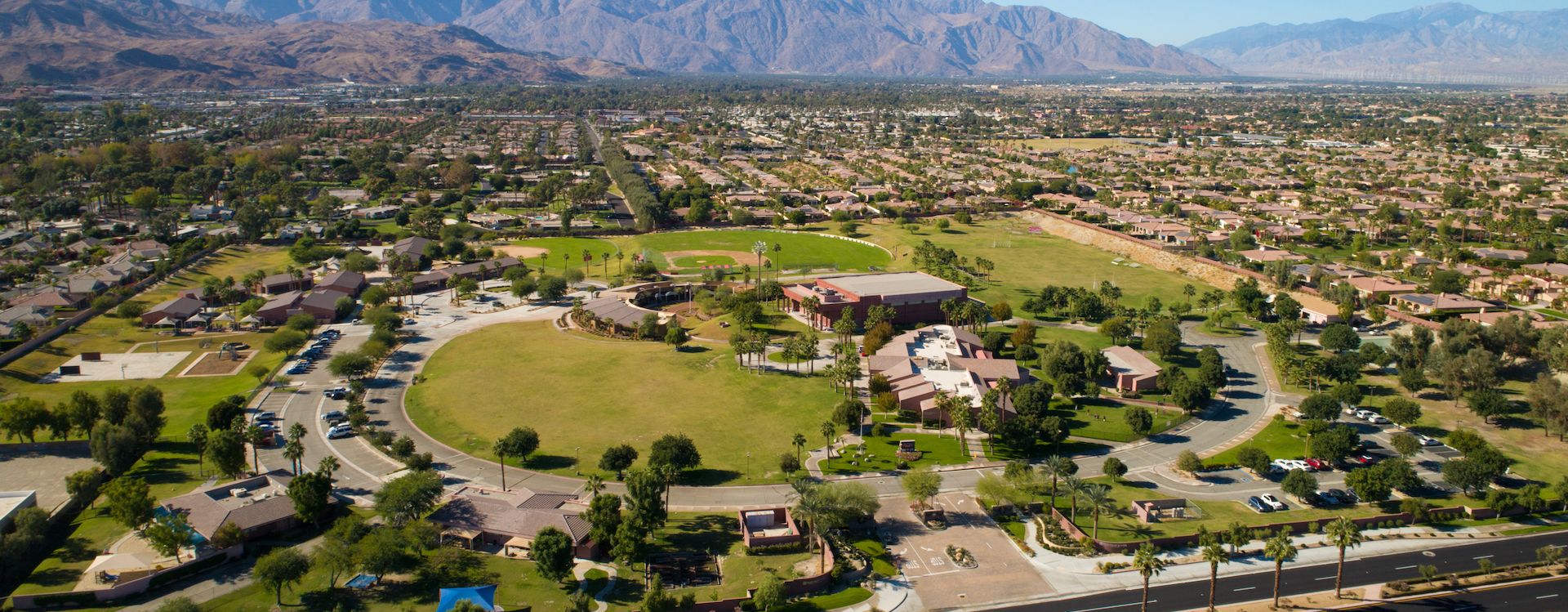
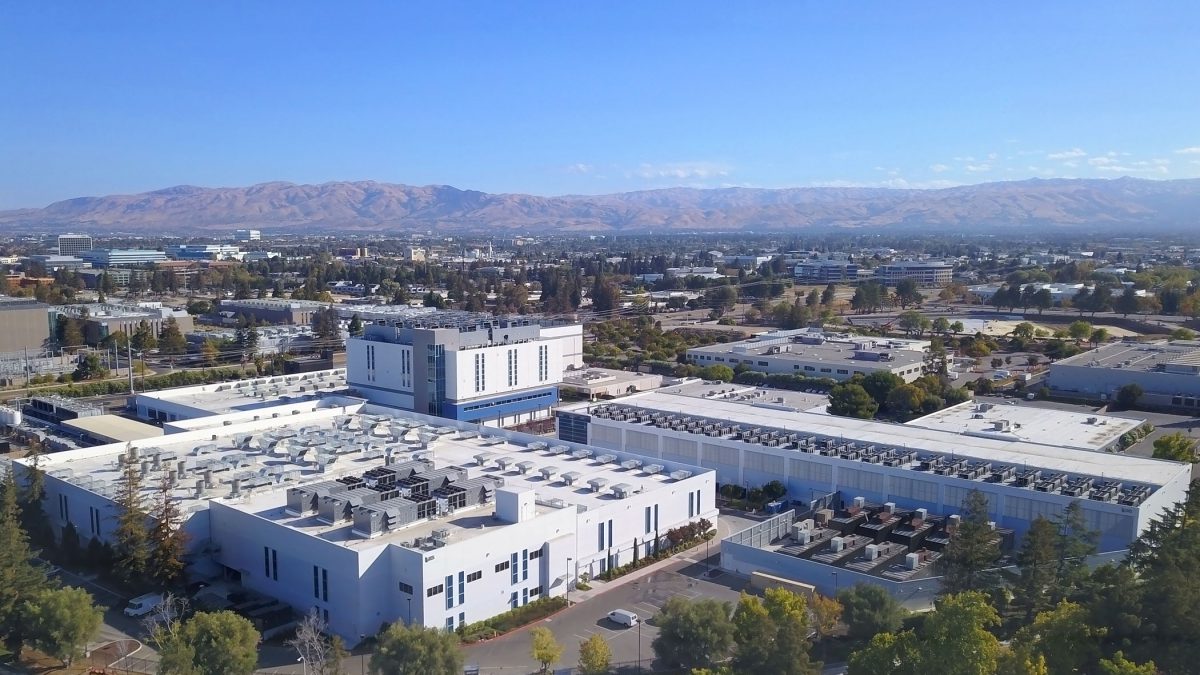
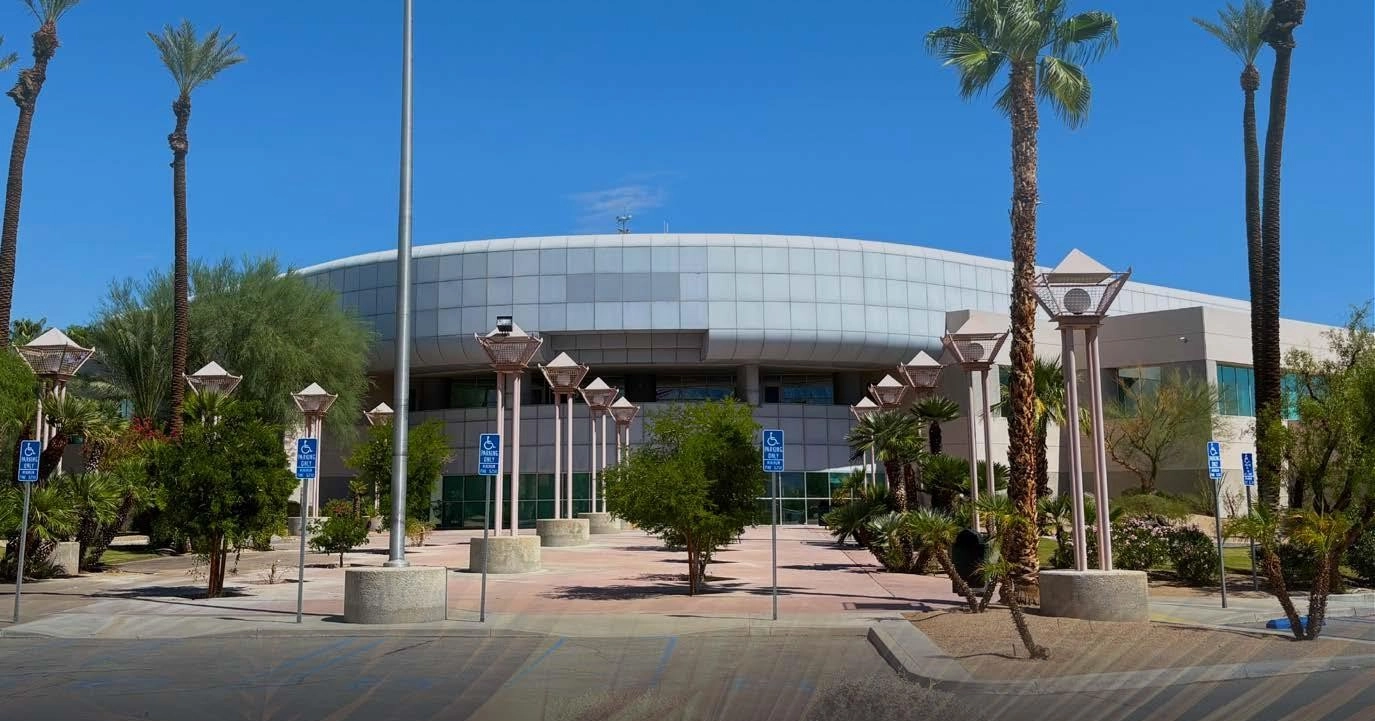
Colliers is marketing the property as a 141,181-square-foot corporate campus on 14.3 acres, including 5.2 acres of excess land. The highly specialized building has assembly and machine-shop areas, full HVAC coverage, substantial three-phase electrical service and loading facilities. A commercial listing dates the offering to Nov. 13, 2025.
ZOLL has other ventilator manufacturing capabilities. FDA records, for example, identify its Chelmsford, Massachusetts, headquarters as a manufacturing site for other ZOLL ventilators, while Vyaire had also relied on third-party manufacturing in Mexico and Malaysia.
But no public filing reviewed for this article says that Palm Springs production is being transferred to Chelmsford, Mexico, Malaysia or any other specific location.
That distinction matters. The evidence supports a conclusion that ZOLL is eliminating the Palm Springs facility as part of post-acquisition footprint optimization. It does not support naming a receiving plant that ZOLL itself has not identified.
Nor is there evidence that ZOLL itself is winding down.
ZOLL’s Japanese parent, Asahi Kasei, continues to classify Critical Care as one of its “First Priority” businesses for investment and growth, with a fiscal 2027 operating-income target of 55 billion yen for the unit. The company says Critical Care is expected to continue growing in North America while pursuing opportunities in adjacent markets.
Before ZOLL, there was Bird
The significance of 1100 Bird Center Drive is easier to miss if the story begins with Vyaire.
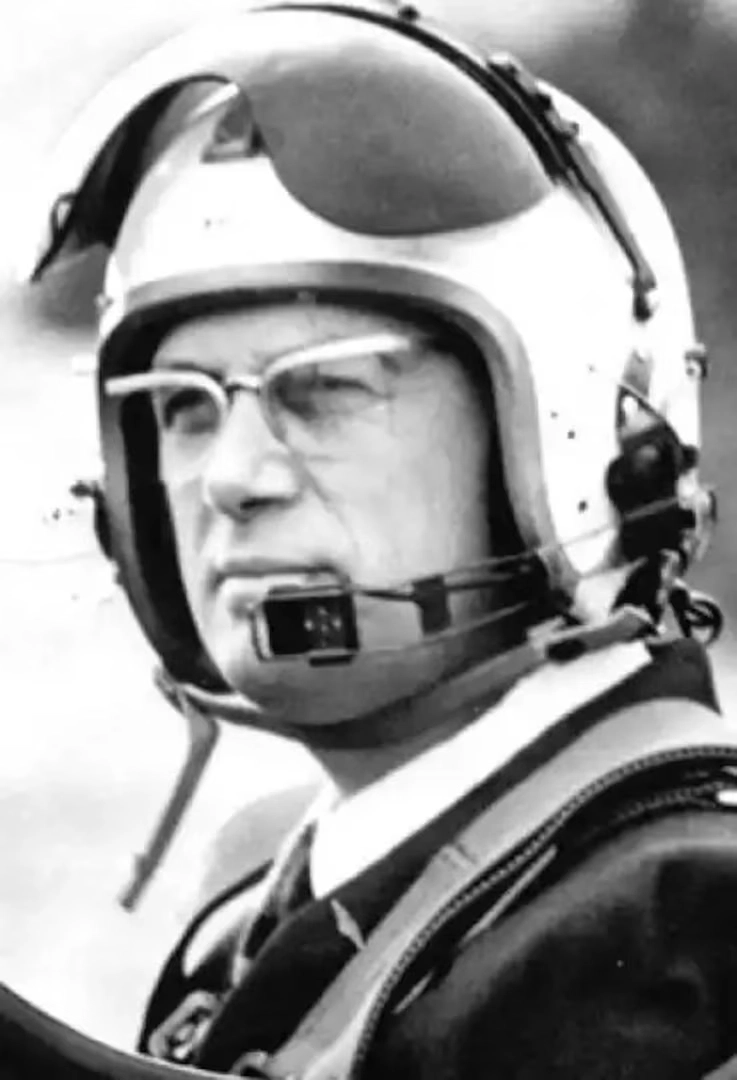
Forrest Bird’s medical-device company became a significant Palm Springs manufacturer and gave Bird Center Drive its enduring connection to the inventor.
It began much earlier with Forrest M. Bird, a Massachusetts-born pilot who soloed an airplane at 14 and entered the Army Air Corps during World War II as a technical air training officer. High-altitude flight pushed him toward the problem that would define his life: how to regulate pressure and airflow so people could breathe when their own lungs, or their environment, could not do the job.
Bird eventually adapted aviation principles to respiratory medicine. In 1958, the compact green machine that became known simply as “The Bird” entered widespread use. The National Inventors Hall of Fame’s history of Forrest Bird credits it as the first highly reliable, low-cost, mass-produced medical respirator.
His Babybird respirator, introduced in 1970, became another landmark. The Inventors Hall of Fame says the technology helped reduce mortality among infants with respiratory problems from about 70 percent to less than 10 percent.
Bird was also an unusually colorful figure for a medical-device entrepreneur. Aviation was not a youthful phase he left behind. He kept flying, built a four-engine amphibious aircraft known as the Bird Innovator and used aviation as part of his medical evangelism. He collected airplanes, cars and motorcycles, and decades later “60 Minutes” profiled the man whose passion for airplanes had led him into respiratory medicine.
He was inducted into the National Inventors Hall of Fame in 1995 and later received the National Medal of Technology and Innovation.
Palm Springs was part of that story, not merely an address. Historical examples of the Mark 7 identify Bird Corporation in Palm Springs as the manufacturer, and medical-industry directories from the early 1980s listed Bird Products-3M Medical Products Division here. The Bird name became embedded in the city’s industrial geography.
The ownership chain became increasingly complicated.
Bird sold his namesake business to 3M in the late 1970s. Bird Products later became associated with Bird Medical Technologies, which Thermo Electron acquired in 1995. Thermo combined Bird with other medical-device businesses that ultimately became VIASYS Healthcare.
Cardinal Health acquired VIASYS in 2007 and spun much of that operation into CareFusion in 2009. Becton Dickinson acquired CareFusion in 2015, then moved its respiratory business into the company that became Vyaire Medical in 2016. ZOLL bought selected Vyaire ventilation assets out of bankruptcy in 2024.
Through all of those corporate transformations, Palm Springs continued to make and support respiratory equipment.
That continuity is what the ZOLL closure threatens to end.
A rare kind of job for Greater Palm Springs
Greater Palm Springs is pursuing a regional strategy that specifically calls for more year-round, higher-wage employment in sectors such as advanced manufacturing, biotechnology and other traded industries. As GPS Business Insider reported earlier this year, diversifying beyond tourism and consumer-dependent businesses is a central objective of the region’s new economic-development strategy, led by Greater Palm Springs Economic Development.
The ZOLL plant is the kind of operation the region says it wants more of: a specialized manufacturer selling into national and international markets rather than a business dependent primarily on tourists or local consumer spending.
Its loss therefore carries more economic meaning than the raw job count suggests.
It also comes as another large employer on Bird Center Drive is leaving. FedEx has separately announced the permanent closure of its ship center at 111 Bird Center Drive, eliminating 62 jobs effective Sept. 29 as part of the company’s national Network 2.0 restructuring. The two closures are unrelated, but together they create an unusual concentration of job losses in the same Palm Springs business corridor.
For the city, the immediate question is what replaces ZOLL in a 141,181-square-foot industrial and research building configured for far more than ordinary warehouse use. The property has the power, assembly space, machine-shop capability and airport access that could make it attractive to another advanced manufacturer, medical-device company or research-oriented user. Finding one, however, would mean replacing not just a tenant but a highly specialized economic function.

Bob Marra is the CEO/Publisher of GPS Business Insider. He has been studying, writing and giving presentations about business, economic and public affairs news and issues and the local economy in the Greater Palm Springs/Coachella Valley region for more than 20 years.