College of the Desert project remains on schedule for 2027 opening as leaders emphasize new model connecting education directly to jobs, entrepreneurship, and regional growth
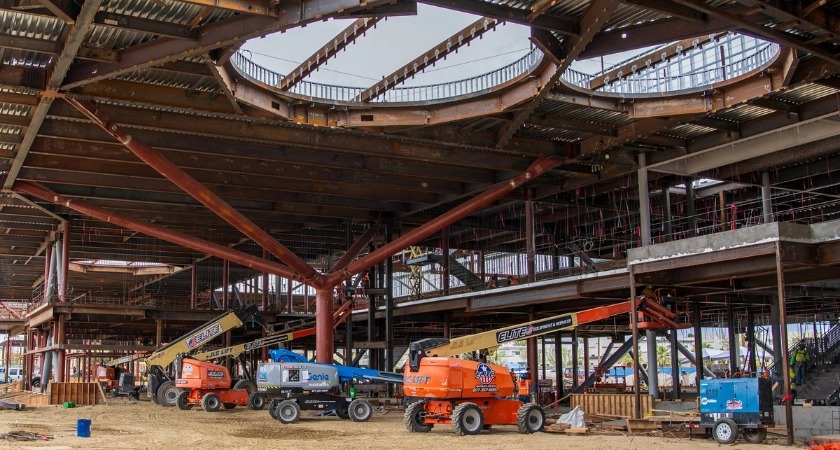
One of the most consequential workforce development investments in the Greater Palm Springs region reached a major inflection point this week as College of the Desert’s new Palm Springs campus achieved its structural completion milestone, positioning the project firmly on track for a Fall 2027 opening.
But for regional business leaders, the significance of the milestone extends far beyond construction progress. It represents a new approach to workforce development that aligns local education with the economic realities and opportunities of Greater Palm Springs.
“This is going to be a game changer,” said Scott Adkins, interim executive director of bond projects and facilities planning for the college. “We’re approaching education differently, more from a workforce perspective, and it’s going to change the way we prepare people for employment in the future.”
A shift from campus expansion to workforce strategy
The Palm Springs campus is not being positioned as a traditional expansion of higher education. Instead, it is being developed as a purpose-built workforce engine, structured around industry alignment and real-time labor market needs.

COD Superintendent/President Val Martinez Garcia
College leaders describe the project as a direct response to one of the Coachella Valley’s most persistent structural challenges: the gap between available jobs and locally trained talent.
“This moment is far more than steel and structure, it’s about building opportunity,” College of the Desert President Val Martinez Garcia said in a statement. “The Palm Springs campus is designed to meet the needs of today’s students and tomorrow’s workforce, connecting education directly to economic mobility and regional growth.”
The campus is designed to serve thousands of students annually while also extending beyond conventional academic models through dual enrollment programs, incumbent worker training, and direct employer partnerships.
Adkins emphasized that the design philosophy itself reflects this shift.
“We’re flipping the classroom,” he said. “The spaces are flexible, technology-driven, and designed to support a completely different way of teaching and learning than what people are used to seeing.”
Industry-Aligned programs target core economic sectors
The campus’ academic focus areas are tightly aligned with the Greater Palm Springs economic base and growth sectors, including:
- Healthcare and allied health training
- Hospitality and culinary arts
- Digital media, film, and emerging technologies such as AI and XR
- Architecture and sustainable design
These program areas were selected not only for their relevance to Palm Springs but for their broader regional applicability across the valley’s economy.
“This isn’t just about educating traditional students,” Adkins said. “It’s about creating opportunities for entrepreneurs, for graduates continuing to develop their craft, and for people in our community at different stages of their careers.”
Blurring the line between education and economic activity
One of the most distinctive aspects of the Palm Springs campus is its intentional integration of community access and economic activity into its facilities.
Unlike conventional campuses, many of the specialized spaces are being designed for ongoing public and professional use.
For example, a workforce innovation kitchen within the culinary program will serve both students and the broader community. Entrepreneurs and aspiring chefs will be able to access industrial-grade facilities to develop products, refine concepts, and potentially launch businesses.
Similarly, digital media labs, AI-enabled environments, and immersive technology studios will be accessible to users beyond enrolled students, creating a shared innovation infrastructure for the region.
“We want these spaces to be used not just during coursework, but after,” Adkins said. “If someone wants to develop a film project or build a business idea, they can come back and use these facilities for a nominal fee. That’s part of the vision.”
The model also extends to non-credit and community-based learning through programs such as COD’s Partnership and Community Education (PaCE) program, which already offers targeted training such as AI for creatives, and is expected to expand significantly once the campus opens.
Building a pipeline that starts earlier
The campus is also designed to engage students earlier in the education pipeline, including K-12 learners.
Summer programs and early exposure initiatives will allow younger students to access advanced technologies and training environments before they graduate from high school, accelerating skill development and workforce readiness.
“We want students to arrive at college already having exposure to these tools and skills,” Adkins said.
Economic implications for the region
From a business perspective, the long-term implications are substantial.
The Palm Springs campus is expected to:
- Address persistent labor shortages in healthcare, hospitality, and technical fields
- Provide a stable, locally trained talent pipeline for employers
- Support entrepreneurship and small business formation
- Enhance the region’s competitiveness in attracting new industries
- Increase economic mobility for residents
For a region historically dependent on tourism and service-based industries, the campus represents a strategic step toward economic diversification.
It also offers employers a more direct role in shaping workforce outcomes through curriculum input, partnerships, and training collaborations.
On time, on track, and entering a critical phase
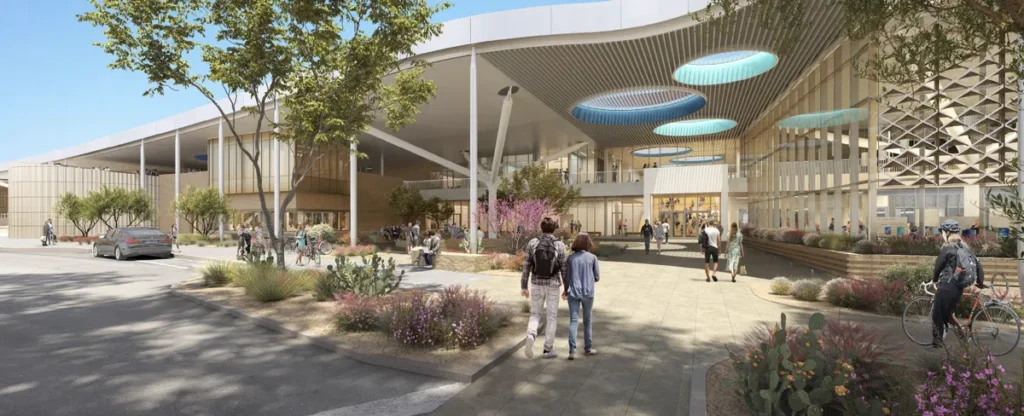
Rendering of the main entrance to the new COD Palm Springs Campus slated to open fall 2027.
With the structural phase complete, the project now moves into interior buildout and program activation, where the focus shifts to outfitting specialized labs, finalizing partnerships, and aligning workforce pipelines ahead of opening.
Adkins acknowledged the complexity of maintaining the project timeline.
“We are on schedule,” he said. “And we have worked very hard to keep that schedule.”
A defining investment in regional competitiveness
For Greater Palm Springs, the COD Palm Springs campus represents more than a new educational facility.
It is also a strategic economic development initiative that integrates education, industry, and innovation in a way that few regional projects have attempted at this scale.
As the Coachella Valley continues to grow and evolve, the success of this model could play a defining role in shaping its workforce, its business climate, and its long-term economic trajectory.
Or, as college leadership has framed it, the project is not simply about building a campus.
It is about building opportunity.

Bob Marra is the CEO/Publisher of GPS Business Insider. He has been studying, writing and giving presentations about business, economic and public affairs news and issues and the local economy in the Greater Palm Springs/Coachella Valley region for more than 20 years.