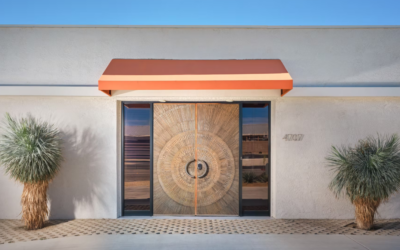
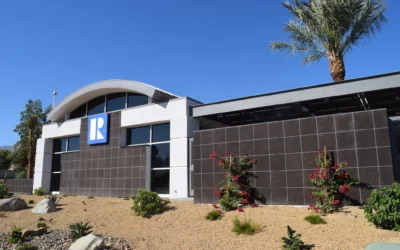
Comprehensive Cancer Center at Desert Regional Medical Center, part of the Desert Care Network, is celebrating 35 years of delivering advanced cancer care, pioneering research, and compassionate treatment to patients in the Greater Palm Springs region.

Teresa Whipple, Executive Director, Comprehensive Cancer Center at Desert Regional Medical Center.
“For 35 years, our mission has been clear: to provide compassionate, advanced cancer care to every patient who walks through our doors. This year, we celebrate how far we’ve come, and we renew our commitment to advancing treatment, research, and healing for generations to come,” said Teresa Whipple, executive director for the Comprehensive Cancer Center. Since opening its doors in 1990, the center has been committed to providing world-class oncology services to the community and transforming lives through innovation and personalized care. The Center has two locations for care, including Palm Springs and La Quinta.
Thirty-five years after Desert Regional Medical Center opened the doors of its Comprehensive Cancer Center, Whipple can still remember when it was a small, niche program trying to prove its value.
“We were fairly small,” she recalled. “We were recruiting like crazy, getting surgical oncologists in,” and building what would become the region’s first dedicated breast center, now recognized as a Breast Center of Excellence by the American College of Radiology.
Today, that fresh start has grown into a regional anchor for cancer care – a program that combines cutting-edge treatment with an unusually deep web of community support, drawing patients from across the Coachella Valley, the High Desert and even Arizona.
From pioneering program to regional leader
The Comprehensive Cancer Center at Desert Regional Medical Center opened in 1990, bringing the Coachella Valley its first multidisciplinary approach to cancer care at a time when such coordinated programs were usually found only at major academic institutions.
Milestones followed in steady succession:
- In 1995, it launched the valley’s first surgical oncology program.
- In 2000, it joined clinical research that helped lead to FDA approval of Herceptin, a breakthrough breast cancer drug.
- In 2005, it gave local patients early access to Yervoy (ipilimumab), now a standard treatment for melanoma.
- In 2016, the Coachella Valley’s first TrueBeam linear accelerator was installed for highly precise radiation therapy.
- By 2018, it became the first in the valley to use SCOUT® technology to precisely localize breast lesions for surgery.
- And most recently, it began offering Pluvicto, an advanced radioligand therapy for late-stage prostate cancer – another first for the region.
These aren’t just bragging rights, Whipple stressed. They’re a way of keeping patients close to home for treatments that once would have required trips to Los Angeles or San Diego.
“From the start, we’ve been committed to providing research options for our patients,” she said. The clinical trials are “extra work” and “don’t make any money,” she added, but they give patients options “years before [new drugs are] available to anybody else.”
Herceptin is one of the most striking examples. Being part of those trials, she noted, helped usher in a new era in breast cancer care, where cure rates for many patients now exceed 90 percent.
A team that has grown and stayed
When Whipple arrived in 1994 as chief financial officer, the center had just a handful of physicians.
“We already had a radiation oncologist and we needed to get more. We had two medical oncologists,” she said. “We were busy recruiting, recruiting.”
Three and a half decades later, the program has grown into a robust multidisciplinary team with:
- Five medical oncologists
- Two radiation oncologists
- Two gynecologic oncologists
- Four surgeons
…and more on the way, as recruitment continues.
Behind them stands a staff with unusually long tenure. Pharmacy and lab services are led by Dr. Tim Tyler, who has been with the program longer than Whipple. Radiation services are managed by Carol Harris, a dosimetrist and therapist who has worked in radiation oncology on the campus for roughly 40 years, predating the current center.
“It takes a pretty wonderful person to be able to work with cancer patients one after the other, all day long, over the years,” Whipple said. “We have managers and staff who have dedicated their entire careers to this.”

Dr. Elber S. Camacho, medical director for the Comprehensive Cancer Center.
Medical Director Dr. Elber S. Camacho, who has helped shape that culture, puts the mission sharply in focus: “For 35 years, our focus has been on treating not just the disease, but the person,” said Dr. Elber S. Camacho, medical director for the Comprehensive Cancer Center. “We’re proud of what we’ve accomplished, and even more excited about what lies ahead as cancer care enters an age of precision and personalization.”
Patient-centered by design
Ask Whipple what truly makes the Comprehensive Cancer Center different, and she doesn’t start with technology. She starts with how a patient moves through a single day of care.
“One of the most important things is to be patient-centric,” she said. “The patient is in the middle. This is not done at most places.”
At many institutions, she noted, patients are expected to come in days before treatment just to have blood drawn, then return for a separate appointment once results are ready. At the Comprehensive Cancer Center, those steps are compressed.
A typical chemotherapy visit might look like this:
- The patient arrives and has labs drawn.
- Roughly 15 minutes later, those results are on the screen in the exam room when the patient sees a medical oncologist.
- The physician reviews the labs in real time and adjusts that day’s treatment on the spot.
While the infusion runs, care continues at the chairside. A social worker performs a psychosocial assessment. A registered dietitian checks on nutrition and offers tailored guidance. All of it happens in one visit – and many of those services are free to the patient.
“We know our patients do better with all of this,” Whipple said. In cancer, she added, the most important thing is compliance, meaning getting treatments and imaging “on time” and “at the right interval,” especially for chemotherapy and radiation where delays can affect outcomes.
More minds on every case
Behind the scenes, a multidisciplinary tumor board meets regularly to review complex cases. Medical oncologists, surgeons, radiation oncologists, pathologists, radiologists, pharmacists and other specialists weigh in together.
“When you’ve got a fragmented system, each doctor’s making decisions on their own,” Whipple noted. At the Comprehensive Cancer Center, by contrast, “you get all these minds working on each case.”
Putting a case on the table takes courage, Whipple acknowledged.
“It takes a lot of courage for these doctors to put it out there,” she said. “But they open themselves up to feedback because the patient will benefit.” The group may debate sequencing (chemo before surgery or after), imaging schedules and follow-up plans, often double-checking details in real time – even consulting previous cases and relevant literature or decision-support tools too.
That collaborative instinct extends into the clinic day. If a patient has driven from Blythe or the High Desert and needs to see more than one specialist, physicians will often call a colleague upstairs.
“They’ll say, ‘I’ve got this case right now… would you pop in, meet her and let’s just talk right now,’” Whipple said. “So, the patient doesn’t go home wondering who their radiation oncologist is or what happens next.”
Anchored in a larger network
The Comprehensive Cancer Center is part of the Desert Care Network, which includes Desert Regional Medical Center in Palm Springs, JFK Memorial Hospital in Indio and Hi-Desert Medical Center in Joshua Tree, along with three trauma centers and a regional stroke network.
That integration matters when a person’s first encounter with cancer is an emergency.
“Often at the hospital, people will come in with breathing problems or abdominal pain,” Whipple said. “They’re hospitalized, they discover that it’s a malignant tumor, and our doctors are able to get over there quickly… and provide that consult, then transition them to outpatient.”
Patients tend to do better, she noted, when they can sleep in their own beds at night, get treatment during the day and spend weekends at home rather than remaining in a hospital for their entire course of care.

The Comprehensive Cancer Center has a satellite facility in La Quinta, where patients may be seen for a variety of diagnostics, treatments, screenings, and support services.
Being part of a system also brings other advantages: a hospital-based pathology team led by Dr. Jolie Abrahams providing oversight for the center’s on-site lab; robust radiology coverage; and the ability to transition patients smoothly between inpatient and outpatient settings. The American College of Surgeons Commission on Cancer specifically requires that accredited programs be part of a medical center, and the network helps satisfy that standard.
Wrapped in community support
If the medical center provides the backbone, the broader community wraps around patients in ways that are unusually concrete.
The center relies on a constellation of nonprofit partners to ease the financial and logistical burdens of treatment:
- Desert Cancer Foundation helps patients with insurance premiums and copays when they qualify. Financial counselors at the center work to enroll patients in coverage such as IEHP and obtain authorizations so they’re not overwhelmed by bills.
- Desert Cancer Foundation’s impact is magnified because physicians at the cancer center agree to accept Medi-Cal rates and the hospital provides steep discounts, stretching donated dollars much further.
- Pendleton Foundation helps patients pay personal expenses that don’t stop for cancer, including things like rent or utilities.
- Bighorn BAM provides additional support for patients in treatment.
- Hansen House, located on the hospital campus, offers lodging for patients traveling long distances so they can walk to daily radiation or concurrent chemo-radiation.
To help patients simply get to their appointments and eat well during treatment, the center and its philanthropic partners also provide gas cards and grocery cards.
“We have a couple of charities that support us in that,” Whipple said. “We want to make sure they’re able to have fresh food all the time throughout their treatment.”
The American College of Surgeons Commission on Cancer, which accredits the program as a community comprehensive cancer center, takes note of that community web.
“Every three years they look at what additional care support we’re providing,” Whipple said. “We always get the highest marks because we are utilizing all of these other nonprofits to help our patients.”
Accredited, benchmarked and focused on survivorship
The Comprehensive Cancer Center’s outcomes are benchmarked nationally through the American College of Surgeons Commission on Cancer, and Whipple says the results are strong.
“Our outcomes are compared, and we do very well,” she said. “We do very well for survivorship for five-year, 10-year survivorship.”
In addition to Commission on Cancer accreditation, the center’s breast program is recognized as a Breast Center of Excellence by the American College of Radiology – a designation that was once rare outside national cancer institutions, especially for community hospitals.
For Whipple, though, survivorship is not just a number on a report. It’s the reality that “most of our patients are survivors,” she said – people who have completed a long, complex journey that often includes surgery, chemotherapy, radiation, imaging and years of follow-up.
Embracing whole-person care with clear boundaries
Along that journey, the center offers complementary services such as Reiki, yoga and mindful meditation not as substitutes for medical care, but as ways to support patients emotionally and physically.
“We embrace all of that,” Whipple said, but staff and volunteers are trained to be clear: these modalities do not cure cancer and must never be presented as such.
Physicians and social workers also spend time dispelling myths that can delay life-saving treatment, from unfounded fears about deodorant causing breast cancer to a belief that alternative therapies alone can cure advanced disease.
“Timing is everything,” Whipple said, describing conversations in which doctors explain that starting evidence-based treatment now may give a patient an excellent chance of survival while waiting years to try unproven remedies can dramatically change that outlook.
Research today, breakthroughs tomorrow
The center’s record of innovation – from Herceptin and Yervoy trials to TrueBeam, SCOUT and Pluvicto – reflects a longstanding culture that values research even when it strains budgets and staffing.
“It’s extra work, it’s extra staffing,” Whipple said. “However, it gives us options for our patients that we otherwise wouldn’t have.”
That commitment is now expanding through molecular diagnostics and precision oncology programs, including participation in AGENDIA trials that analyze tumor biology to tailor treatment plans.
Whipple believes the next decade will bring even more profound change.
“We’re still early in the breakthroughs with cancer,” she said. “The next five, 10 years are going to be huge with genomic testing… We’re going to get to the point of vaccines preventing certain types of cancer.”
A venerable leader, still evolving
Whipple, who became executive director around 2000 after several years as CFO, has spent most of her career watching the center grow alongside the community it serves.
She’s quick to credit the physicians, managers and staff who have built the program and the nonprofits and hospital partners who have made it possible for patients to receive world-class care without leaving the desert.
“These milestones and exceptional results are a tribute to the dedication of our skilled team, the courage of our patients, and the support of our community,” she said.
Thirty-five years after that first small program opened its doors, the Comprehensive Cancer Center has become something larger: a place where advanced research, coordinated care and community generosity intersect, quietly changing the odds for thousands of local families.