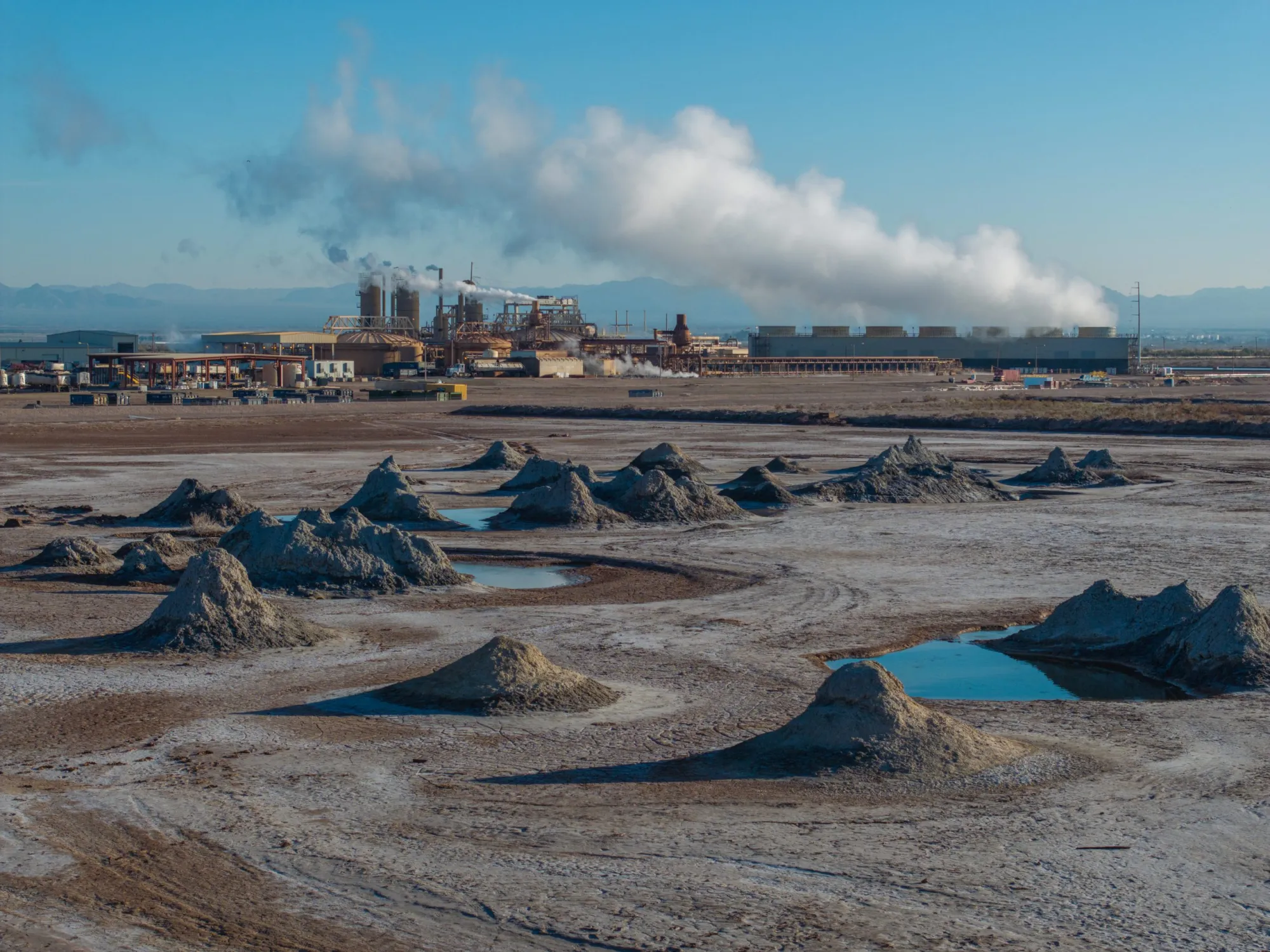
Steve Lawrence has spent his life in rooms where the country’s biggest energy decisions were made. He was an early architect of natural gas deregulation in the 1980s, built one of Enron’s most successful national programs before the company imploded, advised federal agencies after 9/11, and later helped cities and major corporations around the world understand how energy can shape their economic futures.
Now he lives in La Quinta. And after decades of national work, he says Greater Palm Springs is sitting on both a crisis and an opportunity.
“This place could create thirty or forty thousand new jobs if we just changed the way we use energy,” Lawrence said during a long interview. “Energy can be the anchor of a real economic development strategy. But right now, the cost of power is shutting the door on business before they even look inside.”
A Career Built In the Middle of Energy’s Biggest Turning Points
Lawrence’s story begins in the late 1980s, when deregulation first opened the natural gas market.
He recalled being asked to help evaluate a Chicago energy company struggling to survive despite enormous sales. “They were doing a tremendous amount of business,” he said, “but they couldn’t figure out why they didn’t have any money. The amount of resources you need to put an energy program together is huge.”
His work led him straight into Enron at the peak of its innovation. And while Enron’s collapse remains infamous, Lawrence insists the early days of the company were groundbreaking.
“It was one of the greatest experiences of my life,” he said. “We did things no one had ever done in the energy business. We trained young people to sell, to understand customers, to look at the whole system backwards from the customer’s viewpoint.”

Steve Lawrence, CEO of Secure Energy Sources.
He credits former Enron chairman Ken Lay with shaping his professional philosophy. “Mr. Lay was one of the finest men I’ve ever known,” Lawrence said. “He always told us, ‘Spend the money as if it’s your own.’”
The turning point, in his view, came when trading went fully digital, and the company culture shifted. “All of a sudden it was a game,” he said. “Transactions were happening in milliseconds. Fraud came in. And a lot of us who actually built the system started leaving.”
A Post-9/11 Turn Toward National Security
After leaving Enron, Lawrence moved into emergency services and national security work. A unique combination of energy expertise and emergency response knowledge positioned him to evaluate vulnerabilities in the national power grid.
He described one pivotal moment just after 9/11. “Somebody fired up Google Maps, and we started looking at the grid,” he said. “They asked me, ‘Can you show us where you take our country out?’ And I could.”
The vulnerabilities were staggering. “We took out 44 million people for six months in one scenario,” he said. “Another spot affected 58 million. People don’t understand how fragile parts of the system really are.”
That work led him deeper into contracts for sensitive facilities nationwide. “If a lab at Fort Detrick loses power, poison can come out and kill everybody within seconds,” he said. “That’s what ‘high-value target’ actually means.”
Why the Coachella Valley’s Power Crisis Feels Familiar to Him
Lawrence has lived in La Quinta for years. He didn’t plan to get involved in local energy problems, but business leaders kept asking him for help.
“I realized there were opportunities here,” he said. “And if we do this for the right reason, we can shape the next fifty years of this community.”
His verdict on the region’s current energy landscape is blunt.
“Power here costs almost the same as in Hawaii,” Lawrence said. “It’s the same power that comes from Arizona, yet it’s nine cents there and thirty-nine cents here. That has nothing to do with delivering electricity. It’s politics. If you look at a rate base in California compared to other places, probably 40% or more of it has nothing to do with power. It’s another method of taxation. And so, these are all the things that come into play out here that make this situation unique.”
He believes the Imperial Irrigation District (IID), despite being the target of widespread criticism, is not the villain people think it is.
“IID is a water district,” he said. “It’s not an electric utility. They were never designed for what the region needs today. Their charter ties their hands.”
He argues that IID’s governance structure creates an inherent mismatch. “Seventy percent of the business is in Riverside County,” he said, “but the board lives in Imperial County. That’s a problem, and it’s no one’s fault. It’s just how the system was built.”
The result, he says, is a utility that has been forced to react instead of plan. “They’re building substations where people will pay for them, not where they’re needed in anticipation of growth and expansion,” Lawrence said. “That’s the opposite of long-term planning.”
Why Businesses Don’t Come And What It Would Take to Change That
Lawrence’s central warning is that energy costs are crushing the region’s competitiveness more than anything else.
“Our power costs are the number one, two, three, or four expense for most businesses,” he said. “How do you attract good jobs when the basic cost of operating is so much higher than Phoenix, Vegas, or anywhere in Arizona?”
He cites a simple example: warehouse and distribution companies shipping through Long Beach.
“There are forty-four million people within six hours of I-10 and 86,” he said. “The logistics companies all know that. So why don’t they stop here? Because Phoenix costs half as much and nobody makes it hard for them to build.”
In his view, the valley’s leadership model is upside down.
“This has to be led by business, not politics,” he said. “Right now, the people who actually know what they’re doing are in the background, and the people making policy don’t understand the energy system. That’s got to change.”
The Solution: Site-Specific Natural-Gas Generation
Lawrence’s company, Secure Energy Sources, specializes in independent power solutions for large industrial users.
He is quick to correct misconceptions. “We’re not selling equipment. We’re providing the right solution for each site,” he said. “Some places need batteries, some need solar, some need natural gas, some need hybrids. It depends on the operation.”
Natural gas remains the backbone.

Interior infrastructure of a fully integrated, modular power plant that’s off the grid.
“Fifty-seven percent of all power in California already comes from natural gas,” he said. “It’s clean. It’s economical. The only place natural gas is considered a bad fuel is California, and that’s politics, not science.”
His model focuses on industrial users because that’s where the leverage lies.
“We’re talking site-specific,” he said. “If we pull six megawatts off the grid at a major casino resort, for example, that frees enough power for six thousand homes. That means IID doesn’t need a new substation. That’s how you change the system.”
He says large campuses around the state already do it. “The entire campus of one of the Casino Morongo Resort is run off of a microgrid,” he said. “They couldn’t have developed their impressive, energy-intensive facilities without it.”
A Community at a Crossroads
Lawrence is not interested in blaming IID or replacing the utility. His message is more nuanced: the Coachella Valley needs a parallel track that enables growth where the traditional system cannot.
“It’s not about replacing residential power,” he said. “It’s about unlocking industrial growth so the whole community benefits.”
He believes the valley is full of people with the intelligence and resources to push this forward, but they are not yet organized.
“There are brilliant people here,” he said. “They might live in Rancho La Quinta or Bighorn, but they know how to build things. If we bring them together on a real energy strategy, we can change everything.”
His voice hardened slightly as he described the stakes.
“Energy is the one common denominator in California that everybody stays away from,” he said. “If we fix it here, companies will stop in Greater Palm Springs instead of driving straight to Phoenix. That’s thousands of jobs. That’s the next fifty years.”
A Final Thought From a Reluctant Public Figure
For someone with his resume, Lawrence insists he prefers to stay behind the scenes.
“I haven’t talked to anybody in your business since 2003,” he said. “I’ve always worked behind the curtain. But I love this community, and I think we can do something important here.”
It is clear he sees the region as more than a place to retire.
“This is my home now,” he said. “If we do this right, we can build a future that lasts.”
Bob Marra is the CEO/Publisher of GPS Business Insider. He has been studying, writing and giving presentations about business, economic and public affairs news and issues and the local economy in the Greater Palm Springs/Coachella Valley region for more than 20 years.