Rental prices for homes and apartments in the Greater Palm Springs region have eased slightly over the past year. Still, the cost of housing remains far above what most local workers, especially those in the low-paying service sector, can afford. That’s the conclusion from a detailed review of actual transaction data sourced from Zillow Market Trends, focused on 3-bedroom single-family homes and 2-bedroom apartments/condos across the region’s nine cities.
Data and Methodology:
The figures cited here are based on the Zillow Market Trends dataset, which compiles actual rental listings and transactions posted on its platform. While not a complete census of all rentals in the region, Zillow’s dataset reflects a large share of market activity and provides a more immediate and much more comprehensive snapshot than government sources like the American Community Survey, which rely on smaller sample surveys.
This analysis covers only 3-bedroom houses and 2-bedroom apartments/condos. Recent months did not provide enough data to include Indian Wells and Coachella, so those cities are excluded from this summary.
What the Numbers Show:
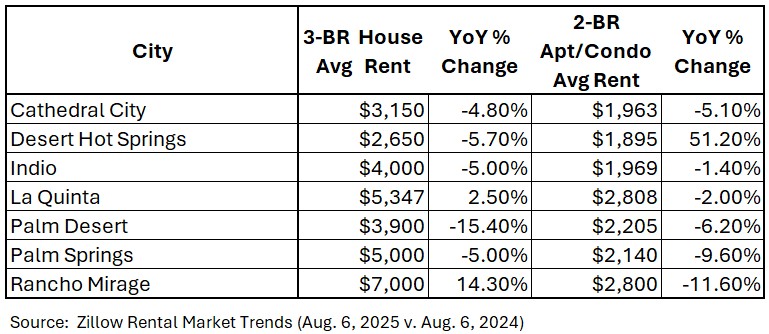
Across the seven cities with sufficient data, the average asking rent for a 3-bedroom house is about $4,703 per month, down 2.7% from the previous year. The average for a 2-bedroom apartment or condo is about $2,199, down 2.1% year-over-year.
Rental inventory is most concentrated in La Quinta, Palm Springs, and Palm Desert for 3-bedroom homes, and in Palm Springs and Palm Desert for 2-bedroom apartments. Notably, luxury markets like Rancho Mirage and La Quinta show longer average days on market, suggesting top-end prices are slow to lease, even as demand persists.
Comparison to National Averages:
Nationally, the median apartment rent is $1,402 (Apartment List, July 2025), while Zillow’s broader national average (all unit types) is about $2,100. For a 2-bedroom apartment, the National Low Income Housing Coalition estimates a fair-market rent of about $1,747 per month in 2025.
Three-bedroom single-family homes rent for even more, typically 20% higher than apartments, reflecting a premium of roughly $350 per month nationally. Even as rents have softened somewhat across the U.S., Greater Palm Springs remains far above these benchmarks – particularly for families needing more space.
Affordability Crisis for Service Workers:
The Greater Palm Springs economy depends on hospitality, retail, food service, and property management, sectors where wages rarely keep pace with the “housing wage” needed for affordability. The California minimum wage is $16.50/hour (higher for some industries). Still, most local service jobs pay well below the $33.63/hour required to afford a modest 2-bedroom at fair-market rent without exceeding the 30% of income affordability standard.
For context, a full-time worker earning $18/hour brings in about $3,120 per month, making $936 the recommended upper limit for housing costs. That’s less than half the region’s typical 2-bedroom rent, and not even close to a 3-bedroom. Even two full-time workers at this wage, grossing $6,240 per month, should ideally spend no more than $1,872 on rent, still well below what the local market demands, especially for families with two or more children who need a 3-bedroom apartment or condo.
The result is a severe cost burden: half of all U.S. renters now spend more than 30% of their income on housing, with over a quarter spending more than half (Harvard Joint Center for Housing Studies, 2023). In the Coachella Valley, this means families double up, commute long distances, or leave the region entirely in search of affordability.
Market Dynamics and National Trends:
While a national surge of new multifamily construction has pushed up vacancy rates and helped temper rents elsewhere, the Greater Palm Springs region remains an outlier. High demand from seasonal residents, second-home buyers, and luxury-seeking tenants keeps local prices high.
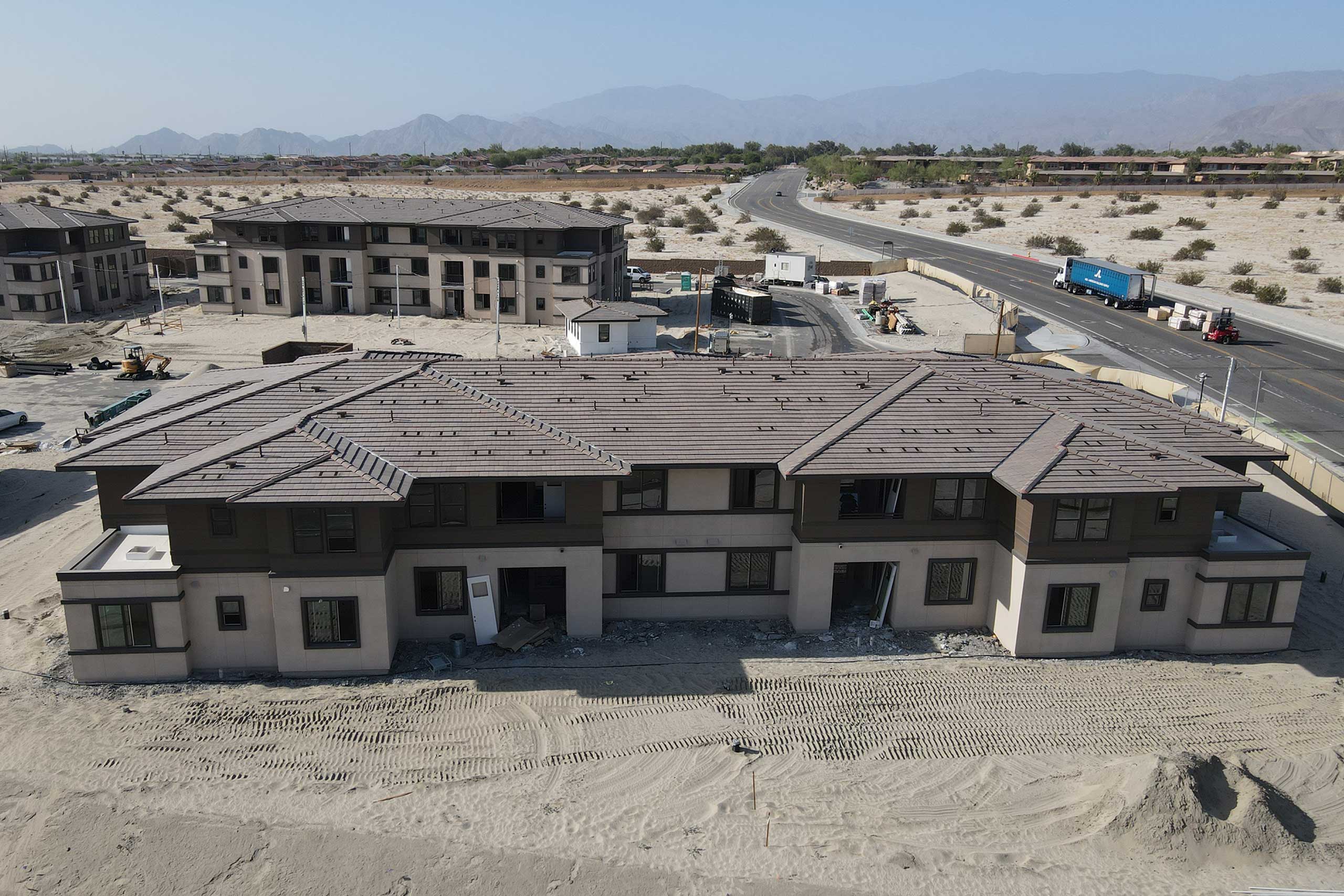
Fortunately, major strides have been made throughout the region in terms of the development of new market-rate and subsidized affordable apartments. The past two years have seen hundreds of new units come online, and several more development projects are in the pipeline, which are contributing to the gradual reduction in rents. This trend will hopefully continue robustly from now on.
Impacts and the Path Forward:
- Workforce Stability: High housing costs fuel turnover and staffing shortages, particularly in hospitality and services, the pillars of the regional economy.
- Longer Commutes: As local rents outpace wages, more workers commute from distant, more affordable inland areas, increasing their expenses and reducing reliability.
- Pressure on Public Support: Demand grows for rental assistance and subsidized housing, while federal aid standards lag fast-moving market changes.
Local governments and major employers increasingly recognize that affordable workforce housing is crucial economic infrastructure. Solutions under discussion include streamlining development approvals, supporting mixed-income projects near job centers, and expanding direct rental subsidies or master-leased workforce housing.
Bottom Line:
Rents in the Greater Palm Springs area may have dipped from last year’s peaks, but they remain unaffordable for most of the region’s workforce, especially in the vital service sector. Without significant investment in affordable and workforce-targeted housing, the economic foundation of the region remains at risk.
Sources: Zillow Market Trends, Apartment List National Rent Report, National Low Income Housing Coalition, Bureau of Labor Statistics, Harvard Joint Center for Housing Studies.
Editor’s note: Rental figures are based on available listings and transactions from Zillow and do not represent all rentals in the region. Government estimates are based on smaller sample surveys and are best for long-term trends, while Zillow’s data offers a timely view of actual market activity. All figures reflect point-in-time data and are subject to change with market conditions and seasonality.

Bob Marra is the CEO/Publisher of GPS Business Insider. He has been studying, writing and giving presentations about business, economic and public affairs news and issues and the local economy in the Greater Palm Springs/Coachella Valley region for more than 20 years.