A new 10-year tax-sharing agreement for the downtown resort puts a fresh spotlight on a Palm Springs economic-development strategy that Councilmember David Ready says helped strengthen the city’s tourism economy and expand the revenue available for public services.
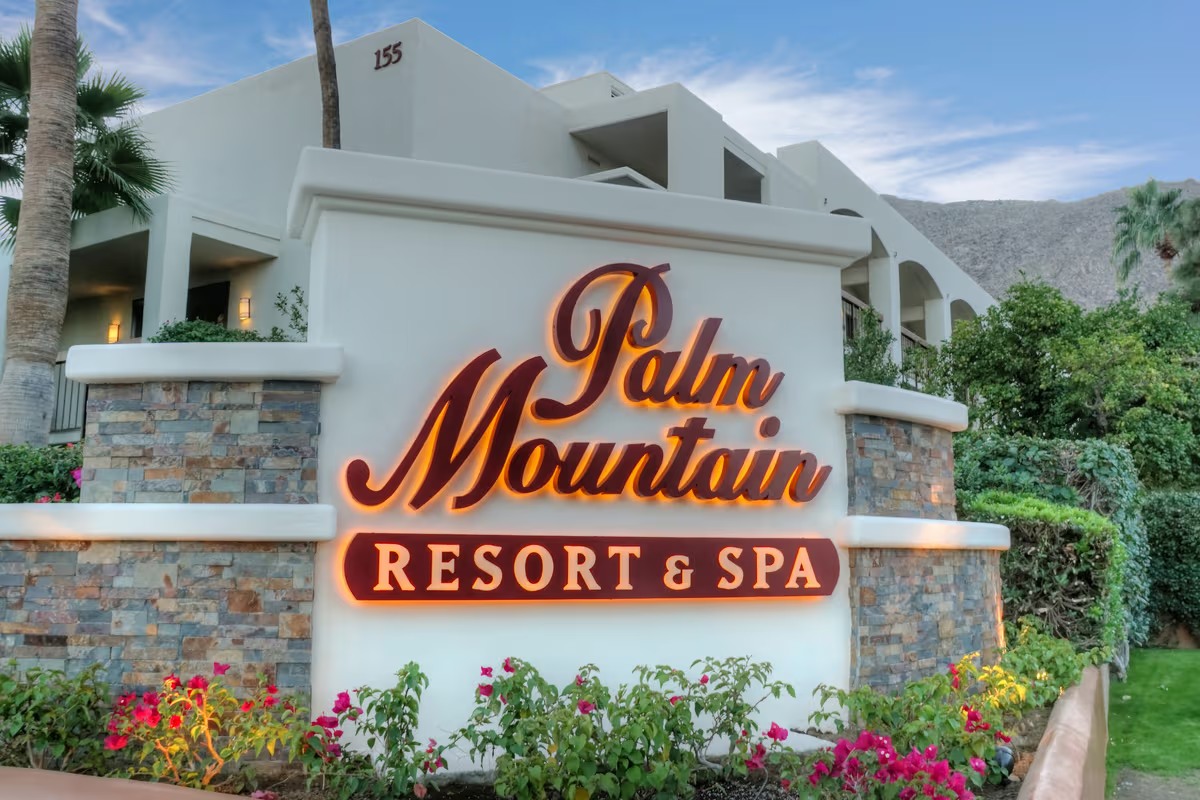
Palm Springs has approved a new 10-year tax incentive for Palm Mountain Resort & Spa, allowing the owner of the 142-room downtown hotel to recover as much as $6.47 million from future increases in lodging-tax revenue generated by the property.
But to Councilmember David Ready, who helped develop Palm Springs’ hotel incentive strategy during his roughly two decades as city manager, the Palm Mountain agreement is best understood as one piece of a much larger economic-development model.

David Ready, Palm Springs City Council Member.
Ready said the program was designed as a partnership between the city and hotel owners, using a portion of new transient occupancy tax, or TOT, to encourage private investment in properties that strengthen the visitor economy.
Over time, he said, the benefit has extended beyond the hotel taxes shared with participating properties. Better hotels can attract more visitors, meetings and weekend travelers, producing additional sales taxes, property taxes and economic activity elsewhere in the city.
Ready said the city’s General Fund has more than doubled since the early 2000s, and he attributes part of that broader growth to the expansion of Palm Springs’ visitor economy.
The added revenue, he said, ultimately translates into community services, including expanded police and fire resources and other quality-of-life programs.
That history provides context for the City Council’s Aug. 26 approval of a new Hotel Operations Covenant Agreement with WR Palm Mountain Resort LP.
Under the agreement, the hotel owner will receive 50 percent of Palm Mountain’s “Adjusted TOT,” essentially the transient occupancy tax generated above a city-established baseline. Payments can continue for up to 10 years, but they stop sooner if the owner receives $6,469,870.24.
The $6.47 million is therefore a maximum, not a guaranteed payment.
The incentive depends on hotel performance
Palm Springs is not providing Palm Mountain with $6.47 million upfront.
Instead, the city and hotel will divide lodging-tax growth above the property’s established baseline. If the hotel does not generate additional TOT, there is little or no incremental revenue to share.
That performance-based structure is central to Palm Springs’ Hotel Operations Incentive Program, which allows owners of qualifying hotels to recover approved investment costs from a portion of the new lodging taxes their properties generate.
For renovation projects, the city’s current program generally returns 50 percent of the incremental TOT to the operator while Palm Springs retains the other half.
Palm Mountain’s approximately $6.47 million investment amounts to roughly $45,600 per room, although the work was not limited to guestrooms. Renovations included furnishings, wall finishes, tubs, blinds and appliances, along with a roof replacement.
The Palm Mountain Resort website now promotes the property’s renovated guestrooms and its location just off Palm Canyon Drive in the heart of downtown.
In simplified terms, Palm Mountain would need to generate approximately $12.94 million in cumulative incremental TOT for its owner to collect the full $6.47 million cap because only half of the additional tax revenue is returned to the hotel.
That would represent about $1.29 million annually in incremental TOT if the maximum were reached evenly over 10 years.
Actual payments will depend on the hotel’s tax baseline, occupancy, room rates and taxable revenue.
Ready: Hotel economics in Greater Palm Springs are difficult
Ready said the incentive program also needs to be viewed through the economics of developing and maintaining hotels in Palm Springs.
Unlike larger year-round urban markets, he described Palm Springs as a relatively small and seasonal hotel market where projects can be financially challenging even when the city’s tourism brand is strong.
That reality, he said, can make incentives important to financing and completing hotel investments.
Ready pointed to the long development history of the Thompson Palm Springs as an example of the difficulty. The project took roughly 15 years to progress through different ownership, financing and development phases before finally opening.
The Palm Mountain transaction is different because it involves renovating an operating hotel rather than constructing a new one. But Ready’s broader argument applies to both: maintaining a competitive lodging inventory requires substantial private capital, and the city has concluded that sharing a portion of new tax revenue can help induce that investment.
The strategy dates to the late 2000s. City records describe the program as a response to the difficulty of financing new hotel construction, with a modified version available for major renovations.
The city has since used the structure across a range of properties.
Tourism revenue supports a much bigger city operation
Ready’s rationale is that focusing only on the rebate misses the larger financial relationship between Palm Springs and its hospitality industry.
A visitor staying in an improved hotel can generate TOT from the room, sales tax from restaurant and retail spending and, over time, additional property-tax value tied to private investment.
Tourism also supports the Palm Springs Convention Center, downtown businesses and a broader hospitality ecosystem that the city is preparing to invest in heavily.
That relationship is becoming even more important as Palm Springs advances a major Convention Center modernization and the hospitality industry pursues a Tourism Improvement District to help finance those improvements.
Palm Mountain itself must participate in the Convention Center Committable Rooms Program as part of its incentive agreement, giving the city access to designated hotel-room inventory for convention and official city purposes.
The property’s location, within walking distance of downtown restaurants, shops, cultural attractions and the convention district, makes it part of that larger visitor infrastructure.
Ready said that is ultimately how the incentive program should be judged: not simply by the tax revenue returned to individual hotels, but by whether the investments help grow Palm Springs’ overall tourism economy and the public revenues that flow from it.
The new Palm Mountain agreement will provide another test.
If the renovation produces substantial growth in room revenue, Palm Springs will retain half of the resulting incremental TOT while the hotel owner recovers part of its investment.
If that growth does not materialize, the city’s rebate falls accordingly.
The $6.47 million figure may attract the attention, but the more consequential measure will be what Palm Mountain generates above its baseline over the next decade and how much of that new business ultimately stays with the city.

Bob Marra is the CEO/Publisher of GPS Business Insider. He has been studying, writing and giving presentations about business, economic and public affairs news and issues and the local economy in the Greater Palm Springs/Coachella Valley region for more than 20 years.