Two long-delayed hotel developments will return to the Palm Springs City Council agenda on March 11, when officials consider new actions that could determine whether either project finally moves toward construction.
One item would reset the timeline for the long-stalled Dream Hotel project near the Palm Springs Convention Center. The other provides a status update on the Orchid Tree Hotel, a smaller downtown proposal that has also struggled with financing and planning hurdles.
Together, the items highlight a recurring challenge that has, for years, tested the considerable patience and goodwill of the Palm Springs City Council and staff: advancing potentially high-profile tourism projects while dealing with an inordinate array of missed deadlines, shifting plans, financing gaps, and growing neighborhood frustration.
The Dream Hotel proposal requires a vote by the council. City staff recommends approving a first amendment to the 2023 settlement and development agreement, updating construction deadlines, formalizing neighborhood outreach measures and adding financing oversight.
The Orchid Tree item is procedural. Staff recommends the council simply receive and file a status report indicating the developer has generally met a recent application milestone.
Dream Hotel’s Long History
The Dream Hotel project has one of the longest planning histories of any Palm Springs development.
City records trace the concept to the late 1990s, with a major milestone in 2007 when the council approved Planned Development District 333 a mixed-use hotel and condominium project near the convention center.
Subsequent approvals in 2009 and 2013 modified design elements but kept the concept intact.
In 2013, the city and the developer entered into a purchase and sale agreement and a services agreement governing the conveyance of the city-owned property, project deadlines, and replacement public parking. Over the following years, the council approved several amendments as the project evolved.
A major redesign came in 2017, when the project shifted to a Dream-branded hotel with 170 rooms and 35 condominium units. Additional amendments in 2018 and 2019 adjusted the unit mix, building layout and deadlines.
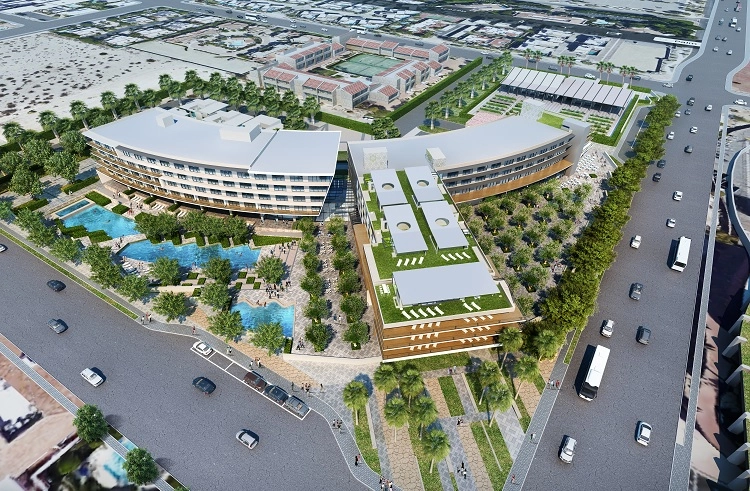
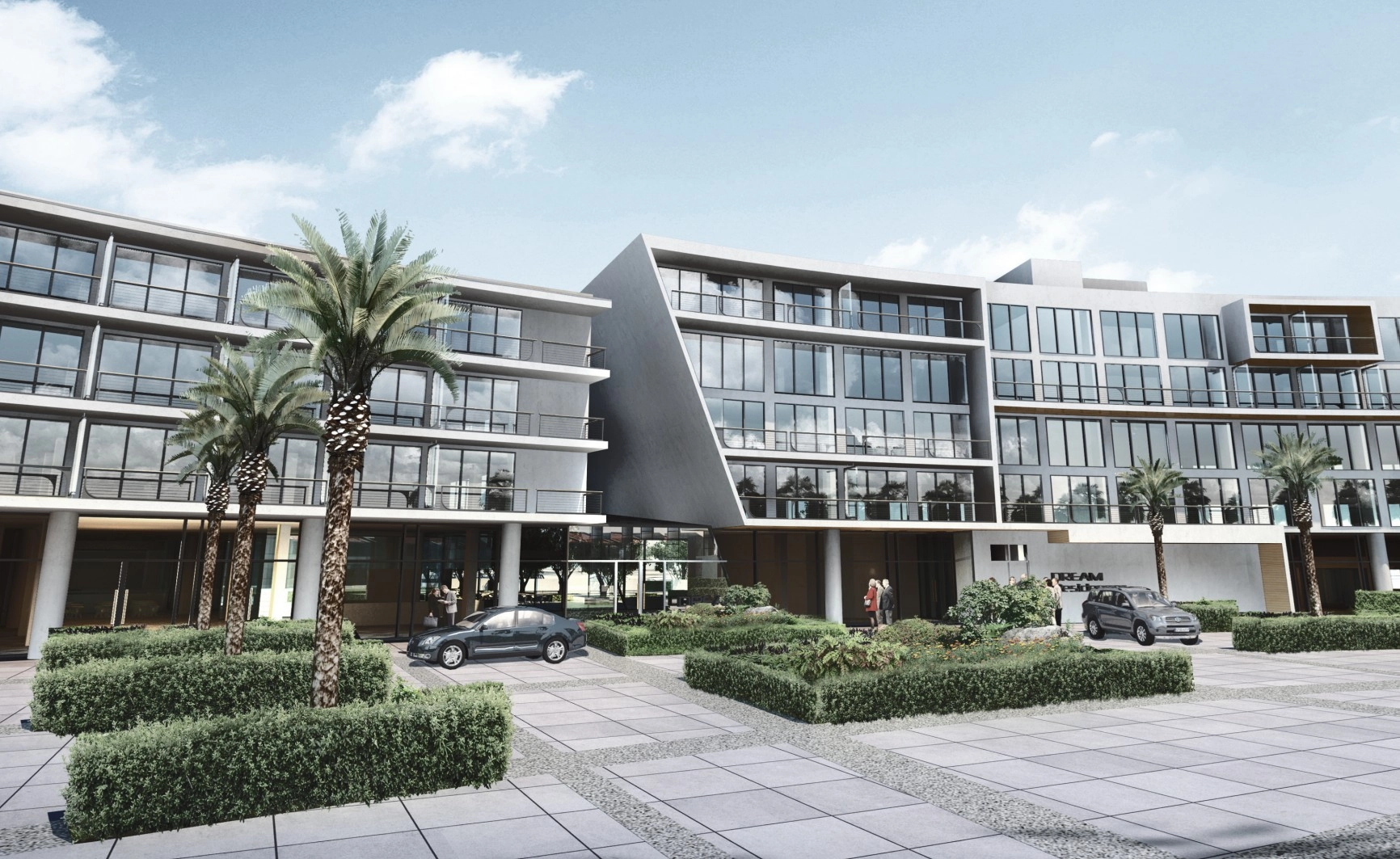
The Dream Hotel Palm Springs rendering update in 2017.
Another Reset
In 2023, the city approved amendments to development plans and a settlement and development agreement meant to restart the project after years of delays.
That version envisioned 150 to 160 hotel rooms, at least 28 short-term-rental residential units in the hotel tower, 12 North Villas and 24 South Villas. The schedule anticipated building permits in 2023–24 and completion by late 2026, a timeline that has already slipped.
The new amendment would keep the 150-to-160-room hotel but increase the number of rental-eligible residential units in the tower to at least 40 while leaving the villa counts unchanged.
City staff also notes the developer received a minor administrative amendment in January 2026 and now plans to build the project in a single phase rather than multiple phases.
Focus on Financing
Financing has long been the central challenge for the Dream project, and the amendment places new emphasis on monitoring it.
The revised agreement would require the developer to:
- Show proof of finalized financing within 60 days
- Provide written financing updates every 90 days
- Notify the city of any financing delay that could affect the schedule
Such a delay could trigger default under the development agreement.
Staff reports the developer has continued pre-construction work, completed about $80 million in value engineering, secured administrative entitlements and advanced financing discussions, though construction has not yet begun.
The revised schedule includes specific benchmarks such as construction drawings by March 31, 2026, site investigation beginning March 30, a model room by April 30, and site remediation starting the same day.
The amendment also formalizes monthly neighborhood meetings and a project website to address concerns about security, aesthetics and the project’s prolonged delays.
Orchid Tree Project Seeks Momentum
The Orchid Tree Hotel proposal has followed a similarly complicated path.
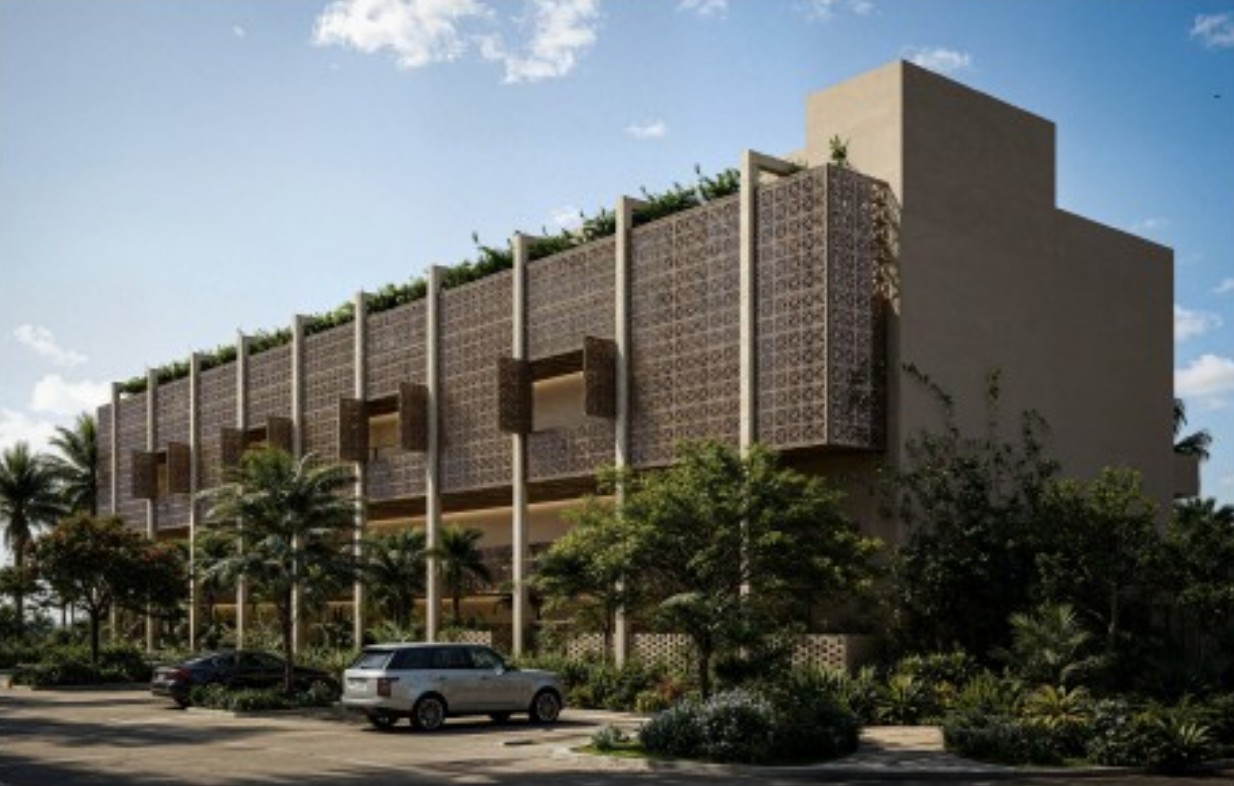
Orchid Tree Hotel rendering viewed from the Arenas Road/Cahuilla Road intersection.
The project site near downtown Palm Springs, identified as 2845 Cahuilla Road, first received Planning Commission approval in 2015 for renovation and reconstruction of a 52-room hotel. In 2016, the concept expanded to allow the adaptive reuse of historic buildings and up to 64 rooms, along with spa, meeting, and lounge space.
In 2017, the City Council extended the project deadline to May 2019 on the condition that it operate as an Auberge Resorts Collection property.
By early 2019, the developer said Auberge’s standards could not be met without additional incentives and requested reclassification as a luxury hotel.
In 2020, the city approved a revised covenant covering a redesigned project.
Financing Delays
Financing proved to be the obstacle again.
A 2022 feasibility report by CBRE concluded that market conditions prevented the project from obtaining financing despite significant effort. The city granted another extension in 2023.
But the planning application submitted later that year was deemed incomplete, resulting in a default notice and the cancellation of the previous agreement in early 2024.
After months of negotiations, the city approved a new hotel operations covenant in April 2025.
The revised concept includes:
- A 72-room luxury hotel
- Restoration of eight historic bungalows
- Rehabilitation of a historic two-story church for hotel services and a restaurant
- 16 condominium units
- Amenities including a spa, gym, pool and event space
The project could receive a 75% rebate of adjusted transient occupancy tax (TOT) for up to 30 years, or until the rebate reaches $50 million, whichever comes first.
City staff estimates the first reimbursements could begin in 2028.
Latest Milestone
The developer was required to submit a new planning application by Aug. 15, 2025, but the deadline was extended after the initial submittal was deemed incomplete.
According to the new report, the developer has now generally provided materials needed to meet the extended Feb. 14, 2026 milestone, though the city has until mid-March to formally determine compliance.
The next major deadline requires the developer to secure project entitlements by Oct. 11, 2026.
A Familiar Pattern
Taken together, the two projects illustrate a familiar pattern in Palm Springs.
The city continues to promote upscale hotels as a cornerstone of its tourism-driven economy. Yet many high-profile projects face years of redesigns, financing challenges and renegotiations.
The March 11 council meeting will not determine whether either project will break ground soon.
Instead, council members will decide how much additional time, structure, and oversight the city is willing to provide for two hotel developments that have been promised for years but remain in limbo.

Bob Marra is the CEO/Publisher of GPS Business Insider. He has been studying, writing and giving presentations about business, economic and public affairs news and issues and the local economy in the Greater Palm Springs/Coachella Valley region for more than 20 years.