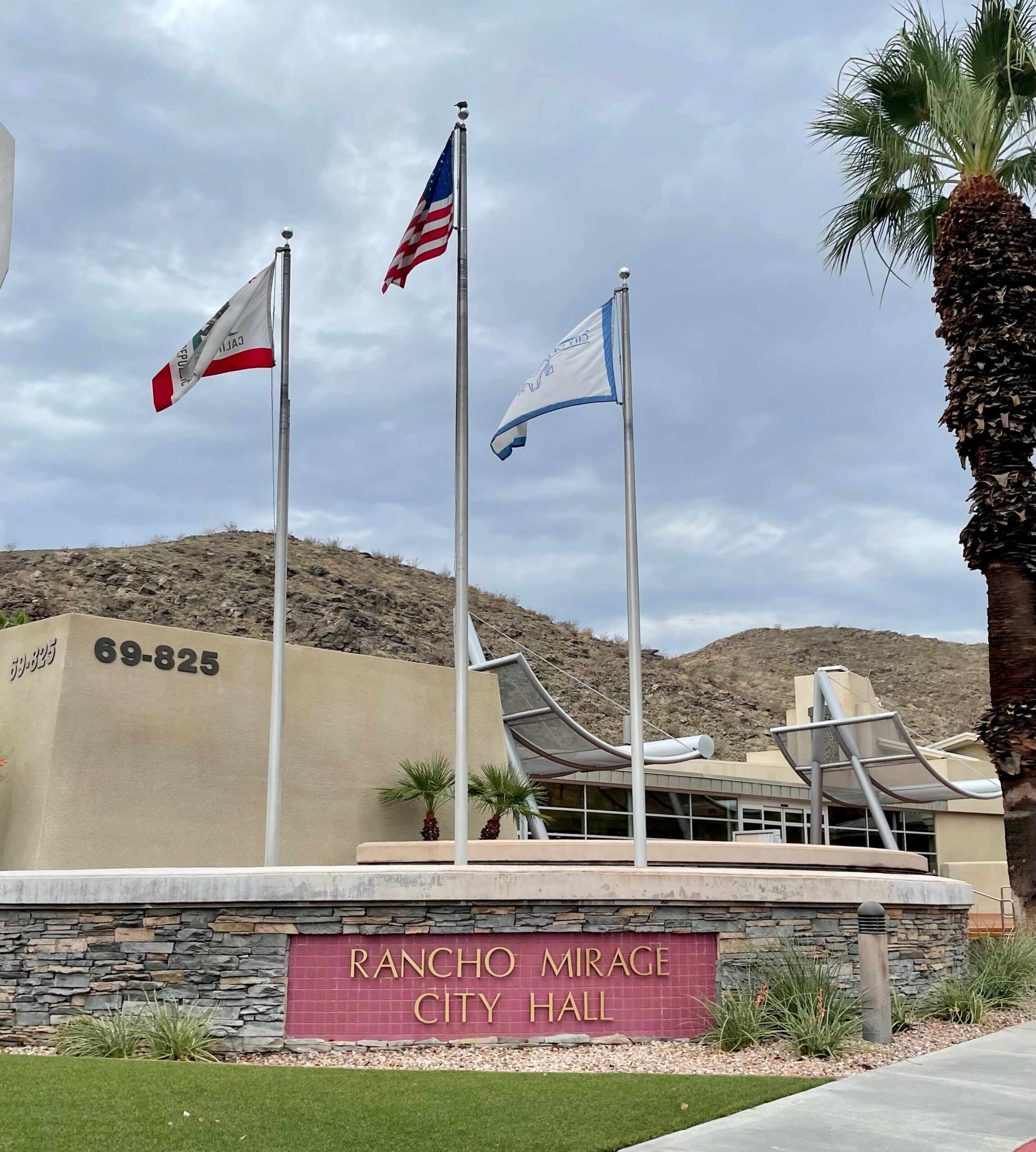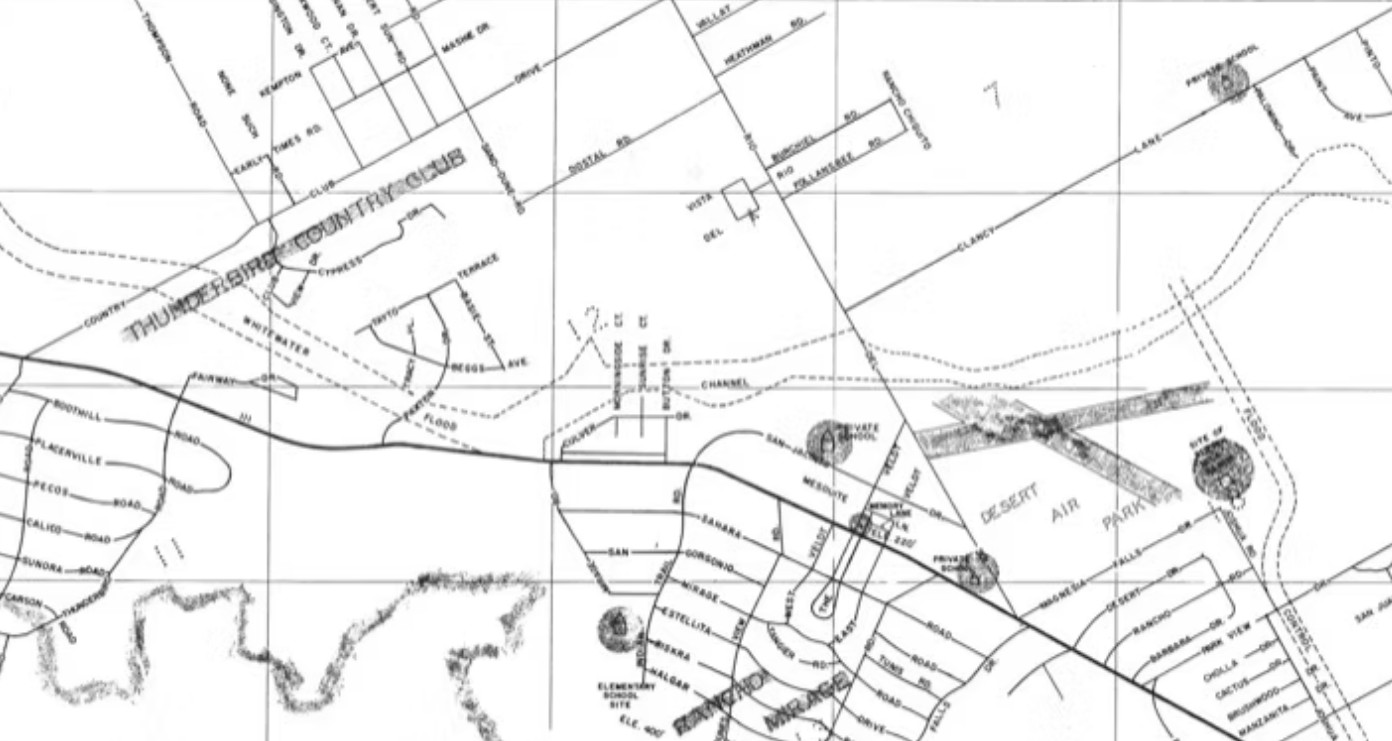
In Rancho Mirage, where architecture has long been part of the city’s identity, preservation is often measured in rooflines, glass walls, breeze blocks and the careful stewardship of homes that helped define desert modernism.
But this year, Preservation Mirage is making a broader argument: buildings are only part of the story.
The nonprofit organization, known for its focus on Rancho Mirage’s architectural heritage and midcentury modern legacy, has helped fund scholarships for graduating College of the Desert (COD) architecture students for the third consecutive year. This year, the effort expanded through a new partnership with the AIA California Desert Chapter and its College of the Desert AIA Architecture Scholarship Program, established in honor of the late Florence A. Hagstrom, Hon. AIA.
The result is both a scholarship story and a regional workforce story. Four COD architecture students were recognized this week as they prepare to continue their education in accredited Bachelor of Architecture programs. Three of the scholarships carried support from Preservation Mirage, with additional funding from local architecture firms and donors. A fourth scholarship was sponsored by Hoyt Construction.
For Preservation Mirage, the program represents a deliberate step beyond preserving notable homes and historic neighborhoods. It is an investment in the people who may one day design, restore, reinterpret or defend the built environment of the Coachella Valley and beyond.
“Buildings are only half the story,” the organization said in announcing the awards. “The other half is the people who design them, build them, live in them, and carry them forward.”
A New Layer In Rancho Mirage’s Preservation Movement
Preservation Mirage began as an informal group of midcentury homeowners who gathered to exchange ideas about owning and preserving midcentury architecture in Rancho Mirage. As interest grew, the group formalized its mission, elected a board in late 2017 and became a registered nonprofit.
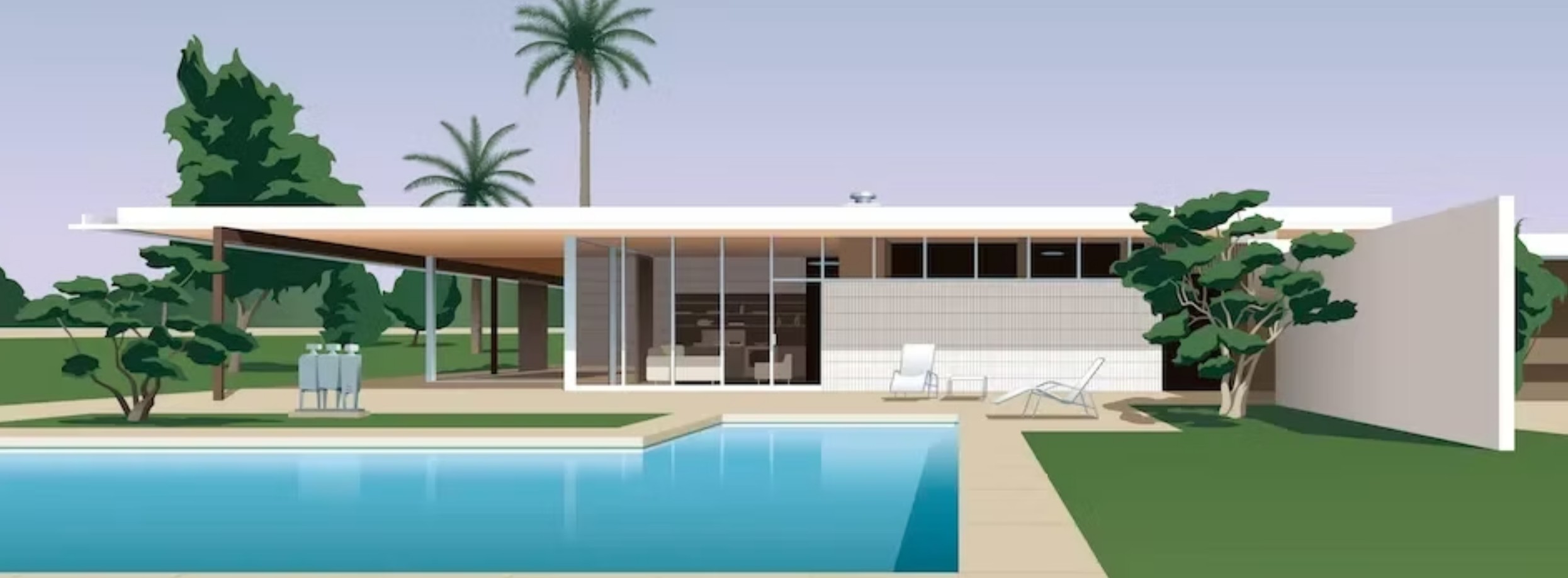
The Richard Neutra-designed “Maslon House,” depicted in this illustration, was built in 1962 in Rancho Mirage. It was razed by a new owner in 2002 after much pushback from preservation-minded community members, which spurred a movement to organize and promote a culture of architectural preservation within the city.
Its website describes the organization as one that brings “the story of Rancho Mirage to life by connecting people to its vibrant architectural history.” Its stated values include preserving the past, building community and investing in the future.
That third value is now taking on a more literal meaning.
The group’s scholarship committee oversees an annual award for Coachella Valley students who demonstrate a passion for historic architecture. The nonprofit also works through committees focused on historic preservation, history, marketing, membership, development and legacy planning. Its preservation work includes serving as a liaison to the Rancho Mirage Historic Preservation Commission, monitoring pending historic home designations and supporting the city’s historical resources survey.
The scholarship program adds a human pipeline to that mission. It connects Rancho Mirage’s past as a haven for bold residential architecture with the educational path of students who are preparing to enter the profession at a time when design questions are increasingly intertwined with housing, climate, affordability, sustainability and community identity.
Honoring Florence Hagstrom’s Influence
This year’s partnership ties Preservation Mirage to a newer scholarship initiative created by the AIA California Desert Chapter.
The AIA California Desert Chapter Annual Scholarship supports students in College of the Desert’s Architecture and Environmental Design Program as they continue their architectural education at the university level. The program is named in honor of Florence A. Hagstrom, Hon. AIA, who served as executive director of the chapter for more than 17 years and was widely regarded as a stabilizing and encouraging force in the local architecture community.
According to the chapter, the scholarship is intended not only to honor Hagstrom’s legacy, but to invest in the future of desert architecture by supporting students who may one day shape the buildings, communities and landscapes of the region.
The scholarship eligibility criteria focus on COD students graduating with a two-year degree and continuing into an accredited Bachelor of Architecture program. Applicants submit essay responses, portfolio samples and confirmation of their intent to enroll in an accredited program in the fall.
For the students selected this year, the award provides financial support, professional validation and a bridge from community college to architecture school.
The recipients were selected by Olympia Pilafidis, AIA, NCARB, an adjunct professor of architecture at College of the Desert, based on student essays, portfolios and confirmed plans to continue their education.
Four Students, Four Architectural Paths
The scholarship recipients are Rebecca Villa, Israel Mojica, Yudith Villegas Camarena and Sebastian Ventura.
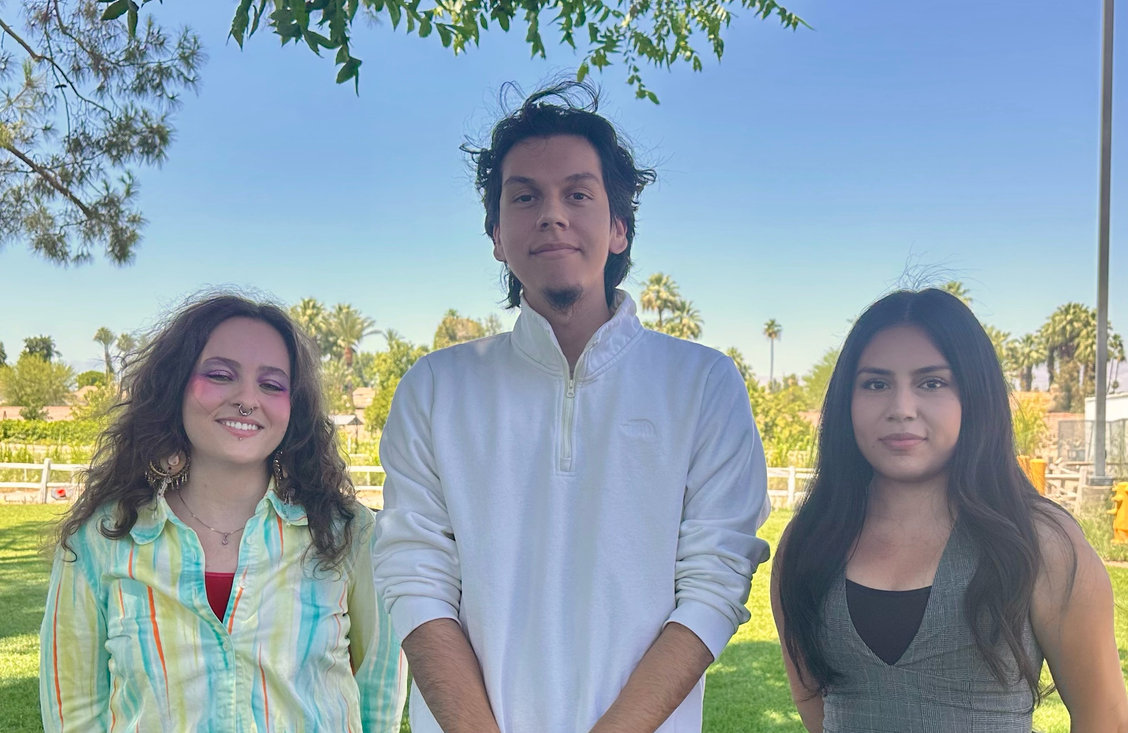
Preservation Mirage scholarship winnners for 2026 (pictured from left to right) are Rebecca Villa, Israel Mojica and Yudith Villegas Camarena (Sebastian Ventura, not pictured).
Villa, who will attend Cal Poly Pomona, received a scholarship fully funded by Preservation Mirage. Her path to architecture is rooted in personal experience. After her family lost its home to a natural disaster in 2011 and moved frequently in the years that followed, she came to understand housing as more than shelter. It became, for her, a question of safety, dignity and opportunity.
At College of the Desert, Villa developed that interest into a broader inquiry. Her final paper for an Introduction to Chicanx/Latinx Studies course examined low-income housing through both architectural and social lenses. Her approach to design, according to the scholarship announcement, is grounded in advocacy and a belief that underserved communities should not be excluded from well-designed, sustainable and beautiful spaces.
At Cal Poly Pomona, she plans to deepen her focus on equitable, sustainable and community-oriented housing.
Mojica, who will attend NewSchool of Architecture & Design in San Diego, received a scholarship funded by Prest Vuksic Greenwood Architects, with additional support from Preservation Mirage. His interest in architecture emerged from seeing housing struggles and homelessness in his community. He views design as a tool for connection, not merely as a visual product.
His goal is to create spaces that encourage people to look out for one another, while also addressing sustainability and the cost pressures that shape daily life. In the scholarship announcement, Mojica is described as someone whose passion grows as the challenge becomes larger.
Villegas Camarena, also bound for NewSchool of Architecture & Design, received a scholarship funded by Kristi Hanson Architects, with additional support from Preservation Mirage. Her path to architecture begins with environmental concern. She has spoken candidly about the construction industry’s role in environmental harm and her ambition to learn the craft well enough to reduce that harm.
Her interests combine political activism, drawing, puzzles, mathematics and the hands-on discipline of building. Through COD’s Applied Construction courses, she developed an appreciation for the labor and precision behind architecture. She imagines a future in which buildings heal, connect and inspire.
Ventura, the fourth recipient, will also attend NewSchool of Architecture & Design. His scholarship was sponsored by Hoyt Construction. While his award was not among those directly funded by Preservation Mirage, the organization recognized him as part of the same emerging cohort of desert-trained architecture students.
Together, the four students represent the breadth of issues now shaping architectural education: housing insecurity, homelessness, sustainability, social equity, construction craft and the emotional meaning of place.
College Of The Desert As A Regional Launchpad
The scholarship program also highlights the role of College of the Desert (COD) as a local point of entry into professional fields that might otherwise feel distant to students in the Coachella Valley.
For students pursuing architecture, the COD can serve as the first step in a longer educational path leading to accredited architecture programs at universities such as Cal Poly Pomona and NewSchool in San Diego.
It’s especially important in a region where many built-environment decisions are made by architects, planners, developers, city officials and consultants whose work shapes daily life for residents.
Scholarship support can help local students remain on that path. It can also send a larger message that the Coachella Valley’s design community sees them as part of its future.
This year’s effort was made possible in part by Sally and Jon Kovler, who designated a donation specifically toward educational scholarships, along with Preservation Mirage members and donors who support the organization’s programs.
Preservation As Economic And Cultural Strategy
In Rancho Mirage, the scholarship effort lands within a larger conversation about the value of architectural identity.
The city’s modernist and midcentury legacy is not just a cultural asset. It is part of the region’s tourism economy, real estate market and civic brand. Books such as “Mod Mirage: The Midcentury Architecture of Rancho Mirage,” by Melissa and Jim Riche, have helped elevate the city’s place in the broader story of desert modernism, documenting architecturally significant homes and communities built in and around historic clubs such as Thunderbird and Tamarisk.
Preservation Mirage founder Melissa Riche, the organization’s president emeritus, helped guide the group from an informal network of homeowners and architecture enthusiasts into a nonprofit with education and advocacy goals.
That evolution reflects a broader shift in preservation work. The field is increasingly about continuity rather than nostalgia. It asks which places deserve protection, who gets access to good design, how communities remember their own stories, and how future construction can learn from the buildings that came before.
The scholarship recipients’ interests suggest that the next generation of architects is already thinking in those terms.

Bob Marra is the CEO/Publisher of GPS Business Insider. He has been studying, writing and giving presentations about business, economic and public affairs news and issues and the local economy in the Greater Palm Springs/Coachella Valley region for more than 20 years.