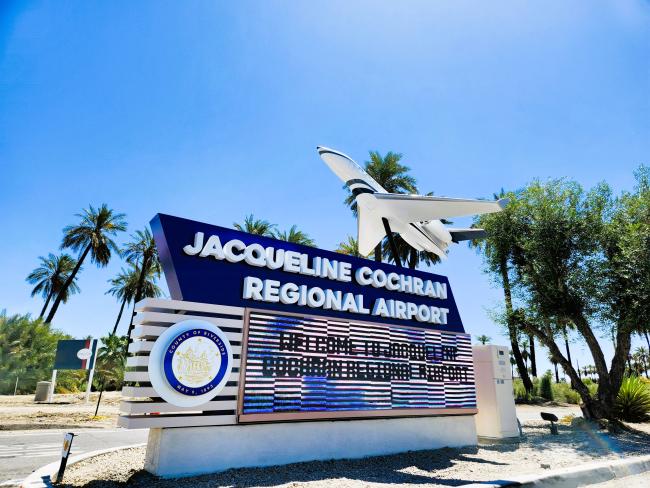
Palm Springs International Airport (PSP) began 2026 on a quieter note than it did a year ago. In January, 330,661 passengers passed through the terminal, down from 354,786 the previous January. The 6.8 percent drop is not dramatic on its own, but a closer look shows where the softness is coming from and why it matters.
The sharpest shift is tied to Canada, according to data presented in the Airport Commission’s February 18 meeting packet. Arrivals on Canadian airlines fell to 19,860 passengers in January, a decline of 22.81 percent from the 25,728 recorded a year earlier. That gap is far wider than the overall passenger dip, and it stands out because Canadian travelers have long formed a reliable winter base for Greater Palm Springs.

In the colder months, Canadian visitors tend to stay longer and return year after year. They fill hotel rooms, book short-term rentals, and provide steady demand that carries through winter into early spring. When that stream slows, even slightly, the effect can ripple across the Coachella Valley’s visitor economy.
January’s totals break down into 162,179 departing passengers and 168,482 arriving passengers. Both sides of the ledger were down compared with last year, bringing the monthly total to 330,661.
The airline mix tells its own story. Alaska led the field in January departures with 35,155 enplanements. American followed with 25,334, and United carried 23,300. Southwest and Delta added 20,817 and 17,055, respectively. These numbers underscore how much of Palm Springs’ winter traffic still rests on large domestic carriers and their national networks.
Canadian airlines, while smaller in volume, remain significant. WestJet recorded 13,294 departing passengers in January, Air Canada carried 4,537, and Porter added 830. On the inbound side, WestJet brought in 14,860 passengers and Air Canada 4,150. The contraction in this segment is clear, even as domestic traffic remains comparatively steady.
Looking ahead to spring, the published Airport Commission figures suggest that the Canadian pullback may continue, particularly in May. Flights from Canada to PSP are scheduled to decline year over year (2026 v. 2025) in March (-11.4%, -6,595 seats), April (-8.5%, -3,458 seats), and most sharply in May (-38%, -4,449 seats).

For the region, May is an important shoulder month. A quicker seasonal drawdown of Canadian service could mean fewer spring visitors lingering before the desert heat sets in and leisure travel shifts to cooler destinations. If those schedules hold, tourism businesses may need to lean more heavily on domestic flyers and drive markets to fill the gap.
On the domestic side, the picture is steadier. March flights and seats are slightly ahead of last year. April shows a more noticeable dip, while May is close to even. By June, total seats are projected to rise year over year. In practical terms, the airport’s domestic backbone appears intact, even as the international segment softens.
One development could further strengthen that backbone. United is converting its Los Angeles service to year-round operations, offering twice daily flights in peak season and daily service in summer. The schedule is designed to include a morning departure and evening return, making it easier for travelers to connect through LAX to Mexico, Hawaii, and transpacific destinations. The route will be operated by SkyWest and was supported by incentives aimed at turning seasonal routes into permanent ones.
That kind of connectivity does more than add convenience. Year-round hub access can help keep local travelers from driving west, improve options for business passengers, and provide stability during slower shoulder months. In a year when Canadian demand appears softer, those network gains take on added importance.
The January numbers alone do not explain why Canadian visitation has fallen. They simply show that it has, and by a margin larger than the overall decline at the airport. If spring capacity reductions materialize as scheduled, 2026 may unfold with a different mix of visitors than the valley has grown used to in recent winters.
Even so, the broader schedule suggests that Palm Springs International remains positioned for another strong year. Domestic capacity is largely holding steady, summer seats are trending upward, and key network connections are being reinforced. The opening month of 2026 may carry a Canada-driven headwind, but the airport’s foundation remains solid as it moves into the busy spring season.

Bob Marra is the CEO/Publisher of GPS Business Insider. He has been studying, writing and giving presentations about business, economic and public affairs news and issues and the local economy in the Greater Palm Springs/Coachella Valley region for more than 20 years.