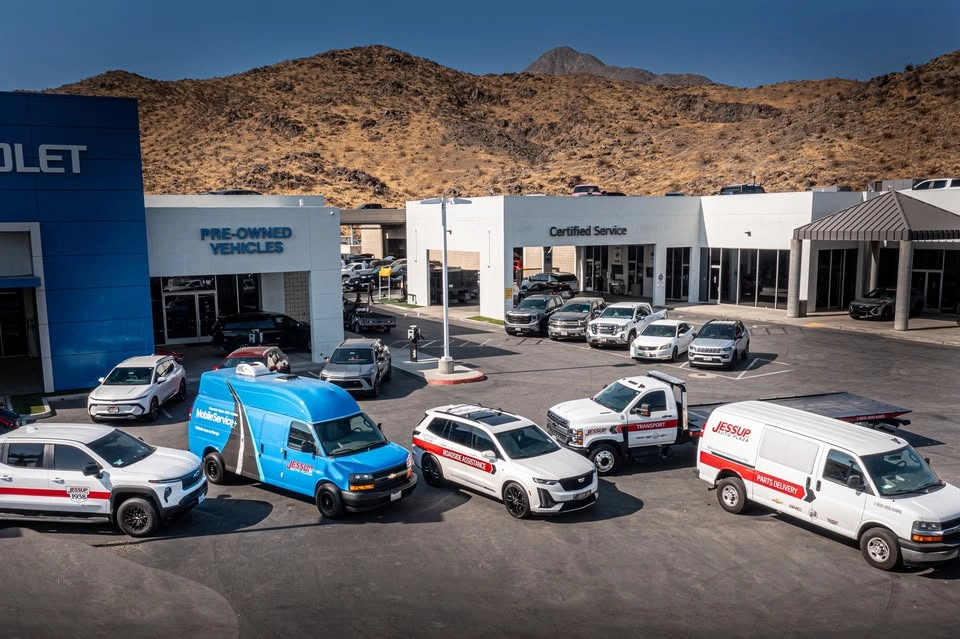
A fast-moving U.S. government tariff landscape is reshaping what Greater Palm Springs residents pay for cars, how automakers plan production, and how neighborhood dealers manage their lots. To ground the national story locally, we asked Dan Jessup, CEO of Jessup Auto Plaza in Cathedral City, to detail how the newly imposed tariffs are playing out across his General Motors store and his Volvo and Infiniti franchises. His take: manufacturers are absorbing some costs now, buyers may be pulling purchases forward, and the back half of the year could get bumpy.
“It’s a noisy time in our industry. We hoped for some settling after COVID, getting back to regular business practices, and then the elections turned the EV transition into a political football,” said Jessup.
Manufacturers are absorbing massive tariff hits – for now
Ford Motor paid out more than $800 million in tariffs in this year’s second quarter, despite manufacturing most of its vehicles in the U.S. The tariff bill came from parts imported from outside the country, as well as from fees on steel and aluminum. The hit helped wipe out the company’s entire net profit, leading to its first quarterly loss since 2023.
General Motors’ second-quarter earnings took a $1.1-billion hit from tariffs. However, the automaker still beat analyst expectations for the period on Tuesday, supported by strong sales of its core gasoline trucks and SUVs. The largest U.S. automaker by sales said it expects the tariff impact to worsen in the third quarter and stuck to a previous estimate that trade headwinds threaten to hit the bottom line by $4 billion to $5 billion this year. GM said it could take steps to mitigate at least 30% of that impact through price increases.

Dan Jessup, CEO, Jessup Auto Plaza
What Greater Palm Springs consumers should expect
At the national level, a 25% U.S. tariff on many imported vehicles and auto parts is already filtering through supply chains. A late-July U.S.–EU framework to step down duties on European cars to 15% is still being implemented, leaving exporters and U.S. retailers to navigate week-to-week uncertainty. For local buyers, that translates to uneven pricing and sporadic availability, especially on import-heavy models.
Locally, Jessup says manufacturers are temporarily cushioning sticker shock, but that can’t last forever: “Manufacturers are eating the tariffs right now to keep factories moving and sales going. They’ll do it as long as they can.”
He adds that valley showrooms may be seeing a “beat-the-increase” effect. “Our sales are up in the first six months, and the only thing we can put our finger on is a rush to buy before price increases, almost like a COVID-era dynamic.”
The national data echo that possibility: analysts expect more of the tariff tab to reach households as the year progresses, which could firm up used-car demand as some shoppers pivot to pre-owned. For local families balancing monthly payments with rising living costs, even small price changes will have an impact.
Domestic vs. import seeing different pressures
Jessup’s portfolio straddles both sides of the tariff line – GM on the domestic side; Volvo (Europe) and Infiniti (Japan) on the import side – offering a real-time A/B test of policy impact.
“My domestic brand has a bit of a leg up in this environment compared with the smaller import brands, but everyone is dealing with the same policy noise,” Jessup said.
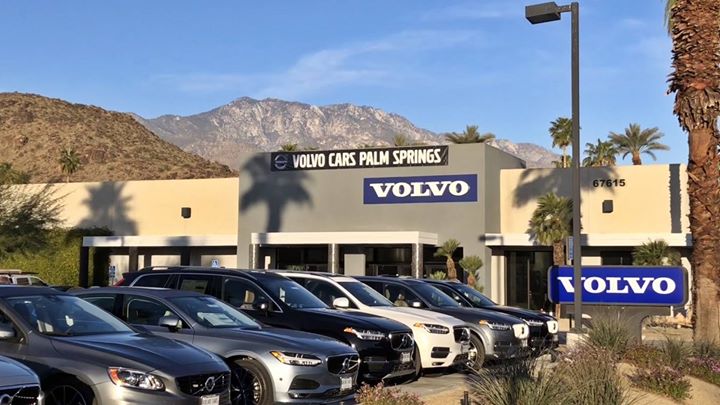
EU tariffs of 15% apply to Volvo cars made in Sweden and Belgium
Even U.S.-assembled vehicles carry significant imported content. Industry research cited in our earlier reporting estimates thousands of dollars in added costs per vehicle once parts tariffs ripple through, a burden that doesn’t vanish just because final assembly is in North America. That’s why valley buyers may see steadier pricing on some domestics but not total insulation.
For European and Japanese nameplates, the squeeze is sharper right now: “I’ve got Volvo (European import) and Infiniti (Japanese import), and those brands are definitely hit harder than my domestic brand. There’s no way they can absorb these tariffs, and they know they can’t pass it all on to the consumer.
“Right now, Volvo and Infiniti are both facing around 15% tariffs. That’s real money on every unit,” Jessup noted.
Model strategies are already shifting: “Infiniti actually announced they’re going to stop building two vehicles, effectively cutting the product lineup in half, because they can’t afford to bring those models in under the tariff,” he added.
Inventory, pricing, and the service lane
Nationally, dealers are preparing for patchier allocations and quicker price updates as the tariff picture evolves. In Greater Palm Springs, Jessup says the practical juggling act is already underway: keep desirable trims in stock, protect customers from whiplash, and manage financing exposure.
“No two buyers are the same. Some do everything online and chase price or a specific color; others buy local because of relationships. Tariffs filter into each of those buying journeys differently,” according to Jessup.
Rising vehicle costs raise floorplan balances, the short-term loans dealers use to carry inventory, while parts tariffs creep into the service department, nudging up the cost of repairs on everything from powertrain components to routine wear items. That matters here at home, where many residents keep vehicles longer and rely on local service centers to stretch value.
Community stakes: jobs and city revenues
Auto retail is a major employer and tax generator for local cities. Franchised new car dealerships in California support more than 138,000 jobs and contribute billions in state and local taxes; a typical store employs around 100 people, and they are known for supporting local charitable causes. In Greater Palm Springs, those impacts show up as paychecks for sales consultants and technicians, sponsorships for youth sports, and sales-tax revenue that funds public safety and parks. When margins tighten or sales dip, communities feel it.
Jessup’s concern is less about a dramatic cliff and more about a slow tightening if tariffs persist:
“The concern is the shoe that drops in the back half of this year: tariffs start hitting prices, the demand we pulled forward dries up, and thus we would see a significant slowdown.”
The policy noise and how locals can navigate it
Implementation details still matter. While a U.S.–EU step-down to 15% was announced, key steps are still being phased in, and “rate-on-the-day” uncertainty can affect what ships and when. For local shoppers, that means expecting uneven timing of price changes and model-by-model differences in availability. For city halls that depend on auto sales tax, it argues for conservative budgeting through year-end.
Jessup’s practical advice to buyers is simple: communicate early with your local dealer about trims, colors, and arrival windows, and be open to comparable configurations if your first choice becomes constrained. For now, he sees manufacturers trying to shield customers, but the industry can’t outrun math:
“For years, the industry shut down internal-combustion engine development to go all-EV because that’s where policy was pushing. Now they’re restarting internal combustion engine programs and flipping plants back, spending huge dollars all over again.”
A founder’s perspective
The Jessup family name has been part of the desert’s auto story for decades. Dan credits his father, Andy Jessup Sr. who now serves as chairman of the board of Jessup Auto Plaza, with providing the clearest read on a murky market:
“As my 93-year-old father, Andy Jessup Sr., says – At this point, it’s impossible to forecast what’s next.”
That uncertainty is precisely why local voices matter. The tariff debate will keep evolving in Washington and overseas. In Greater Palm Springs, car shoppers, dealers, and city leaders will live with the day-to-day effects – one allocation, one purchase order, and one family car at a time.

Bob Marra is the CEO/Publisher of GPS Business Insider. He has been studying, writing and giving presentations about business, economic and public affairs news and issues and the local economy in the Greater Palm Springs/Coachella Valley region for more than 20 years.