A move from Indio to Old Town La Quinta, a leadership transition and a new regional strategy are bringing more visibility to a county team that has worked behind the scenes in the Coachella Valley for years.
For years, some of Riverside County’s most important economic development work in the Coachella Valley has happened without much visibility.
A developer looking at an unfamiliar site might need an introduction to the right city official. A major project could run into a utility or permitting issue its investors hadn’t anticipated. A small business might need help finding capital, navigating government or training workers. A company scouting the region might simply need someone who knows which community, property or public agency makes the most sense for what it wants to build.
Those are the kinds of assignments that have long landed at the Riverside County Office of Economic Development’s Coachella Valley operation.
What changed this spring was not the county’s presence in the region. It was the front door.
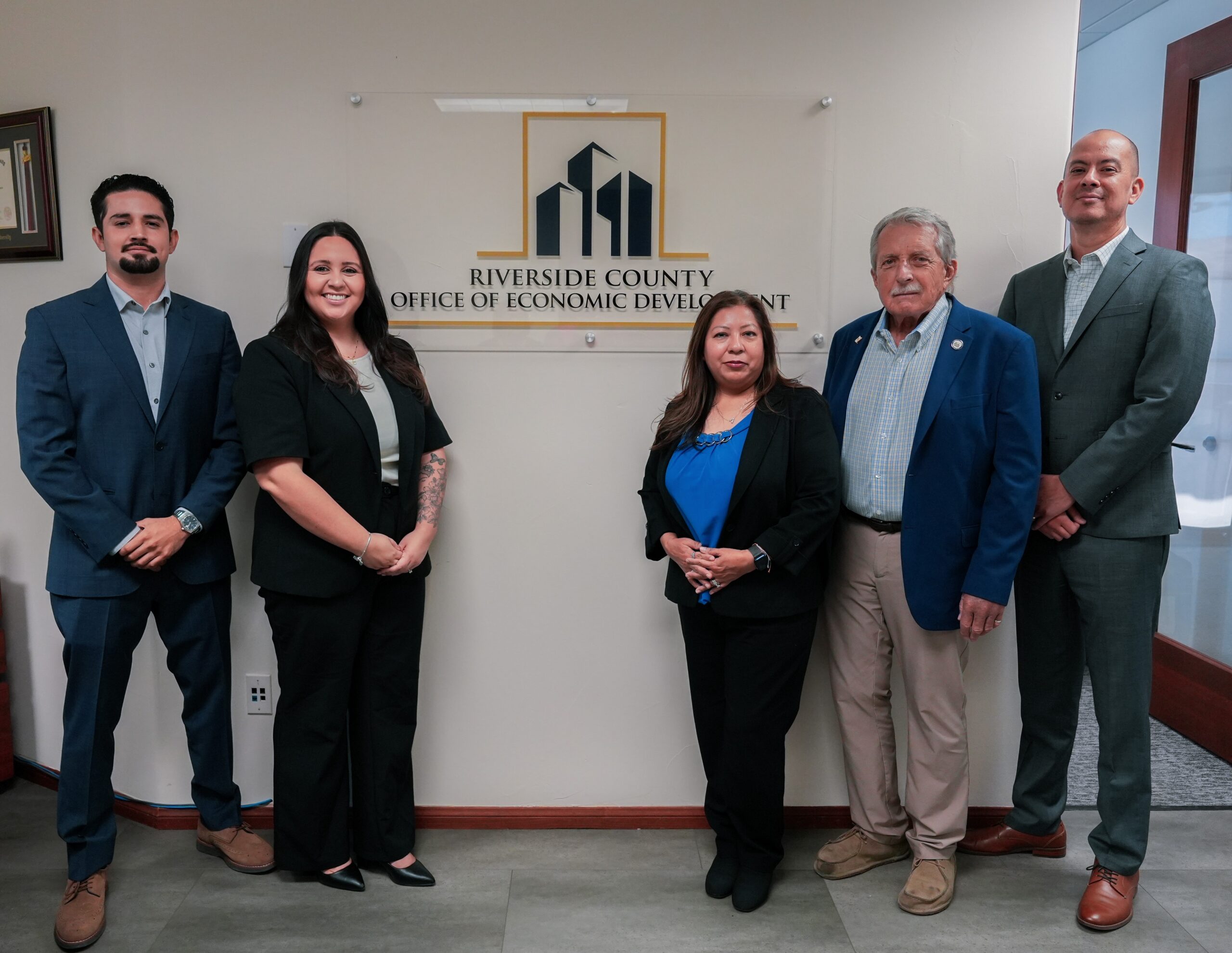
In April, the economic development team moved from its longtime quarters in a county building on Monroe Street in Indio to a new office at 78-100 Main Street, Suite 203, in Old Town La Quinta, where the county now hosts its Coachella Valley economic development operation.
The move sounds routine until you consider the reasons behind it.
The Indio location placed the team within county government, but the new office provides something the previous space could not: a dedicated, publicly accessible setting for meetings with businesses and regional partners.
The idea was less about changing the mission than making it easier for people to find and use the operation that was already there.
It also comes as the Coachella Valley team is undergoing a significant personnel transition.
A Changing of the Guard
Longtime county economic development official Joaquin Tijerina retired after a career that made him a familiar figure to business leaders, city officials, developers and economic development professionals across the region.
Tijerina’s institutional knowledge was considerable. He was involved in Coachella Valley economic development roles going back decades, working on business assistance, project facilitation, entitlements and the Coachella Valley Small Business Development Center.
His departure created the kind of challenge that economic development organizations do not always advertise: much of their value resides in relationships.
Knowing a county department exists is one thing. Knowing whom to call inside it, which city should hear about a prospect, where a project may encounter difficulty, and which private or public-sector partner can help solve a problem is another.
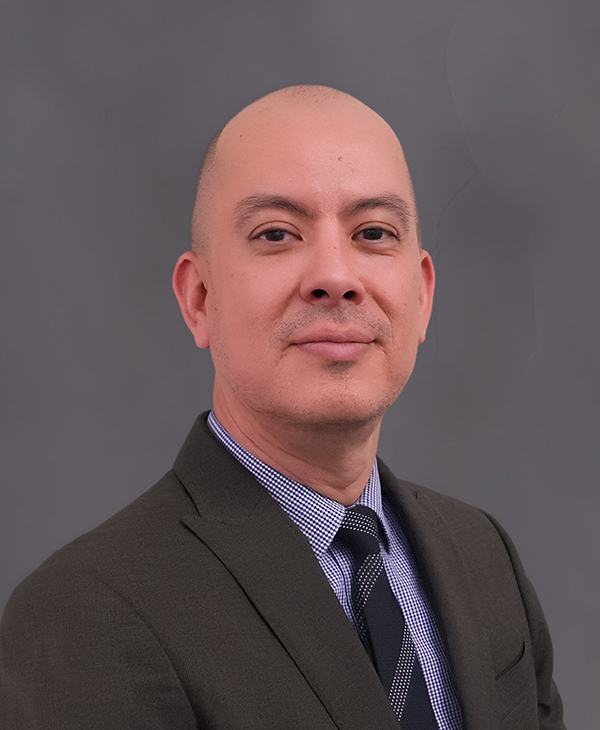
Riverside County Economic Development Manager – Jaime Arroyo.
Jaime Arroyo, Economic Development Manager at Riverside County’s Office of Economic Development, has stepped into that role, bringing a different but highly relevant background.
Arroyo has more than 15 years of experience in grants and program management and has secured approximately $60 million in federal and state funding during his career. Before joining Riverside County, his work included economic, transportation and workforce development projects for public agencies and nonprofit organizations in the Los Angeles area.
More recently, he worked for the City of Coachella as grants manager, giving him something particularly useful for his new assignment: firsthand experience on the city side of the city-county economic development relationship.
That perspective was evident in a recent discussion with the county’s Coachella Valley team.
Arroyo described an operation whose primary economic development responsibility is the county’s unincorporated communities, but whose practical work frequently crosses jurisdictional lines. Developers do not always begin their searches knowing whether the best site is in a city, in unincorporated county territory or even in the part of the Valley they initially had in mind.
The county team can become the connector.
That distinction is important because Riverside County is not trying to replace the economic development departments in Palm Springs, Palm Desert, Indio, Coachella or the Valley’s other cities.
The office’s value proposition is different.
The Business of Reducing Friction
Economic development is often portrayed as recruiting a large employer or cutting a ribbon on a major project. In reality, much of the actual work is considerably less visible.
It can mean explaining a site to an outside investor, identifying a permitting issue before it becomes a larger problem, bringing a utility into a discussion, connecting a company with workforce assistance, identifying financing resources or handing a business prospect to the city where it has the best chance of succeeding.
The county describes its broader economic development division as working with more than 75 economic development partners and offering assistance to companies seeking to start, grow or expand in Riverside County.
In the Coachella Valley, that creates an unusual role.
The venerable Robert (Bob) Wright, Supervising Development Specialist, who has been at the forefront of the county’s economic development team in the Coachella Valley for several years, helping connect people and assisting numerous important projects through the development pipeline, is working with Arroyo to lead a hands-on team that also includes Maria Cruz Lascano, Development Specialist III, Andrea Borunda, Development Specialist II, and Pedro Aceves, Development Specialist II.
Lascano joined the team in 2020 and plays an important role in promoting the Coachella Valley Small Business Development Center (CV SBDC) services and resources available to entrepreneurs and small businesses through a wide range of workshops, mixers, consulting, and meetings. Borunda and Aceves serve as Development Specialists helping businesses navigate resources, funding programs, and operational support designed to help them grow and remain resilient.
This team of professionals directly serves large swaths of unincorporated territory, including communities with significant development potential. But its contacts and market knowledge don’t stop at those boundaries.
If a retailer or manufacturer approaches the county looking for a location and the right answer happens to be inside one of the nine cities, Arroyo said the objective is to make that connection rather than force the prospect into county territory.
In that sense, economic development becomes a form of regional matchmaking.
The county has also expanded the data available to businesses and site selectors. Its RivCoSites property and demographic platform allows investors, brokers and companies to search available land, industrial, office and retail properties while examining workforce, income, housing and other demographic information.
Still, data cannot anticipate every complication. And that is where relationships matter.
Acrisure Arena and the Role of a Facilitator
Few examples are as visible as Acrisure Arena.
The 11,000-seat arena has transformed a patch of unincorporated Riverside County north of Interstate 10 into one of the region’s most recognizable entertainment destinations.
But county economic development officials are careful not to claim credit.
The office did not build the arena, finance it or single-handedly bring it to the Coachella Valley. The project involved Supervisor V. Manuel Perez’s office, the Berger Foundation, Oak View Group and numerous public, private and utility partners.
The economic development team’s role reflected how the office operates: working alongside the project, drawing on local relationships, helping investors understand the area, identifying the people who needed to be involved, and assisting when regional or county issues emerged.
That distinction keeps the office’s role in perspective.
Economic development agencies can easily overstate their contribution to private investment. In practice, their value can be measured by something less glamorous: how effectively they remove avoidable friction from projects that other people are risking capital to develop.
Thermal Ranch Shows the Long Game
The county’s relationship with Thermal Ranch illustrates a different kind of economic development work.
The massive, multifaceted eastern Coachella Valley development project grew out of the success of Desert International Horse Park, which attracts an affluent national and international equestrian clientele to Thermal throughout each winter.
The county team’s relationship with the operation stretches back through earlier ownership and intensified as the horse park encountered permitting and operating challenges during the pandemic.
As the owners developed plans for a much larger equestrian-centered community, county economic development staff continued working with the project and with Perez’s office on issues involving permitting, environmental health and other county functions.
Thermal Ranch received county approval in late 2025 for a development encompassing more than 600 acres, with a major equestrian facility, housing, hotel and commercial components.
The example matters because it illustrates that economic development is not always a recruitment announcement followed by a groundbreaking.
Sometimes it is years of calls, meetings, regulatory questions and incremental problem-solving.
It also demonstrates why the county’s role is especially important in the eastern Valley, where substantial economic activity occurs outside incorporated cities.
Selling the Valley Beyond the Valley
The County’s economic development work also extends beyond responding to individual business inquiries.
Riverside County promotes itself at major business-recruitment events, including the International Council of Shopping Centers (ICSC), SelectUSA, semiconductor-industry conferences, and more.
At ICSC Las Vegas, one of the commercial real estate industry’s largest gatherings, the county operates a sizable pavilion alongside municipal partners. For the 2026 event, 11 Riverside County cities participated with the county.
The approach is revealing, as the county is marketing Riverside County, not merely its unincorporated acreage.
The Coachella Valley pitch includes the transportation benefits of Interstate 10, access to Southern California ports and airports, available land, a growing population and development costs that can compare favorably with coastal Southern California.
There are also constraints.
Utility capacity is increasingly important to large industrial and technology projects. Water, energy infrastructure and long entitlement timelines can complicate development. Some Valley communities have ample land but not necessarily the infrastructure needed to support every proposed use.
County officials acknowledge those issues rather than treating the region as frictionless.
That realism matters as Riverside County seeks industries that would broaden an economy still heavily influenced by tourism, hospitality, agriculture, health care and construction.
A Strategy Beyond Individual Projects
The county’s newest economic development strategy provides the larger framework.
Riverside County’s 2026-2030 Economic Development Strategic Plan is a five-year roadmap covering business attraction and retention, entrepreneurship, investment, workforce and industry development. A separate Coachella Valley regional strategy adapts those goals to the desert economy.
Its ambitions extend well beyond developing and filling shopping centers.
The Coachella Valley strategy identifies opportunities in advanced manufacturing, health and biotechnology, creative industries, climate-resilience technologies and other sectors capable of creating a broader employment base.
For Arroyo and the local team, implementation may be as important as the plan itself.
The county has begun talking with cities about how to apply portions of the strategy locally. That is necessarily a city-by-city exercise. What makes sense in industrially oriented Coachella or Desert Hot Springs may have little relevance to Indian Wells. Palm Springs has different assets from Thermal, and Palm Desert has different development patterns from Mecca.
The practical test will be whether the strategy produces projects, investment and jobs rather than remaining a planning document.
From Workforce to Film Locations
The breadth of the office can be difficult to convey because economic development programs touch numerous parts of the economy.
Businesses can be connected to workforce-development programs, lenders and technical assistance. The office supports small-business development and entrepreneurship. Its Riverside County Film Commission works with productions on filming and locations. County staff participate in Innovation Month and business-pitch programs and maintain relationships with organizations serving the Valley’s agricultural sector.
The Coachella Valley Small Business Development Center (SBDC) is another major part of the operation and now shares the improved La Quinta office environment.
County officials want cities to use the SBDC more aggressively, particularly because smaller economic development departments cannot provide intensive one-on-one assistance to every entrepreneur or existing business that needs help.
That program warrants its own story, which we will publish in October.
Creating the Room, Literally and Figuratively
The county has also built a convening role through the Coachella Valley Business Conference and Economic Forecast.
Spearheaded by Bob Wright, the event began in 2017 with about 250 participants. Attendance eventually grew to roughly 700, according to county officials, bringing business executives, public officials, economists and economic development professionals into the same room. It has become a can’t-miss event for those involved in the local economy.
That role helps explain why something as mundane as a conference room at the new La Quinta office matters.
Economic development is built around transactions, but also around conversations.
A company considering a site may need to sit down with planners, utilities and local officials. An entrepreneur may need to meet an adviser. A city may need to bring the county into a business-retention discussion. A developer unfamiliar with the Valley may need several people around one table before deciding whether to pursue a project.
The old Indio office allowed the county to do the work.
The Old Town La Quinta office is designed to make that work easier and more visible to the business community.

Bob Marra is the CEO/Publisher of GPS Business Insider and GPS Market Intel. He has been studying, writing and giving presentations about business, economic and public affairs news and issues and the local economy in the Greater Palm Springs/Coachella Valley region for more than 20 years.