To understand why a Coachella Valley resident misses a medical appointment, it may not be enough to ask whether that person has insurance.
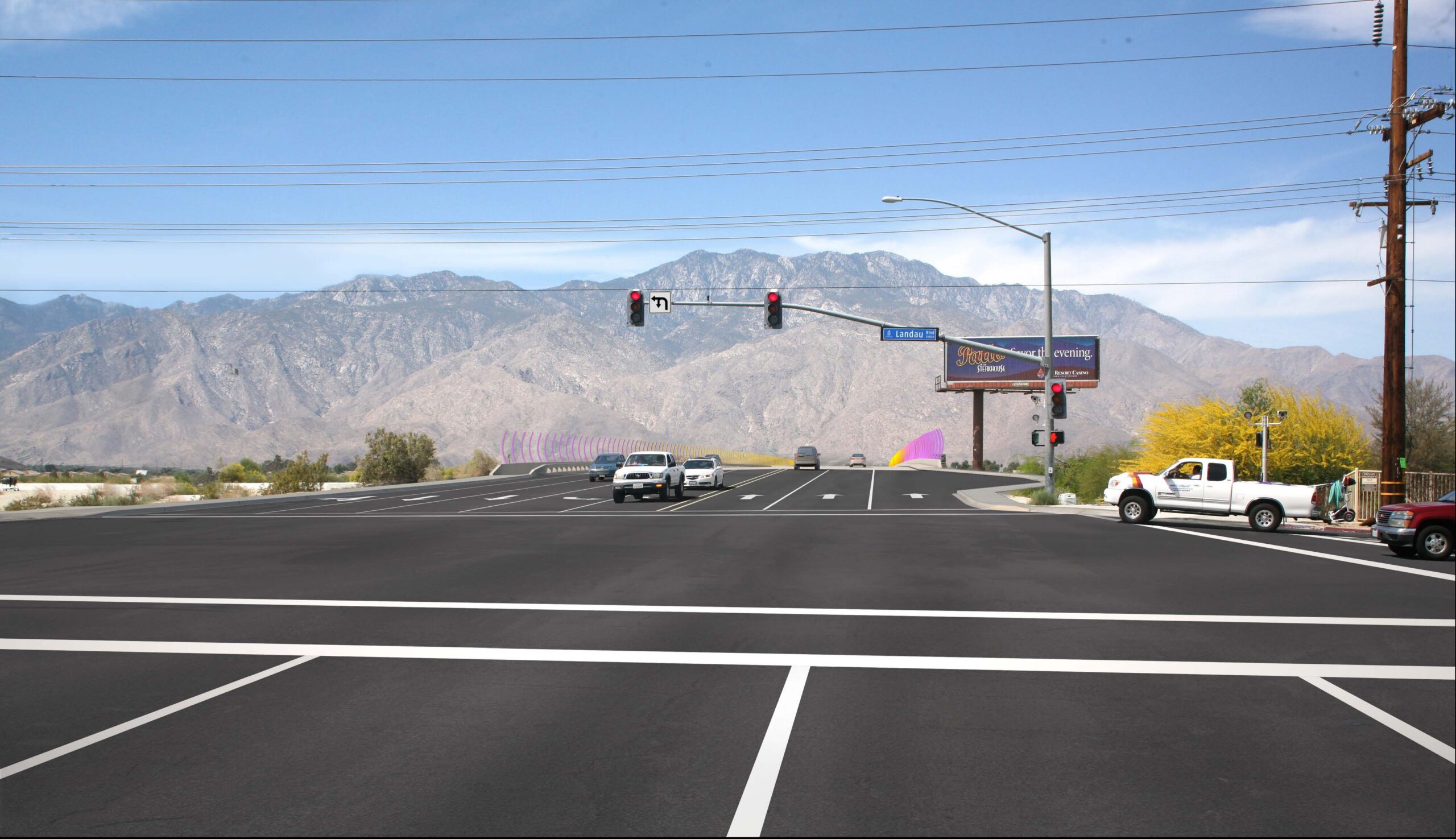
The answer may be a bus route that does not reach the clinic, a long trip in extreme heat, an unaffordable rent increase, a shortage of doctors, or a child in distress whose family cannot find timely mental health care.
That broader view of health will be at the center of the Desert Healthcare District & Foundation’s third annual Healthy Desert, Healthy You Summit, a free, one-day gathering scheduled for Sept. 10 at Omni Rancho Las Palmas Resort & Spa in Rancho Mirage.
More than 350 residents, healthcare professionals, nonprofit leaders, educators, public officials and other stakeholders are expected to attend. The program will feature more than 40 speakers and focus on four issues that increasingly shape the valley’s health and economic future: healthcare access, behavioral health, workforce development and housing.
The shift is significant. The first two summits concentrated largely on environmental health, including air quality, water quality and land use. Those concerns remain part of the District’s work, but this year’s event moves more directly into the conditions that determine whether residents can obtain care, maintain stability and build healthy lives.
District Board President Kimberly Barraza said the region’s most pressing challenges “extend beyond traditional healthcare and environmental concerns.”
The summit’s premise is that health is not produced only in hospitals and doctors’ offices. It is also influenced by where people live, whether they can afford to remain there, the jobs available to them, the strength of the local healthcare workforce and whether services can be reached when they are needed.
A broader definition of health
The agenda reflects problems that are familiar across the valley but often handled by separate institutions.
A District-commissioned healthcare assessment released in 2023 estimated that the Coachella Valley had a shortage of 236 physicians, with the largest gaps in primary care fields such as internal medicine, pediatrics, obstetrics and gynecology. The report also identified communities where transportation barriers, housing insecurity and the risk of being uninsured overlap.
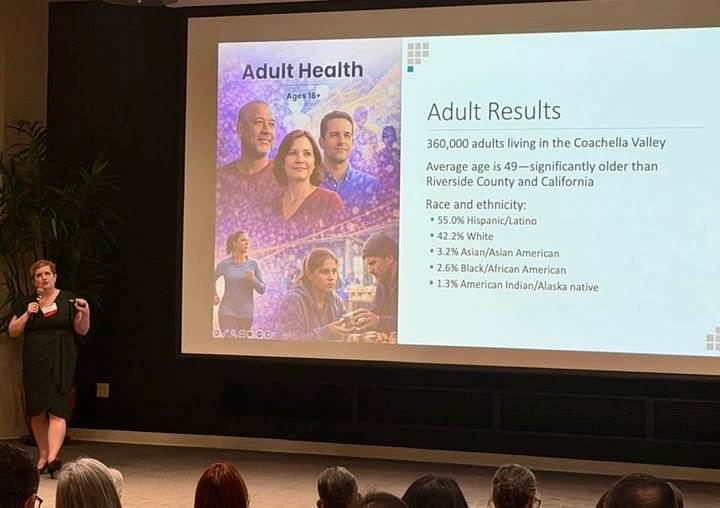
The District’s newly adopted strategic report describes “a region of nearly 450,000 people with sharp differences in income, age, healthcare infrastructure and access to resources.” It says about 28 percent of adults live at or below the poverty line, while eastern and western valley communities often have younger, lower-income populations and less healthcare infrastructure relative to need.
Those differences help explain why a summit about health includes panels on homelessness prevention, career pathways and transportation.
A resident who cannot reliably reach a clinic does not have meaningful access to that clinic. A family facing eviction may postpone preventive care. A healthcare provider struggling to recruit nurses, physicians or behavioral health professionals may have facilities but not enough people to deliver timely services. A worker without economic stability may be less able to manage chronic illness or take time away from work for an appointment.
The summit is designed to put those connections in the same room.
A regional agenda built around practical barriers
The day will open with breakfast and registration at 7:30 a.m., followed by the formal program from 8:30 a.m. to 3:30 p.m. Attendees will choose among concurrent panel discussions organized around the four major themes.
Morning sessions will examine how housing and healthcare systems can work together, how transportation barriers prevent residents from receiving care, and how the valley can strengthen its healthcare workforce pipeline.
A second group of panels will focus on early intervention for youth mental health, mobile and community-based care, and strategies to prevent homelessness before families reach a crisis.
After lunch, the program will turn to employment and career pathways as drivers of community health, along with community-centered approaches to behavioral health access. Spanish interpretation and American Sign Language support will be available.
The speaker list draws heavily from organizations already working on the region’s pressure points. Participants include representatives from Eisenhower Health, Innercare, SunLine Transit Agency, Martha’s Village & Kitchen, Lift to Rise, Riverside University Health System Behavioral Health, Coachella Valley Behavioral Health, ABC Recovery Center, Riverside County Workforce Development, Visión y Compromiso, the LGBTQ Community Center of the Desert and other local and regional organizations.
That mix is central to the event’s purpose. The valley’s healthcare challenges do not fall within a single jurisdiction or sector. Transportation agencies, employers, schools, cities, hospitals, health plans and community organizations may all encounter different parts of the same resident’s problem.
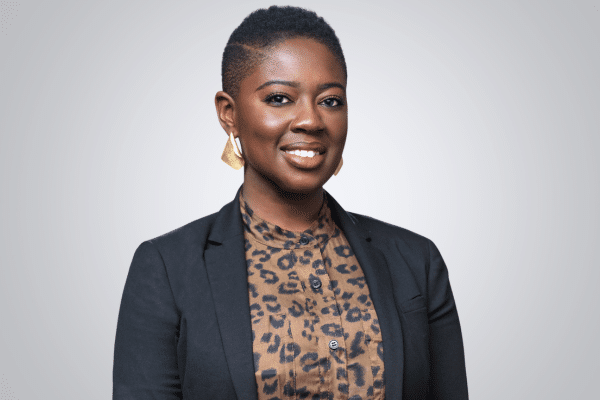
Dr. Angelica Geter
Two speakers, one demand for action
Dr. Angelica Geter, a nationally recognized public health executive and the first chief health officer for the City of Atlanta, will deliver the keynote address. Geter also co-led development of the Desert Healthcare District’s new five-year regional health strategy, giving her address a direct connection to the agency’s next phase.
The closing “call to action” address will be delivered by Dr. Takashi Wada, vice president of population health and CalAIM at Inland Empire Health Plan. Wada previously served as IEHP’s chief medical officer and has held leadership roles in county public health and mental health systems.
His role is intended to address a common weakness of conferences: participants may leave informed and inspired but uncertain about what comes next.
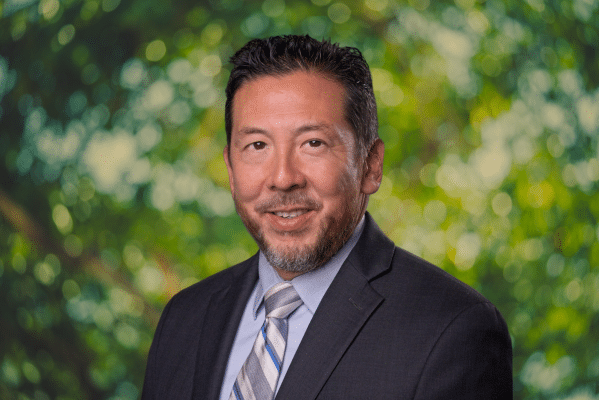
Dr. Takahashi Wada
That question matters more this year because the summit coincides with a major transition for the Desert Healthcare District.
A public test for the District’s larger role
In May, the District’s board adopted a 2027-2031 strategic plan that calls for the agency to evolve from primarily a grantmaker into what it describes as a “Health System Amplifier.”
The concept is straightforward but ambitious. Rather than only funding individual organizations, the District intends to use its money, data and convening power to connect providers, align programs, identify gaps and help the valley’s health system operate more cohesively.
The plan prioritizes healthcare workforce development, access to primary, specialty and behavioral care, housing stability, economic opportunity, environmental resilience and stronger use of regional health data.
The District also expects to receive nearly $650 million over 30 years under the new lease-purchase agreement for Desert Regional Medical Center, including an initial $100 million investment beginning in May 2027. That influx gives the agency an opportunity to support solutions on a scale that previously was not possible, but it also raises expectations for transparency and measurable results.
In that context, the summit is more than an annual educational event. It is an early public demonstration of the District’s proposed role as the organization that can bring otherwise separate institutions together around shared health outcomes.
The challenge will be turning conversation into durable collaboration.
What happens after the summit
The most consequential discussions may be those that identify where systems fail to connect.
Can health plans and transportation providers create more reliable routes to care? Can schools and behavioral health organizations intervene before a young person reaches a crisis? Can hospitals, colleges and workforce agencies build local training pipelines that lead residents into healthcare careers? Can housing organizations and medical providers share information and coordinate services without forcing vulnerable residents to navigate multiple disconnected systems?
Those questions are larger than a single day, and no summit can solve them by itself.
But the Healthy Desert, Healthy You Summit arrives at a moment when the District has adopted a broader definition of health, committed itself to a more assertive regional role and is preparing to manage an unprecedented level of public resources.
Its value will ultimately be measured not by how many people attend, but by whether the relationships and ideas developed in Rancho Mirage lead to new partnerships, targeted investments and visible improvements in the lives of Coachella Valley residents.
The summit is free to attend, and advance registration is available through the Healthy Desert, Healthy You website. Complimentary self-parking will be available at Omni Rancho Las Palmas.