Imperial Irrigation District (IID) has adopted a new two-year strategic plan that reads as both a roadmap and a warning for the desert region it helps power and sustain.
The 2026-2027 plan outlines 17 strategic initiatives tied to infrastructure, water policy, electric reliability, cybersecurity, finances and workforce development. On its face, it is an internal planning document. But for the Coachella Valley, it is also a revealing statement about where one of the region’s most important public agencies sees the greatest risks ahead.
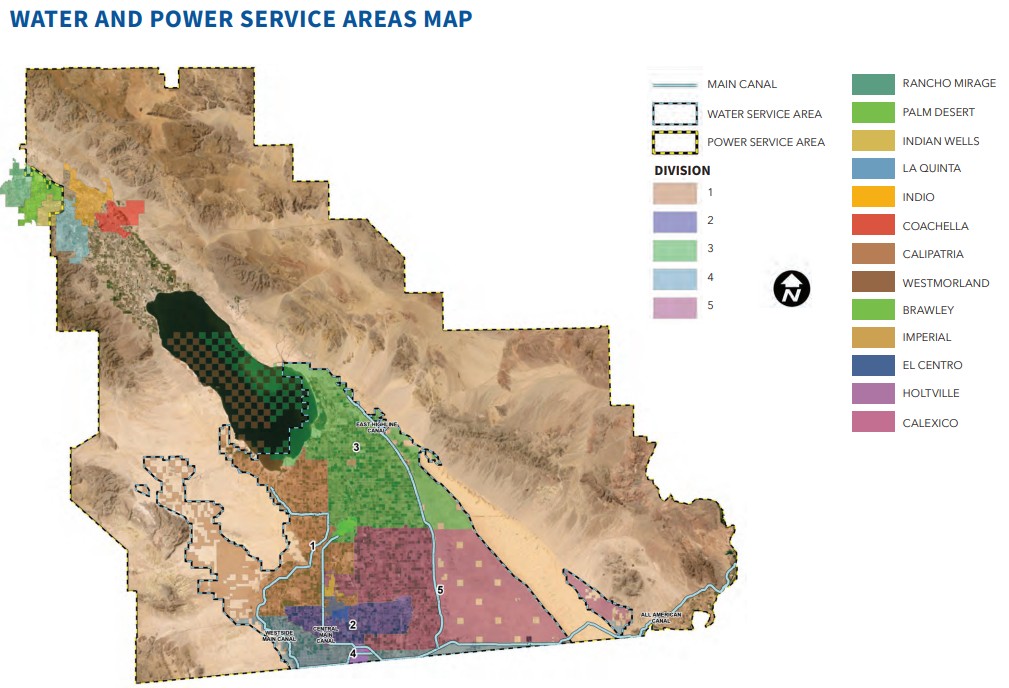
IID’s water and power service areas map
Those risks are not hard to identify. They include aging infrastructure, mounting electricity demand, uncertainty around the Colorado River, environmental pressures surrounding the Salton Sea, and the growing challenge of building utility systems fast enough to keep pace with desert development.
For local governments, developers, business leaders and residents, the document matters because it reaches well beyond IID’s internal operations. It touches the infrastructure backbone that will influence housing production, commercial growth, public investment and the valley’s broader economic competitiveness.
IID framed the plan as a blueprint for reliability, resilience and modernization. Yet it also reflects an agency facing intensifying pressure on multiple fronts. The district must strengthen its grid, defend its water interests, modernize its systems, improve coordination with outside agencies and do it all while maintaining public confidence and protecting ratepayers.
That challenge is particularly acute in the eastern Coachella Valley, where questions about power capacity, governance and regional planning have become central economic development issues.
The plan is organized around seven broad priorities: reliable assets, financial resilience, efficient water management, reliable and cost-effective power, stronger federal and regional partnerships, secure digital systems and a more resilient workforce. Strategic plans are often written in broad language, but several parts of this one stand out as especially important for the valley.
One of the most notable is IID’s explicit emphasis on collaboration with Coachella Valley agencies. The plan says the district will pursue coordinated service planning and long-term service and governance agreements with valley agencies to ensure reliable power service while protecting district ratepayers’ interests.
That language arrives at a sensitive time.
Local leaders in the eastern Coachella Valley have been increasingly vocal about the need for better planning, more infrastructure investment and stronger local influence over decisions that affect growth. Concerns about electric system capacity have become tied directly to whether housing, commercial and civic projects can move ahead without delay. The creation of the Coachella Valley Power Agency last year underscored the depth of that concern and the desire among local governments for a more formal role in future energy planning.
IID’s new plan does not settle those tensions. But it does suggest that the district understands the issue cannot be managed through business as usual. It signals that a more structured relationship with Coachella Valley agencies is becoming necessary as demand rises and the cost of delay grows.
That matters because the valley’s energy story is no longer merely a utility issue. It is a land-use issue, a housing issue, and a business climate issue.

Power substations like the one pictured above typcially cost in the tens of millions of dollars.
In practical terms, the plan calls for new and upgraded transmission lines, substations and generation assets to support load growth, improve resilience and withstand increasingly severe weather. It also points to the need for better real estate coordination, permitting support and interagency planning to help move projects faster. That is a recognition that the barriers are not only technical. They are also governmental, financial and logistical.
IID’s long-range power outlook adds urgency. The district expects electricity demand to grow over the next five years as electric vehicles, fleet electrification and data center activity place added pressure on the system. Over a longer time horizon, it anticipates a grid shaped by deeper electrification, tougher zero-carbon mandates and more extreme climate conditions.
For the Coachella Valley, that is not abstract. This is a fast-growing region where future residential projects, hospitality investments, industrial uses and public facilities will all depend on having enough power capacity in the right places at the right time. If the infrastructure lags, growth lags with it.
Water is the other major pillar of the plan, and just as consequential.
IID controls the largest single entitlement to Colorado River water in California, which makes it one of the most influential agencies in the state’s water politics. The strategic plan makes clear that the district intends to remain aggressive in defending its senior water rights, shaping post-2026 Colorado River negotiations and coordinating with state, federal and regional partners on environmental and policy issues.
That posture comes as the Southwest moves toward a new operating framework for the Colorado River after the current guidelines expire. The stakes are enormous, and IID has consistently argued that any new framework must respect longstanding legal priorities and cannot ignore the economic and environmental consequences for the Imperial and Coachella valleys.
The district has also emphasized its conservation role. For years, IID has pointed to its water transfer, system conservation and deficit irrigation efforts as proof that it has already contributed substantially to stabilizing the river system. The new plan builds on that narrative, highlighting continued conservation efforts while also making clear that local impacts must remain part of the equation.
That is especially true at the Salton Sea, where declining inflows and exposed playa continue to create environmental and public health concerns. IID’s strategic plan links future water strategy to those impacts, reinforcing the district’s argument that Colorado River management cannot be separated from local realities on the ground.
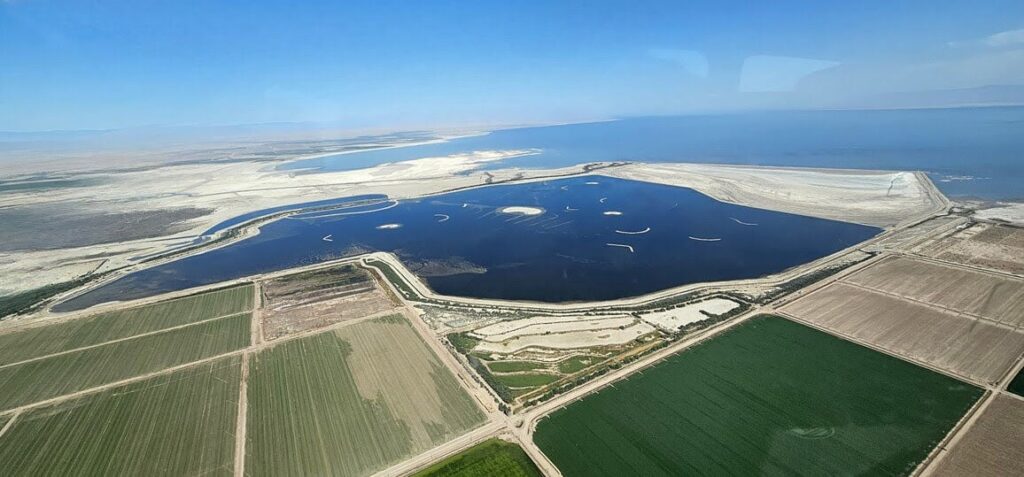
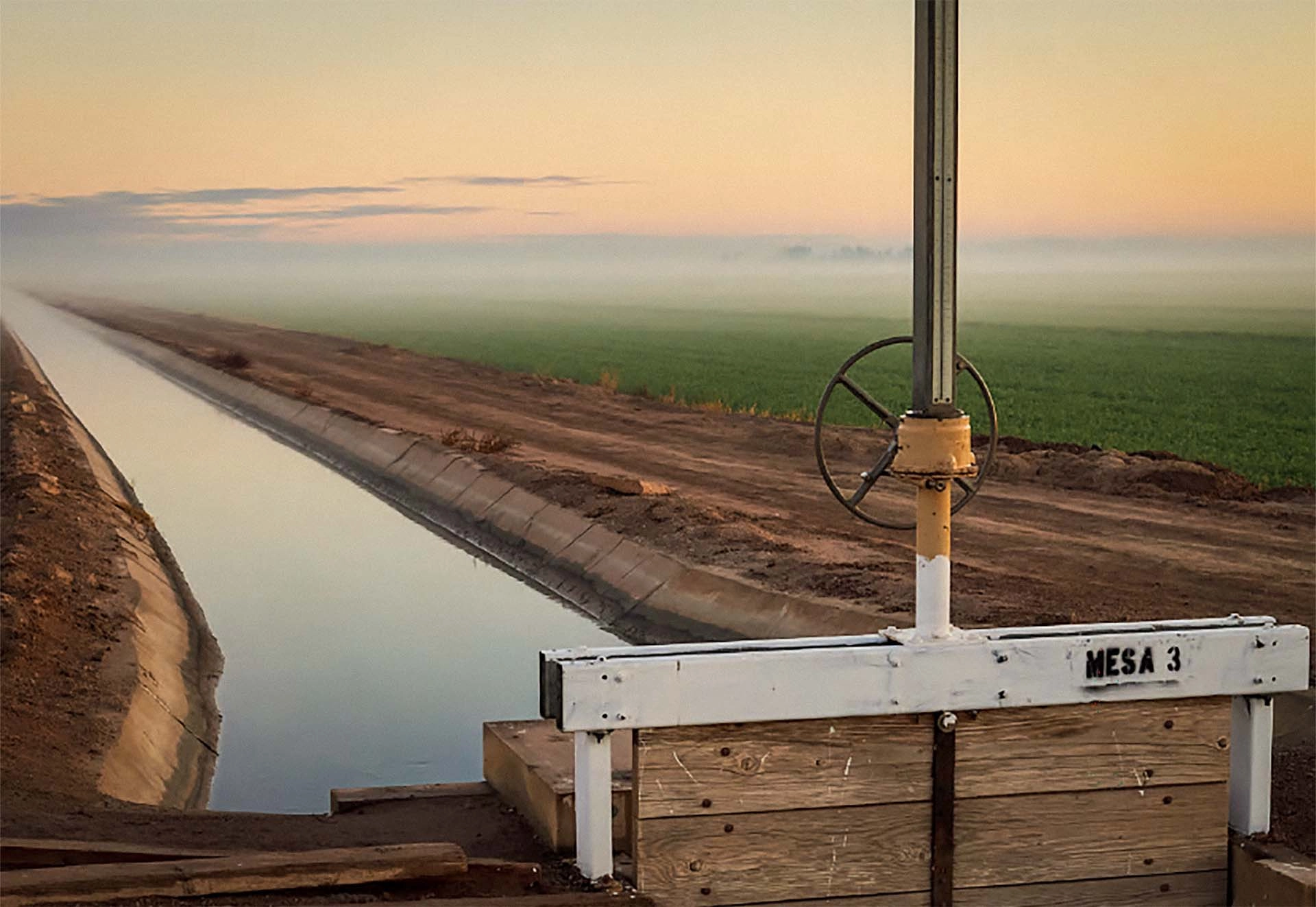
A dependable supply of Colorado River water is critical to the future of the Salton Sea and the surrounding agriculture industry.
In effect, the plan tries to balance two competing obligations. It presents IID as a key regional actor helping address the West’s water crisis, while also casting the district as a defender of local agriculture, community interests and environmental mitigation commitments closer to home.
There is another important theme running through the plan, and it is less dramatic but no less consequential: institutional modernization.
Much of the document focuses on the internal systems needed to carry out large, complex responsibilities. It calls for tighter asset management, more disciplined capital planning, facility modernization, stronger reserve policies, improved credit strength, faster hiring, better succession planning, digital upgrades and more robust cybersecurity.
That may sound like bureaucratic housekeeping, but for a large public utility those issues are foundational. A district cannot reliably deliver power, manage water, negotiate with federal agencies and build new infrastructure if its internal systems are outdated, understaffed or vulnerable to disruption.
IID’s plan speaks directly to those concerns. It envisions aligning budgets, capital priorities and rate setting more closely. It calls for upgrades to enterprise technology platforms, expanded cloud capabilities and stronger cybersecurity protections. It also seeks to reduce time-to-hire and improve retention in difficult-to-fill positions.
For the business community, these details matter because they help determine whether major infrastructure promises translate into real-world execution. A utility’s effectiveness is shaped not only by its engineering plans, but by its finances, staffing, procurement capacity and institutional discipline.
That is why the document feels significant. It is not simply a catalogue of ambitions. It is a reminder of how much the desert’s future depends on systems that are often overlooked until they become strained.
IID is effectively acknowledging that the next phase of desert growth will be defined not just by market demand or civic vision, but by whether the underlying power and water systems can keep up. The district must strengthen the grid. It must navigate Colorado River politics. It must modernize its operations. And it must find a more workable path with Coachella Valley governments at a time when patience is limited and the stakes are rising.
Strategic plans do not solve problems on their own. They can, however, reveal what an institution believes it must confront. In that respect, IID’s new plan is instructive.
For Greater Palm Springs and the eastern Coachella Valley, it signals that the decisive issues ahead are not theoretical. They are concrete, expensive and deeply consequential: substations, transmission lines, water rights, environmental obligations, governance relationships and the pace of execution.
The future of growth in the desert will depend, in no small part, on wires, water and who gets to plan and manage them.

Bob Marra is the CEO/Publisher of GPS Business Insider. He has been studying, writing and giving presentations about business, economic and public affairs news and issues and the local economy in the Greater Palm Springs/Coachella Valley region for more than 20 years.