As Culver City moves toward blocking new drive-through restaurants after a proposed In-N-Out triggered a neighborhood revolt, Palm Desert’s half-century experiment offers a revealing case study in community character, traffic, convenience and the economics of fast food.
Palm Desert’s founders could hardly have anticipated mobile ordering, dual-lane pickup systems or the extraordinary lines that can form when a popular fast-food restaurant opens in a new market.
But when Palm Desert incorporated in 1973, the city made a land-use decision that remains strikingly relevant more than five decades later: Drive-through restaurants would not be permitted.
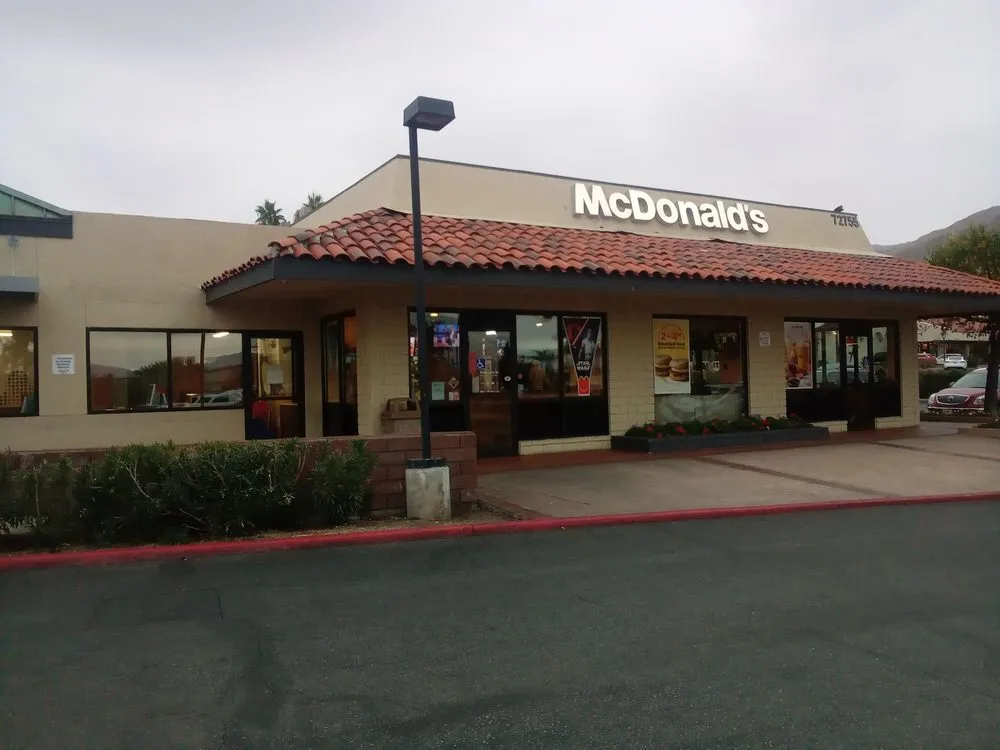
The prohibition has been reconsidered, relaxed around the edges and challenged by developers, residents and elected officials. Yet its central premise remains intact. Across most of Palm Desert, particularly along Highway 111 and within the city’s commercial core, new restaurants cannot be built around a window serving customers who remain in their cars.
Now, a dispute more than 100 miles away has made Palm Desert’s experience newly instructive.
Culver City officials recently extended a moratorium on new drive-through businesses after residents mobilized against a proposed In-N-Out Burger. The planned restaurant would include indoor and outdoor seating, 61 parking spaces and a drive-through system capable of holding approximately 26 vehicles.
Residents raised concerns about congestion, air pollution, pedestrian safety, noise and the effects of another heavily traveled automobile-oriented business near established neighborhoods. In July, the Culver City Council extended its initial 45-day moratorium for another 10 months and 15 days while the city considers a permanent policy.
The controversy has attracted statewide and national attention. In Palm Desert, however, the larger question has been debated for generations.
A prohibition almost as old as the city
Palm Desert’s drive-through policy is frequently described as a ban, although the current rules are more accurately understood as a geographic compromise.
City records show that drive-through restaurants were prohibited when Palm Desert incorporated. The precise record explaining the original decision is not especially extensive, but the policy has long been associated with concerns about litter, traffic and the visual effects of fast-food development.
Early city leaders worried that wrappers, cups and other waste generated by customers eating in their vehicles would find their way into streets and landscaped areas. Drive-through restaurants also conflicted with the image Palm Desert was attempting to establish as an attractive, carefully planned retail and resort community.
That image mattered.
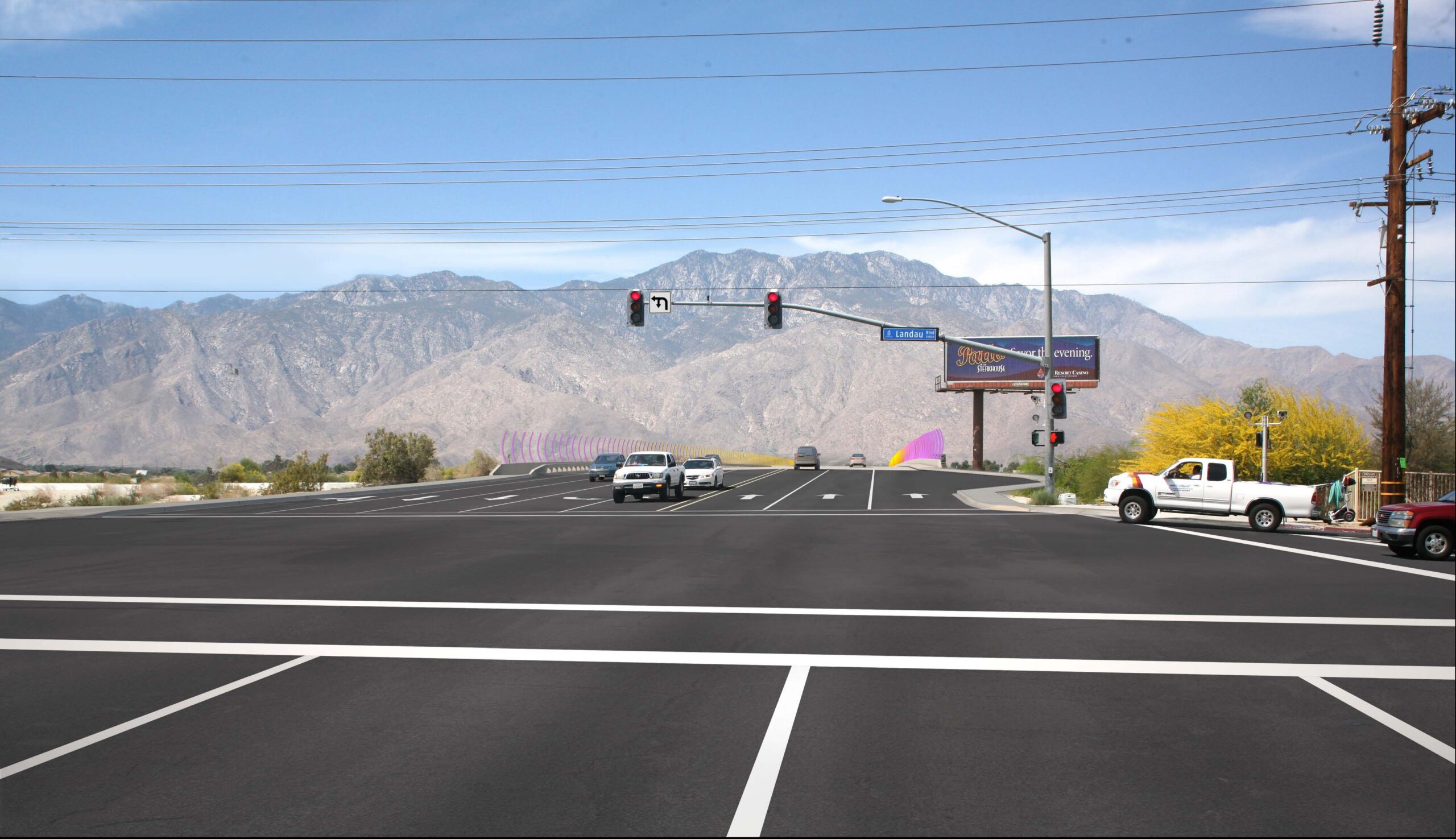
Highway 111 was not simply another commercial road. It was the city’s principal business corridor, connecting shopping centers, restaurants, hotels, civic institutions and El Paseo. Allowing a succession of drive-through lanes, menu boards, speaker boxes and automobile queues could have altered the appearance and development pattern of the corridor.
The city maintained the broad prohibition for more than two decades. But by the mid-1990s, commercial development was advancing north toward Interstate 10, creating a different planning environment.
In July 1996, the City Council directed staff to consider treating areas around the freeway interchanges differently from the rest of Palm Desert. Officials wanted the city to compete more effectively with other Coachella Valley communities along Interstate 10 and recognized that freeway travelers expected automobile-oriented services.
The result was Ordinance No. 827, approved in March 1997. It established a special overlay zone around freeway interchanges where uses appropriate to a highway setting could be considered, including drive-through restaurants, gas stations, convenience stores, car washes and recreational vehicle services.
Palm Desert had not abandoned its original policy. It had divided the city into two different commercial environments.
Near Interstate 10, convenience and freeway access would receive greater consideration. Along Highway 111 and in the established commercial core, design and community character would remain dominant.
The debate returns
The issue resurfaced in 2013, when then-Councilmember Bob Spiegel asked the city to examine eliminating the broader prohibition.
The resulting staff report presented several options. Palm Desert could permit drive-through restaurants citywide, allow them in additional defined areas or leave the zoning ordinance unchanged.
City planners warned that a citywide change would require substantial analysis. The economic development potential of drive-through restaurants would have to be weighed against traffic engineering, aesthetics and the development standards for which Palm Desert had become known.
The proposal did not produce a broad change.
Eight years later, the issue returned with greater urgency.
In 2021, developers and some residents urged the city to allow drive-through restaurants in selected regional shopping centers along Highway 111 and Fred Waring Drive. The proposed rules would have required conditional-use approval and extensive screening intended to conceal drive-through lanes and vehicle queues from major streets.
One potential beneficiary was the Palm to Pines Shopping Center, where developer Wood Investments was considering a Raising Cane’s restaurant at the site of a closed bank building. The developer argued that a popular drive-through tenant could generate traffic and help reinvigorate the center.
The proposal also arrived after the coronavirus pandemic had dramatically increased consumer reliance on drive-through service, curbside pickup and restaurant takeout.
Supporters saw the restrictions as outdated. Councilmember Gina Nestande argued that residents should have more options.
“We need to give our residents a choice,” she said during the debate.
Opponents saw something larger at risk.
Independent restaurant owners warned that national fast-food companies could draw business away from locally owned establishments. City officials also worried that existing fast-food franchises operating without drive-through lanes might relocate, leaving behind restaurant buildings that could be difficult to reuse.
Environmental and planning concerns remained central. Even if the facilities were hidden behind landscaping, opponents argued, the vehicles, queues and emissions would still exist.
The City Council rejected the proposed expansion in a 3-2 vote. Kathleen Kelly, Jan Harnik and Sabby Jonathan voted to preserve the restrictions. Nestande and Karina Moreno supported modifying them.
“There is no shortage of drive-thrus in Palm Desert and the Coachella Valley,” Harnik said at the time.
Where drive-throughs are allowed
Palm Desert’s current zoning code continues the geographic distinction created in the 1990s.
Drive-through and drive-in restaurants may be considered through a conditional-use permit within the Freeway Commercial Overlay District and along designated northern portions of Monterey Avenue and Portola Avenue, extending from the city’s northern boundary to the north side of Gerald Ford Drive.
The code requires drive-through windows, lanes and vehicle queues to be screened or positioned so they are not readily visible from surrounding public streets.
The policy is also consistent with Palm Desert’s broader planning documents.
The city’s General Plan contemplates automobile-oriented uses in places that are clearly designed around vehicles, provided they do not disrupt pedestrian movement or overwhelm the streetscape. Within the City Center, however, the plan calls for drive-through windows to be prohibited while encouraging compact development, active street frontages and greater pedestrian activity.
In effect, Palm Desert has created a planning boundary between the freeway commercial economy and the civic and retail heart of the city.
Did the policy accomplish its purpose?
On its most visible objective, the answer appears to be yes.
Palm Desert’s central commercial corridors did not become lined with newly constructed drive-through lanes, freestanding fast-food pads and automobile queues. The policy helped preserve a different visual identity along Highway 111 and around El Paseo than exists in many suburban commercial districts.
That does not mean the prohibition made Palm Desert pedestrian oriented.
Highway 111 remains a wide arterial road. Many shopping centers are surrounded by large parking lots, and most residents and visitors continue to rely heavily on automobiles. A prohibition on drive-through windows, by itself, cannot transform a desert city into a walkable urban center.
But the policy prevented the city from introducing an additional form of automobile-oriented development into areas where officials wanted buildings, landscaping and commercial architecture to receive greater prominence.
The effect on traffic is more complicated.
A drive-through prohibition can prevent long restaurant queues from spilling into shopping-center drive aisles or surrounding streets. It can reduce conflicts among vehicles, pedestrians and cyclists at individual sites.
It does not eliminate demand.
Customers who prefer drive-through service may travel to northern Palm Desert, neighboring cities or other locations in the Coachella Valley. One resident told the city during the 2013 debate that she frequently purchased food elsewhere because drive-through service was more convenient when traveling with a dog during hot weather.
The policy may therefore reduce traffic at one property while adding distance to some customers’ trips.
The environmental outcome is similarly difficult to isolate. Idling vehicles create emissions, but the effect depends on the number and types of vehicles, the length of the queue and whether customers would otherwise make a longer trip. Electric and hybrid vehicles have also changed the emissions calculation since Palm Desert adopted its original policy.
The land-use effect is clearer. A drive-through requires substantial space for circulation and stacking that cannot be used for buildings, patios, landscaping or other activity. It also introduces additional points of conflict between vehicles and people walking through a commercial property.
The economic tradeoff
For restaurant operators, the business case for drive-through service is powerful.
The format was expanding well before the pandemic, which made low-contact pickup essential for many restaurants. Drive-through lanes are now a core component of the operating model for numerous fast-food and fast-casual brands.
A restaurant without one may generate fewer transactions, particularly during breakfast, lunch and commuting periods. Some chains may refuse to consider a site that cannot accommodate drive-through service.
Carlsbad, another California city with a long-standing prohibition, reconsidered its policy after an economic analysis found that restaurants with drive-throughs generated an average of approximately $30,000 annually in sales tax revenue, compared with $22,000 for restaurants without them.
In 2025, Carlsbad retained its general prohibition but opened the door to case-by-case consideration outside its Village and Barrio districts.
The comparison illustrates the underlying policy choice.
Drive-through restaurants may produce more revenue and make commercial properties easier to lease. They also provide convenience for older residents, people with disabilities, parents traveling with children and customers who may have difficulty leaving a vehicle.
Those considerations carry particular weight in the Coachella Valley, where extreme summer heat can make even a short walk across a parking lot uncomfortable.
But a city does not make land-use decisions solely by calculating the sales tax generated by an individual business. It also considers traffic, architecture, neighboring uses, redevelopment objectives and the cumulative effect of repeating the same development format across an entire corridor.
A policy built on geography
Palm Desert’s experience suggests that the drive-through debate does not have to end with a choice between permitting them everywhere or prohibiting them entirely.
The city’s policy recognizes that a restaurant near Interstate 10 serves a different setting than one along El Paseo, San Pablo Avenue or the central portion of Highway 111.
That distinction may be Palm Desert’s most durable contribution to the broader California debate.

Bob Marra is the CEO/Publisher of GPS Business Insider and GPS Market Intel. He has been studying, writing and giving presentations about business, economic and public affairs news and issues and the local economy in the Greater Palm Springs/Coachella Valley region for more than 20 years.