A newly negotiated agreement with California would allow the Agua Caliente Band of Cahuilla Indians to operate 500 more slot machines, reshape its revenue-sharing obligations and extend its gaming compact by roughly two decades, giving one of the Coachella Valley’s largest employers considerably more room to plan for the future.
A legal agreement negotiated far from the casino floors of Rancho Mirage, Palm Springs and Cathedral City could have significant long-term implications for one of the Coachella Valley’s largest employers and most influential economic institutions.
The Agua Caliente Band of Cahuilla Indians is seeking legislative ratification of a sweeping amendment to its gaming compact with the State of California that would increase the number of slot machines the Tribe is authorized to operate, give it greater flexibility in how its gaming facilities are configured, substantially revise its revenue-sharing formula and extend the agreement for approximately 20 years.
The amendment was executed by the Tribe and Gov. Gavin Newsom’s administration on July 13 and was the subject of legislative informational hearings in Sacramento on August 11.
For the Greater Palm Springs region, the most visible number is 500.
The amendment would raise Agua Caliente’s authorization from 5,000 to 5,500 gaming devices, the legal term that encompasses slot machines and similar electronic games.
But the larger story is not simply the addition of 500 machines.
The agreement creates a longer-term operating framework for a tribal government that already has an unusually large economic footprint in the western Coachella Valley, and it emerges from a fundamental shift in the legal relationship between California and its tribal governments.
It could also give Agua Caliente more flexibility to invest in its three existing casinos, reconfigure them over time or consider other gaming opportunities permitted by the compact, although the amendment itself does not announce a casino expansion or a new casino project.
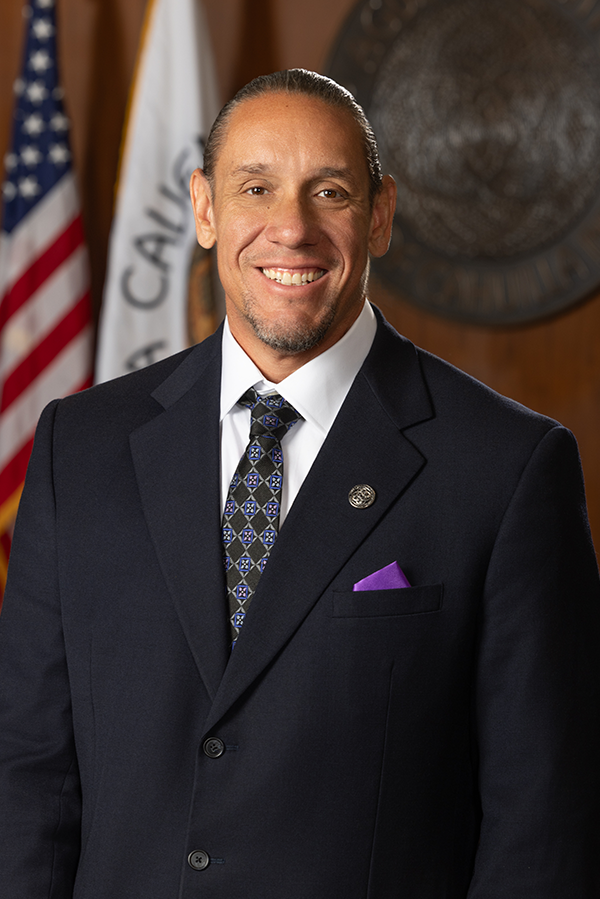
Jeff L. Grubbe, Tribal Chairman of the Agua Caliente Band of Cahuilla Indians
At an Aug. 11 legislative hearing, Agua Caliente Tribal Chairman Jeff Grubbe described the amendment as creating a path for future growth while maintaining the Tribe’s commitment to other California tribes.
The Tribe, he told lawmakers, employs approximately 3,200 people in gaming and non-gaming enterprises.
That puts the compact squarely into the realm of Coachella Valley economic policy.
More capacity, but no announced expansion
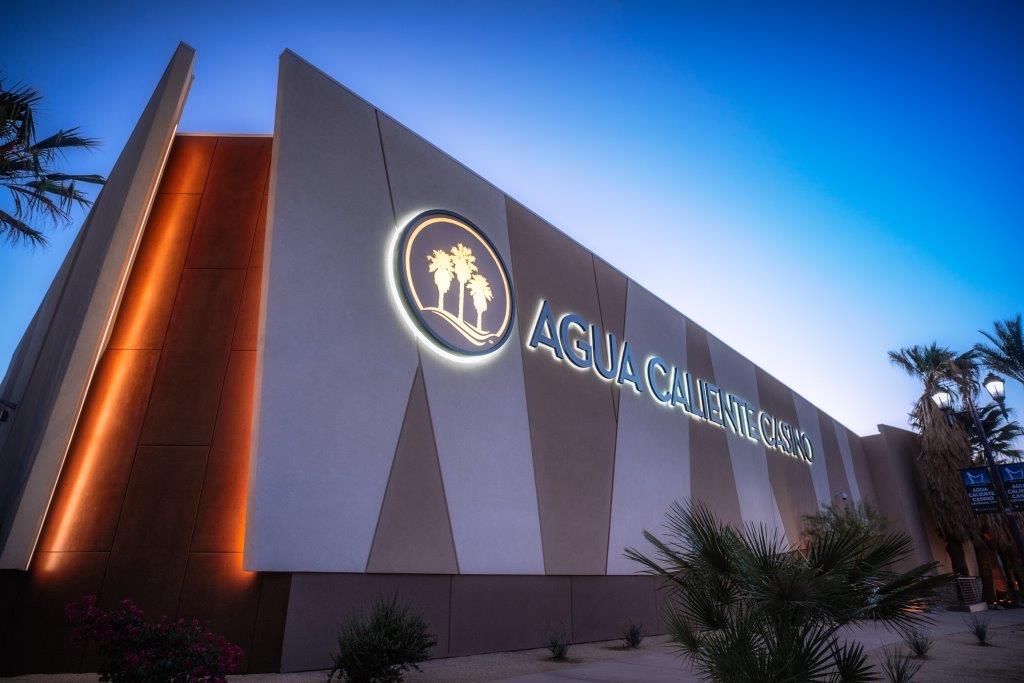
Agua Caliente currently operates casinos in Rancho Mirage, Palm Springs and Cathedral City, making tribal gaming a major component of the Valley’s tourism, hospitality and entertainment economy.
The amendment does not require the Tribe to install 500 additional machines, nor does it say where additional machines would be located.
Instead, it raises the ceiling – an important distinction.
For a business with multiple large gaming properties, additional authorized capacity can function much like unused development entitlement. It creates flexibility to respond to demand, reinvest in an existing property or pursue future expansion without first reopening the basic question of how many gaming devices the state compact permits.
The facility provisions change as well.
The existing 2016 Agua Caliente compact authorizes as many as six gaming facilities, but only two may operate more than 500 slot machines.
Under the amendment, Agua Caliente could continue to operate as many as six gaming facilities, but as many as three could have more than 250 gaming devices.
That wording is particularly relevant because the Tribe already has three established casinos.
It provides greater flexibility for all three existing properties while preserving the theoretical authority for additional, smaller gaming facilities in the future. The amendment should not, however, be read as an announcement that Agua Caliente intends to build a fourth major casino. No such project is contained in the agreement.
For the Coachella Valley, the practical importance may therefore be less about what happens immediately and more about the options the Tribe will have over the coming decades.
A compact built for a different legal era
To understand why the agreement is being rewritten only 10 years after the current compact was negotiated, it is necessary to look beyond Agua Caliente.
The turning point was a 2022 federal appellate decision, Chicken Ranch Rancheria of Me-Wuk Indians v. California.
The Ninth Circuit Court of Appeals concluded that California had gone beyond the scope allowed by the federal Indian Gaming Regulatory Act when it sought compact provisions involving subjects such as family law, environmental regulation and tort liability that were not sufficiently connected to the operation of gaming.
The ruling strengthened the negotiating position of tribal governments and narrowed the subjects California can demand in tribal gaming agreements.
For the state, it also created uncertainty about provisions embedded in existing compacts.
Agua Caliente’s amendment is, in part, an attempt to resolve that uncertainty without litigation.
Matthew Lee, Gov. Newsom’s senior adviser for tribal negotiations, told lawmakers that California faces greater legal risk in the post-Chicken Ranch environment and characterized Agua Caliente as a strong partner of the state.
The new agreement removes or rewrites provisions that became legally vulnerable after the ruling.
In return, California receives something important of its own: greater certainty that the revenue-sharing structure will remain intact.
The amendment includes a covenant restricting challenges to specified compact provisions during the life of the agreement.
That bargain helps explain why a document ostensibly about casino regulation also includes an approximately 20-year extension of the compact.
For Agua Caliente, it provides a much longer planning horizon. For California, it reduces the risk that important financial provisions could later become the subject of litigation.
A major change in the economics of expansion
The revenue-sharing revisions are among the most significant provisions for understanding the business implications.
Under the 2016 compact, Agua Caliente generally pays 6 percent of net win generated by gaming devices between 351 and 2,500, followed by progressively higher rates as the number of machines rises.
At more than 4,500 machines, the applicable upper-tier rate can reach 11 percent.
The new agreement retains the 6 percent rate for gaming devices above 350 and through 2,500 but replaces the higher graduated structure with a 2.4 percent rate on net win generated by gaming devices above 2,500.
That substantially changes the marginal economics of operating more machines.
In simple terms, the current structure makes the upper end of Agua Caliente’s authorized gaming capacity progressively more expensive. The amendment lowers that variable burden for machines above 2,500.
The state says the restructuring should not mean an overall reduction in Agua Caliente’s commitment to California’s tribal revenue-sharing system.
To help offset the lower variable percentage, the Tribe would make an additional $2 million annual payment into the Revenue Sharing Trust Fund, with those supplementary payments capped at $12 million.
Lee described the new arrangement to lawmakers as a larger fixed contribution coupled with a smaller per-device variable payment and said the Newsom administration does not anticipate a net reduction.
The funds are significant because California’s tribal gaming system does not benefit only casino-operating tribes. Revenue-sharing programs provide money to federally recognized tribes with little or no gaming revenue.
Grubbe said the revised arrangement preserves Agua Caliente’s longstanding commitment to limited-gaming and non-gaming tribes.
A provision with particular local significance
Another change may receive less attention than the additional slot machines but could matter directly to cities and public agencies in the Coachella Valley.
Under the current compact, Agua Caliente can receive credits against as much as 60 percent of certain revenue-sharing obligations for qualifying expenditures that provide mutual benefits to the Tribe, the state and local jurisdictions.
Those expenditures can include fire protection, law enforcement, public transportation, infrastructure improvements and economic development.
The amended compact raises the allowable credit to 75 percent.
That creates a stronger mechanism for recognizing money the Tribe directs toward local needs rather than sending the entire applicable contribution through state-administered funds.
The potential relevance is considerable in a reservation whose checkerboard geography is intertwined with Palm Springs, Cathedral City and Rancho Mirage.
Agua Caliente’s governmental and economic activities routinely intersect with municipal roads, emergency services, development, tourism infrastructure and other public systems.
The Tribe itself describes its reservation as encompassing more than 31,500 acres across portions of the western Coachella Valley.
Its economy now extends far beyond casinos. Agua Caliente operates golf courses, restaurants, recreation areas, two massive Agua Caliente Fuel low-cost fuel and convenience stores with areas including slot machines in Rancho Mirage and Palm Springs (opened Aug. 1), and extensive real estate holdings, as well as the Agua Caliente Cultural Museum and The Spa at Séc-he at its downtown Palm Springs Cultural Plaza.
Gaming, however, remains an important financial engine underlying tribal government services and broader economic development.
That is why the compact’s consequences extend well beyond casino floors.
Environmental provisions also change
The amendment also removes a significant provision contained in the 2016 agreement requiring the Tribe to prepare a tribal environmental impact report examining potentially significant off-reservation environmental effects from construction of a gaming facility.
The change reflects the Chicken Ranch decision, which restricted California’s ability to use the compact process to regulate subjects beyond those directly tied to gaming.
That does not mean any future Agua Caliente project would automatically proceed without environmental analysis. Federal law, tribal requirements and project-specific circumstances can create separate review obligations.
But it does mean that the environmental review requirement previously imposed through the state gaming compact would no longer operate in the same way.
For local governments, developers and residents, that is an important distinction if Agua Caliente eventually proposes a new gaming facility or a major expansion of an existing property.
Other provisions affected by the same legal shift include requirements involving child and spousal support withholding and tort claims.
The amended compact replaces existing tort provisions with a requirement that the Tribe maintain written procedures for personal injury and property damage claims involving gaming patrons and provide insurance coverage of at least $10 million per occurrence.
From gaming tribe to regional economic institution
The amendment arrives at a time when Agua Caliente’s role in Greater Palm Springs has become increasingly diversified.
Its three casinos remain among its most visible commercial properties, but the Tribe is simultaneously a landowner, developer, tourism operator, cultural institution and governmental entity.
The opening of the Agua Caliente Cultural Museum and The Spa at Séc-he in downtown Palm Springs further expanded the Tribe’s presence in the region’s visitor economy while establishing a major cultural destination around the hot mineral spring from which Palm Springs derives its name.
During his testimony, Grubbe specifically pointed to the Cultural Plaza as an example of what became possible following the Tribe’s 2016 compact negotiations.
A 20-year extension creates an unusually long horizon for capital investment and business planning. Additional gaming capacity creates operating flexibility. Revised revenue provisions change the financial equation for expansion. Greater credits for locally beneficial expenditures strengthen the connection between tribal economic activity and surrounding communities.
And the post-Chicken Ranch provisions clarify a relationship between tribal and state authority that had become increasingly vulnerable to legal challenge.
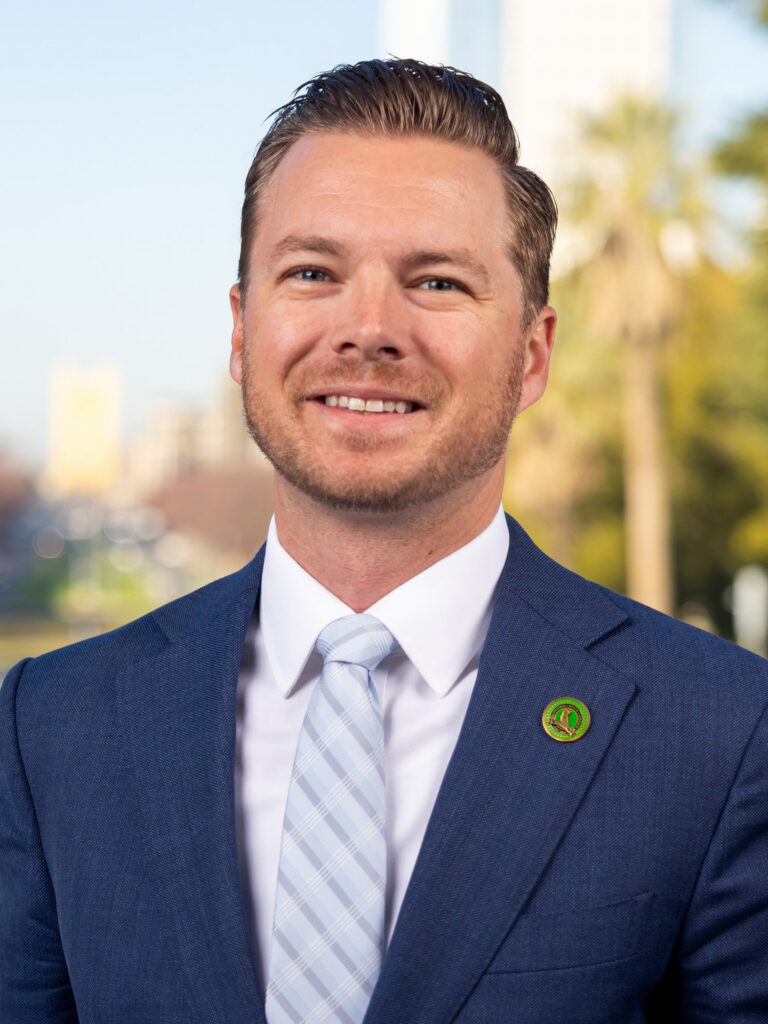
Assemblymember Greg Wallis (R-AD 47) authored AB 2173 to enable the ratification of the compact agreement.
What happens next
The California Constitution gives the governor authority to negotiate tribal-state gaming compacts, but the Legislature must ratify them.
Committee staff has identified AB 2173, authored by Assemblymember Greg Wallis, as the legislative vehicle for ratification of the Agua Caliente amendment.
The Aug. 11 proceeding was informational. Lawmakers were being briefed on the agreement rather than voting to approve or modify it, and compacts negotiated by the governor and tribes are presented to the Legislature for ratification rather than line-by-line amendment.
The committee analysis reported no formal opposition to the Agua Caliente agreement.
The new compact must ultimately be approved through the federal process required for tribal gaming compacts.

Bob Marra is the CEO/Publisher of GPS Business Insider. He has been studying, writing and giving presentations about business, economic and public affairs news and issues and the local economy in the Greater Palm Springs/Coachella Valley region for more than 20 years.