A new regional water plan prepared by six Coachella Valley water suppliers offers a message that is both reassuring and cautionary for the region’s business and civic leaders: the valley expects to have enough urban water to meet projected demand through 2050, even during a near-term five-year dry period, but the system’s long-term reliability will depend on continued groundwater replenishment, conservation, imported water agreements and major infrastructure investments.
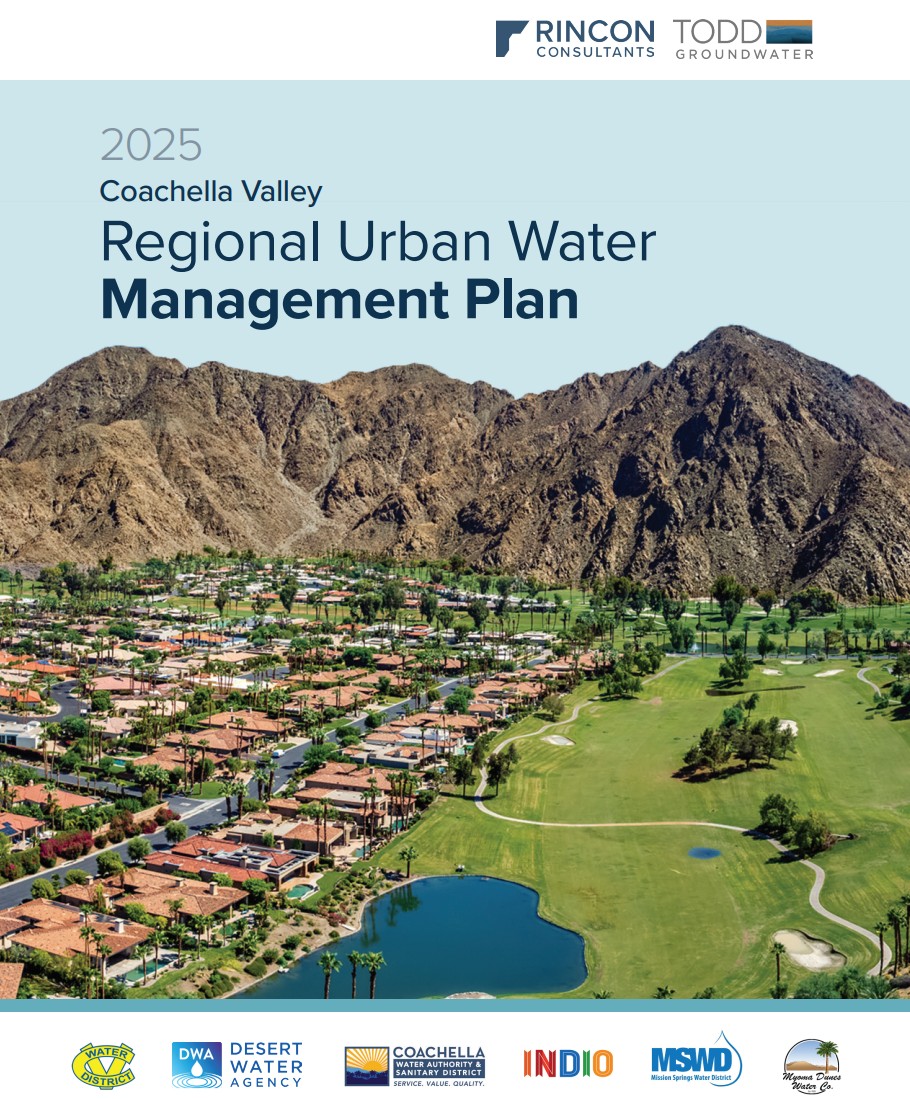
The 2025 Coachella Valley Regional Urban Water Management Plan, a more than 700-page document prepared for the Coachella Valley Water District, Coachella Water Authority, Desert Water Agency, the City of Indio, Mission Springs Water District and Myoma Dunes Mutual Water Company, is the region’s latest state-mandated blueprint for urban water supply, demand forecasting, drought planning and shortage response.
The plan’s central finding is straightforward. The agencies expect to meet “all demands through 2050,” including in average years, single dry years and a modeled five-year drought scenario.
But the plan also makes clear that water reliability in the desert is not a fixed condition. It is a managed outcome.
Groundwater Remains the Foundation
The Coachella Valley Groundwater Basin remains the foundation of the region’s municipal water supply. All six participating agencies use groundwater as their primary source for household, business and local government needs.
The plan describes the basin as a “large-scale storage reservoir,” a critical point for understanding how the valley can maintain service during dry periods. In simple terms, the basin allows agencies to pump water when surface water supplies are limited or when dry-year demand increases.
That reliability, however, depends on what happens over time. In a typical year, groundwater pumping exceeds the amount of natural recharge from local rainfall and mountain runoff. To offset that imbalance, local agencies rely heavily on imported water from the Colorado River and the State Water Project exchange system to replenish the basin.
That is where the plan’s long-term warning comes into focus.
Imported Water Is the Long-Term Pressure Point
The Colorado River system remains under pressure from drought, climate change and negotiations over future operating rules for Lake Powell and Lake Mead. The State Water Project also faces long-term reliability concerns tied to reduced snowpack, changing runoff patterns, environmental constraints and climate-driven hydrology.
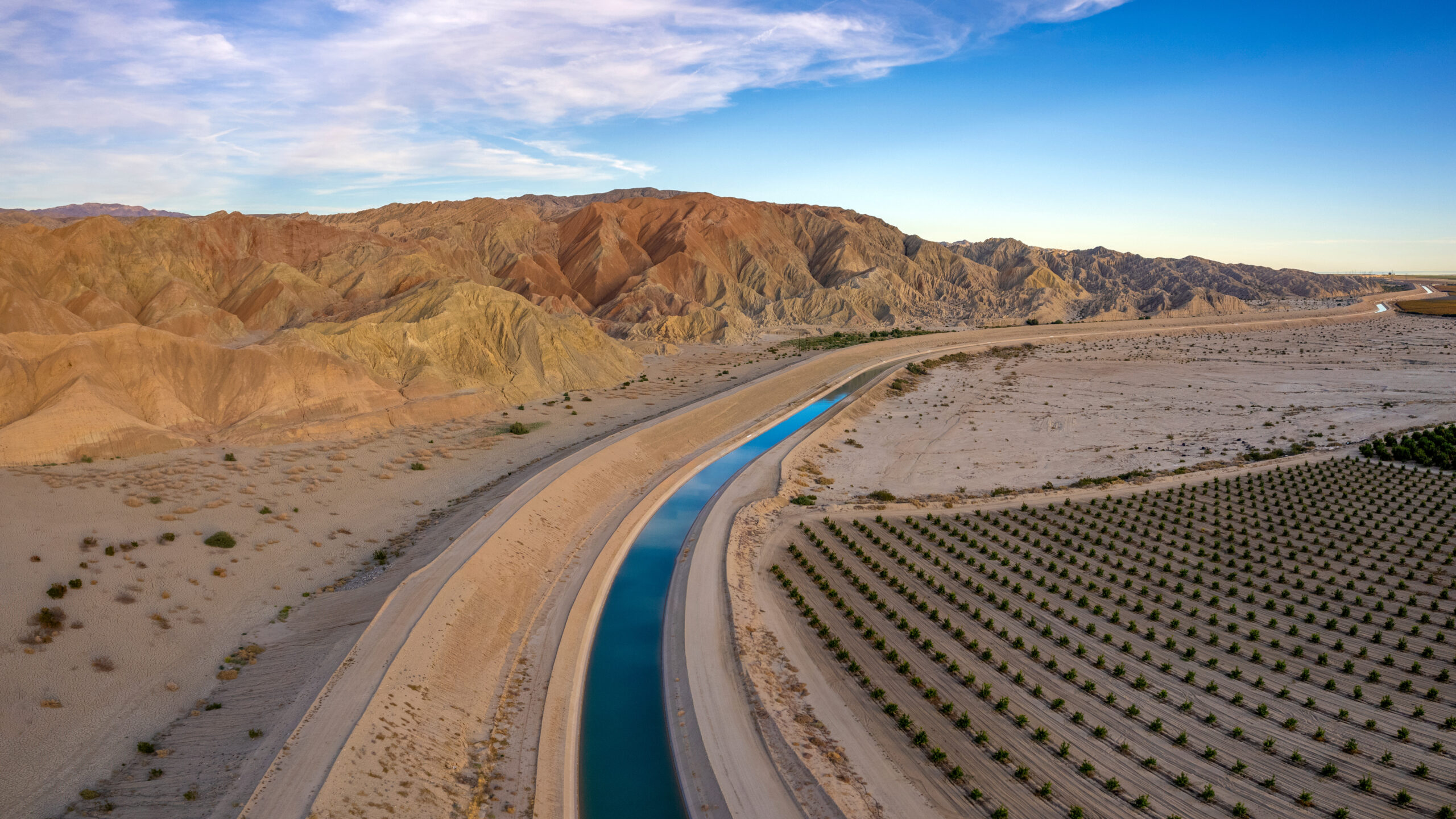
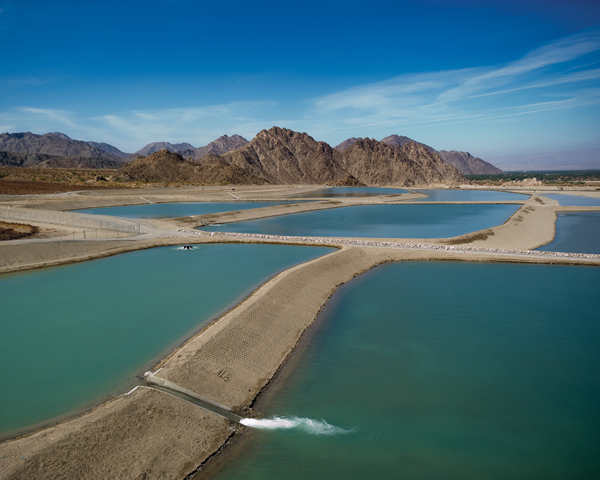
A water canal in Mecca Hills is a key part of the regional infrastructure serving Imperial County and the eastern Coachella Valley.
The local conclusion is not that the valley is running out of water. It is that the valley’s water supply depends on an active, expensive and increasingly complex management system.
The plan says long-term reliability depends on “continued replenishment” of the groundwater basin with imported water supplies. That phrase is one of the most important in the document for civic and business leaders. It means water reliability is tied not only to how much groundwater exists underground today, but also to whether the region can continue to replace what it pumps over time.
Demand Is Expected To Rise, But Not Explode
Across the six participating agencies, total projected gross water use is expected to rise from about 174,000 acre-feet in 2025 to about 177,000 acre-feet in 2030 and roughly 197,000 acre-feet by 2050.
That increase reflects expected population, housing and employment growth, but it also assumes continued gains from conservation, efficient plumbing fixtures, local landscape ordinances, turf replacement programs, smart irrigation controllers and the state’s phased ban on potable water use for non-functional turf at many commercial, institutional and homeowners association properties.
The plan, therefore, suggests that future growth is being modeled with conservation embedded into the baseline. That is an important distinction for cities, developers and major employers. The region’s future water picture is not based simply on finding more water. It is based on using less water per unit of growth, especially outdoors.
The Biggest Suppliers Carry Most of the Urban Demand
The largest urban water supplier in the plan is CVWD, which projects total gross water use of about 99,000 acre-feet in 2030 and about 103,000 acre-feet in 2050.
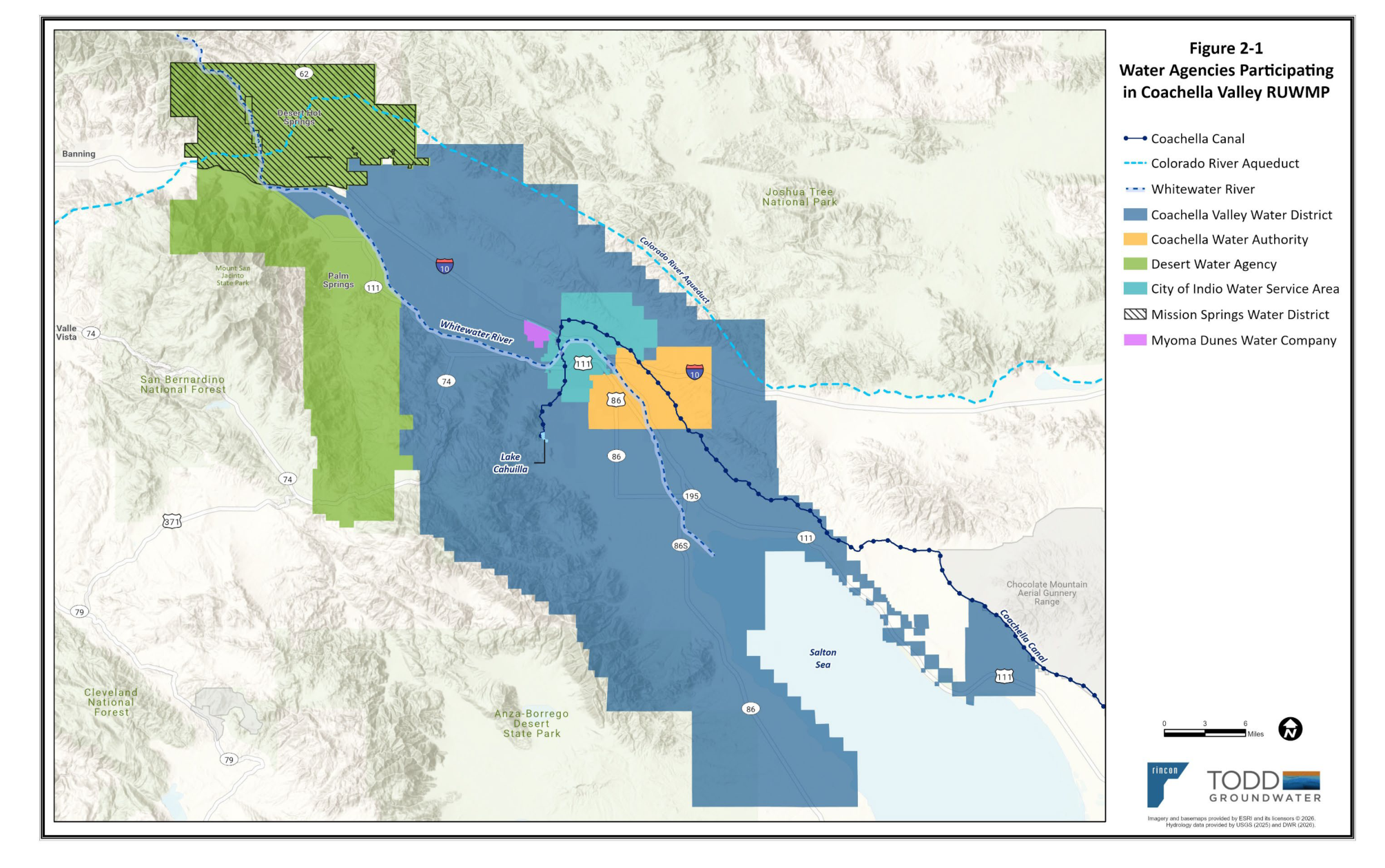
The map above shows the coverage areas of the six Coachella Valley water agencies.
DWA projects total gross water use rising from about 37,000 acre-feet in 2030 to about 40,000 acre-feet in 2050. Indio projects about 20,000 acre-feet in 2030 and about 23,000 acre-feet in 2050, including projected recycled water use.
Growth is more pronounced in some smaller systems. Coachella Water Agency projects demand rising from about 7,400 acre-feet in 2030 to about 10,000 acre-feet in 2050. Mission Springs Water District (MSWD) projects total gross water use will rise from about 9,600 acre-feet in 2030 to nearly 17,000 acre-feet in 2050, including recycled water associated with its regional water reclamation plans.
Myoma Dunes Mutual Water Company, serving the Bermuda Dunes area, projects a smaller and relatively stable demand profile, with total water use of about 4,200 acre-feet in 2030 and about 3,900 acre-feet in 2050.
Agriculture and Golf Remain Major Water Users
The plan also underscores that urban demand is only part of the region’s broader water economy. Agriculture and golf remain major non-municipal water users.
The plan estimates 2025 non-urban, non-potable use at more than 385,000 acre-feet, including about 268,000 acre-feet for agricultural irrigation and about 107,000 acre-feet for golf irrigation.

Coachella Valley agriculture generated $648 million in crop valuation in 2024. The overall economic impact of the industry is much greater, but water use by growers is massive.
All of this matters because the valley’s economy is unusually water-linked. Housing, tourism, golf, agriculture, resorts, public landscaping and municipal growth all depend on a shared basin and a network of imported water, recycled water, non-potable delivery systems and groundwater recharge facilities.
For business leaders, that means water policy is not only an environmental issue. It is a core economic infrastructure issue.
Recycled Water Is Becoming More Important
One of the plan’s central strategies is source substitution, using Colorado River water, recycled water or blended non-potable supplies for irrigation so that less groundwater is pumped for large landscapes.
CVWD’s Mid-Valley Pipeline, recycled water systems, golf course conversions and canal-water deliveries are part of that effort. DWA already uses recycled water for golf courses and large landscapes. MSWD completed the Nancy Wright Regional Water Reclamation Facility in 2024, with plans to support future recycled water use and groundwater replenishment. Indio and Valley Sanitary District have formed a joint powers authority to pursue a future water reclamation facility.
For civic leaders, those projects are not peripheral. They are the core infrastructure for future economic development.
Recycled water is not yet a fully mature valley-wide solution, but the plan treats it as an increasingly important part of the region’s long-term portfolio.
Conservation Is Built Into the Forecast
The demand projections in the plan are not simple extensions of past water use. They assume substantial conservation savings over time.
Those savings come from indoor fixture replacement, state plumbing efficiency rules, the Model Water Efficient Landscape Ordinance, local rebate programs, smart irrigation controllers, turf conversion and the non-functional turf ban under AB 1572.
That is particularly important in Greater Palm Springs, where outdoor water use is a major component of total demand. The future of water conservation will be less about asking residents to take shorter showers and more about changing how large landscapes, commercial properties, HOAs, public spaces and golf-adjacent developments are irrigated.
The Drought Plans Are a Backstop
Each participating agency has prepared a Water Shortage Contingency Plan with six shortage levels. The lower levels focus on conservation messaging, rebate programs, water-waste enforcement and outdoor irrigation limits. The highest level, reserved for a severe shortage or a catastrophic incident, could prohibit the use of potable water for outdoor purposes.
The report does not anticipate that those measures will be needed to close a normal planning deficit. In its drought-risk analysis, the agencies anticipate meeting demands through 2050.
But the shortage plans provide a playbook if imported water deliveries are disrupted, infrastructure fails, drought deepens beyond planning assumptions, or an emergency such as an earthquake affects supply, treatment or delivery systems.
The six agencies also sought to align their shortage actions as much as possible, which matters in a region where customers, businesses, HOAs and major water users often operate across multiple jurisdictions.
Water Quality and Regulation Could Affect Costs
Water quantity is not the only issue. The plan also notes water quality and regulatory issues related to naturally occurring constituents such as arsenic and chromium-6, as well as future PFAS monitoring and compliance requirements.
Those issues may not threaten water availability in the same way drought does, but they can affect treatment costs, well operations, capital planning and customer rates.
For cities and developers, that means water planning is increasingly connected to infrastructure finance. A project may be serviceable from a supply standpoint but still require treatment, distribution, storage or system upgrades that carry real costs.
What It Means for Growth
For business leaders, the practical takeaway is that the Coachella Valley’s water outlook is more stable than the most alarmed public narratives often suggest, but less effortless than the region’s lush landscaping can make it appear.
The valley does not rely on a single source. It relies on a portfolio of groundwater, Colorado River water, State Water Project exchange water, local surface water in some areas, recycled water, conservation and long-term groundwater management.
The plan is also not a blank check for every possible project. Large developments, annexations and infrastructure-heavy projects still require site-specific analysis, service capacity, financing, distribution infrastructure and consistency with agency planning. The fact that the regional plan shows adequate supplies through 2050 does not mean every project can be served at every location without new facilities or costs.
That distinction will become more important as the valley debates housing, industrial projects, resort development, golf course redevelopment, agricultural transitions and climate resilience.
A Message of Managed Confidence
The 2025 plan’s message is ultimately one of managed confidence.
The Coachella Valley has enough water to support planned urban growth, according to the agencies’ forecasts. But keeping that statement true will require continued replenishment, conservation, expansion of recycled water, negotiations on imported water, groundwater monitoring and investment in infrastructure that most residents and visitors never see.
For a desert region whose economy depends on growth, tourism, agriculture and quality of life, water remains one of the valley’s defining business fundamentals.

Bob Marra is the CEO/Publisher of GPS Business Insider and GPS Market Intel. He has been studying, writing and giving presentations about business, economic and public affairs news and issues and the local economy in the Greater Palm Springs/Coachella Valley region for more than 20 years.