As the Coachella Valley continues to absorb growth, traffic, tourism and climate pressures, a state conservancy based in Palm Desert is putting more than $2 million into a different kind of regional infrastructure: the fragile natural systems that help define the desert.
The Coachella Valley Mountains Conservancy Board approved three grants totaling $2.07 million at its recent May board meeting, directing money toward endangered species protection, groundwater monitoring, wetland restoration and wildlife crossing planning.
The grants are not large by the scale of public works budgets or private development deals now shaping the valley. But they touch some of the region’s most distinctive and vulnerable assets: desert pupfish habitat at the Thousand Palms Oasis Preserve, wetland connections tied to the Salton Sea ecosystem, and wildlife movement across State Route 62, the busy corridor between Greater Palm Springs and Joshua Tree National Park.
“These projects reflect the Conservancy’s commitment to collaborative, science-based conservation that benefits both wildlife and local communities,” Executive Director Elizabeth King said in the announcement. “We are proud to support our regional partners in advancing innovative solutions for habitat protection, climate resilience, and species conservation.”
The funding also reflects a broader shift in conservation strategy. In a desert region where water, habitat and transportation corridors are increasingly interconnected, conservation work is no longer only about acquiring land and setting it aside. It is also about managing hydrology, restoring habitat functionality, reducing vehicle collisions and preparing desert ecosystems for more extreme climate conditions.
Three Grants, Two Big Themes

The largest share of the funding will support two projects focused on the desert pupfish, one of the desert’s most resilient but imperiled species. The small fish, native to harsh desert waters, has survived in environments inhospitable to many other species. But its long-term survival now depends heavily on protected and managed habitat.
At the Thousand Palms Oasis Preserve, the conservancy approved a $695,751 Proposition 1 Local Assistance Grant to the Center for Natural Lands Management for a Groundwater-Surface Water Monitoring Project. The work will study why portions of Simone Pond have dried alarmingly over the past two years.
Simone Pond is part of one of the few remaining habitats for the desert pupfish in the region. The project, which will be conducted in collaboration with the United States Geological Survey, is intended to help scientists and land managers better understand the relationship between groundwater and surface water at the preserve.
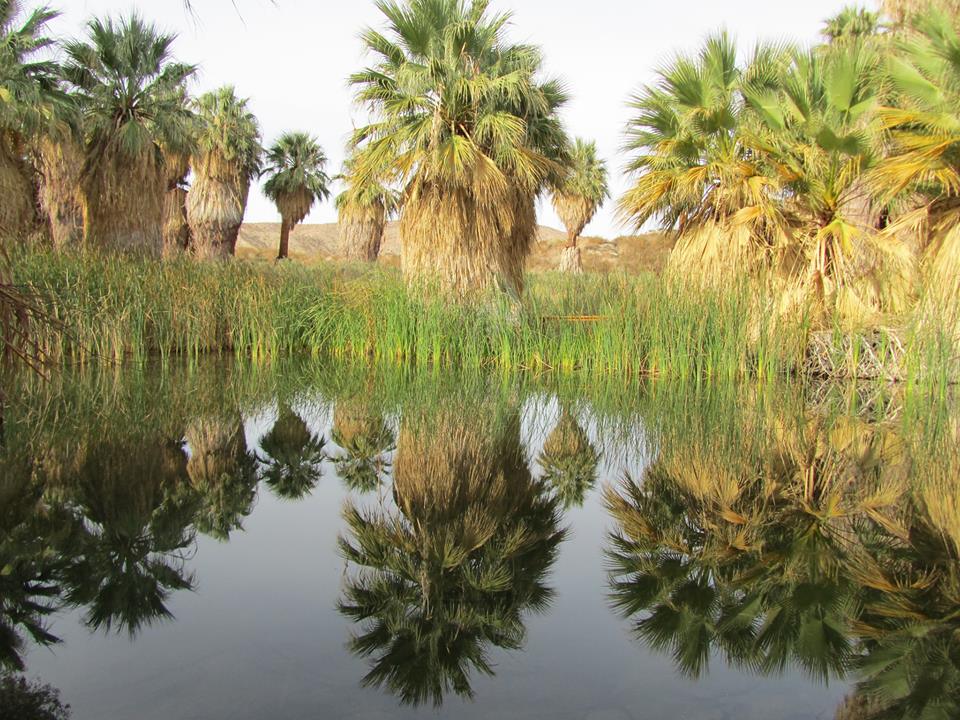
That question is especially important at Thousand Palms Oasis, where the desert’s visible water is tied to deeper geology. The preserve sits along the San Andreas Fault system, where underground water can rise to the surface and sustain palm oases, wetlands and habitat pockets that are rare in the desert.
The second pupfish-related grant is a conditional Proposition 1 Local Assistance Grant of up to $863,450 to The Living Desert Zoo and Gardens for the Desert Pupfish Conservation Refugia Project. That project will evaluate methods to establish sustainable refuge habitat and restore functionality to former wetland cells that historically conveyed water between the Whitewater River and the Salton Sea ecosystem.
The project will take place on land owned by the Torres Martinez Desert Cahuilla Indians, placing it within a larger geography of tribal lands, agricultural history, Salton Sea restoration challenges and endangered species recovery.
Together, the two pupfish grants account for nearly $1.56 million of the total funding approved by the conservancy.
First Climate Bond Grant Goes to Wildlife Crossing Planning
The third grant, $512,000 to the Mojave Desert Land Trust, is the conservancy’s first Proposition 4 Local Assistance Planning Grant. Proposition 4, approved by California voters in 2024, is the state’s $10 billion climate bond for water, wildfire, climate resilience, natural resources, parks and outdoor access.
The local grant will help advance planning for two wildlife crossings across State Route 62, a heavily traveled highway connecting the Coachella Valley, Morongo Valley, Yucca Valley and Joshua Tree National Park.
The corridor has become a growing focus for conservation groups because it cuts through habitat used by mountain lions, bighorn sheep and other wildlife. The issue is not only ecological. Wildlife crossing highways creates public safety risks for drivers, especially on fast-moving desert roads where visibility, speed and animal movement can combine dangerously.
The Mojave Desert Land Trust has been leading a broader state-funded effort to plan wildlife crossings on State Route 62. The conservancy’s grant adds local and regional support to that planning work.
In the announcement, the conservancy said local urgency has grown because of documented mountain lion and bighorn sheep deaths along the corridor, as well as ongoing public safety concerns caused by wildlife attempting to cross the highway.
The project also places the Coachella Valley region within a statewide movement to address habitat fragmentation through transportation planning. California has increasingly treated wildlife crossings not as amenities, but as infrastructure that can reduce collisions, protect species movement and reconnect habitats divided by highways.
Why the Desert Pupfish Matters
The desert pupfish is small, but its significance in the Coachella Valley is large.
The fish is tied to some of the region’s most sensitive desert water systems, including refuges, springs, wetlands and Salton Sea tributary environments. Its survival depends on a network of habitats that can withstand drought, changes in water quality, invasive species and long-term shifts in desert hydrology.
That is why the drying of portions of Simone Pond is more than a site-specific concern. At a preserve known to hikers and visitors for its palm oases, boardwalks and trails, the water that sustains habitat is also a warning signal. If land managers do not understand why parts of the pond are drying up, they cannot reliably protect the remaining pupfish habitat.
The Thousand Palms Oasis Preserve is one of the Coachella Valley’s most recognizable conservation landscapes. It is a major part of the local preserve system and supports desert palm oases, trails and wildlife habitat in an area shaped by the San Andreas Fault. It also gives the public a direct view of how rare surface water is in the desert, and how much ecological life depends on it.
For local residents and visitors, the preserve may be experienced as a place to walk, hike or observe wildlife. For conservation biologists, it is also a living indicator of regional water stress.
A Broader Regional Conservation Role
The Coachella Valley Mountains Conservancy was established by the state in 1991 to protect open space, wildlife, scenic and natural community conservation lands within and around the Coachella Valley.
Much of its earlier work focused on land acquisition. Over time, its role has expanded to include stewardship, restoration, public access, climate resilience and partnerships with nonprofits, tribes and public agencies. That expanded role is evident in the three grants approved this month. None of the projects is a simple land purchase. Each involves a more technical conservation challenge.