The Desert Healthcare District Board of Directors has removed Chief Executive Officer Chris Christensen, a sudden leadership change at one of the Coachella Valley’s most influential public agencies, just as the district is preparing to move from strategic planning into implementation.
The board voted unanimously Tuesday, May 26, to terminate Christensen without cause after meeting in closed session for an agenda item regarding the CEO’s performance evaluation. When directors reconvened in open session, general counsel Jeff Scott reported the action.
“The board, in closed session, voted unanimously to terminate the CEO without cause, in accordance with the terms of his contract,” Scott said.
The decision ended Christensen’s two-year tenure as CEO and more than a decade with the Desert Healthcare District and Foundation, where he previously served as controller, chief financial officer, chief administrative officer and interim CEO.
But the CEO’s termination was not the only leadership issue to surface during the meeting. Later that evening, board members discussed a process to formally evaluate Scott, who has served as the district’s general counsel for many years, dating back to the 1990s, with a break between 2011 and 2016.
The discussion centered on whether the district should evaluate Scott before deciding whether to issue a request for proposals for legal services. The board did not immediately launch an RFP, but the discussion made it clear that legal counsel could also be subject to review as part of a potentially broader governance reset.
Taken together, the actions point to a significant transition period for the Desert Healthcare District and Foundation, a public agency and affiliated foundation that helps fund healthcare access, community health programs and strategic initiatives throughout the Coachella Valley.
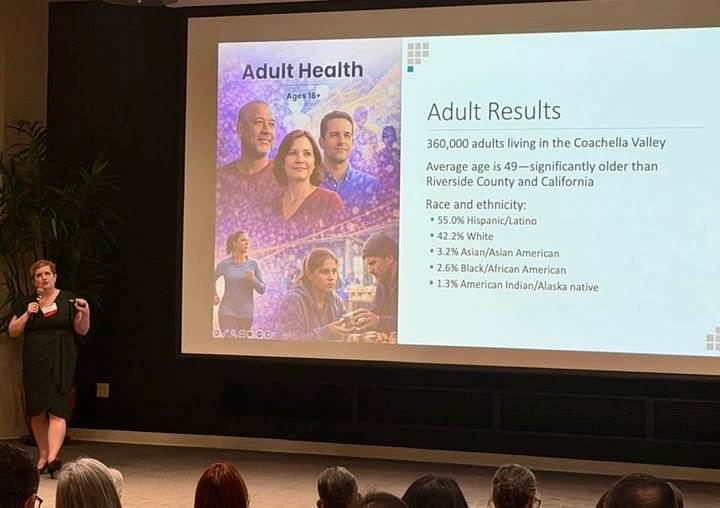
The timing is particularly important. The district has been developing a new strategic plan after a series of community listening sessions held across its seven geographic zones and a virtual session earlier this year. The plan is expected to guide funding priorities, partnerships and programming for years to come, including work tied to access to care, provider shortages, behavioral health, social determinants of health and health equity across the valley.
A Closed-Session Vote, Then A Public Report
The board’s closed-session item was agendized as a public employee performance evaluation under the Brown Act provision commonly used for evaluations of public agency executives.
Before the board entered closed session, Christensen used his public remarks to defend his ethics and integrity and to describe tensions surrounding his performance review process.
He said the review began March 25 and was scheduled to be completed by May 26, but had been delayed by what he described as last-minute procedural revisions, intentional delays and non-responsiveness by Board President Kimberly Barraza.
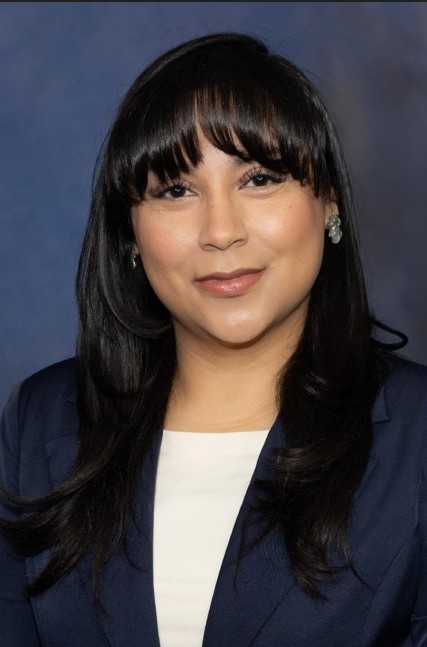
Kimberly Barraza, president of Desert Healthcare District
Christensen also said Barraza had made “false and unjustifiable claims of unethical judgment and inequitable bias” during his annual CEO performance evaluation a year earlier. He said the allegation was personal because of the professional standards tied to his background as a certified public accountant.
“I value my ethical standards, and I would never, ever allow my ethics to be compromised,” Christensen said.
He added that the delay in completing his current review raised concerns about “lack of respect, professionalism and even harassment of a public employee.”
The board did not publicly respond to Christensen’s claims during the meeting.
After the closed session, Scott announced that the board had voted unanimously to terminate Christensen without cause under the terms of his contract.
A termination without cause generally means a public agency is ending an employment agreement without publicly asserting misconduct or a specific disqualifying act. The terms of Christensen’s contract will likely determine any severance, benefits or other obligations connected to the board’s decision.
In a May 27 statement the District said, “The Board concluded that the District and Foundation require a different leadership vision and direction moving forward.”
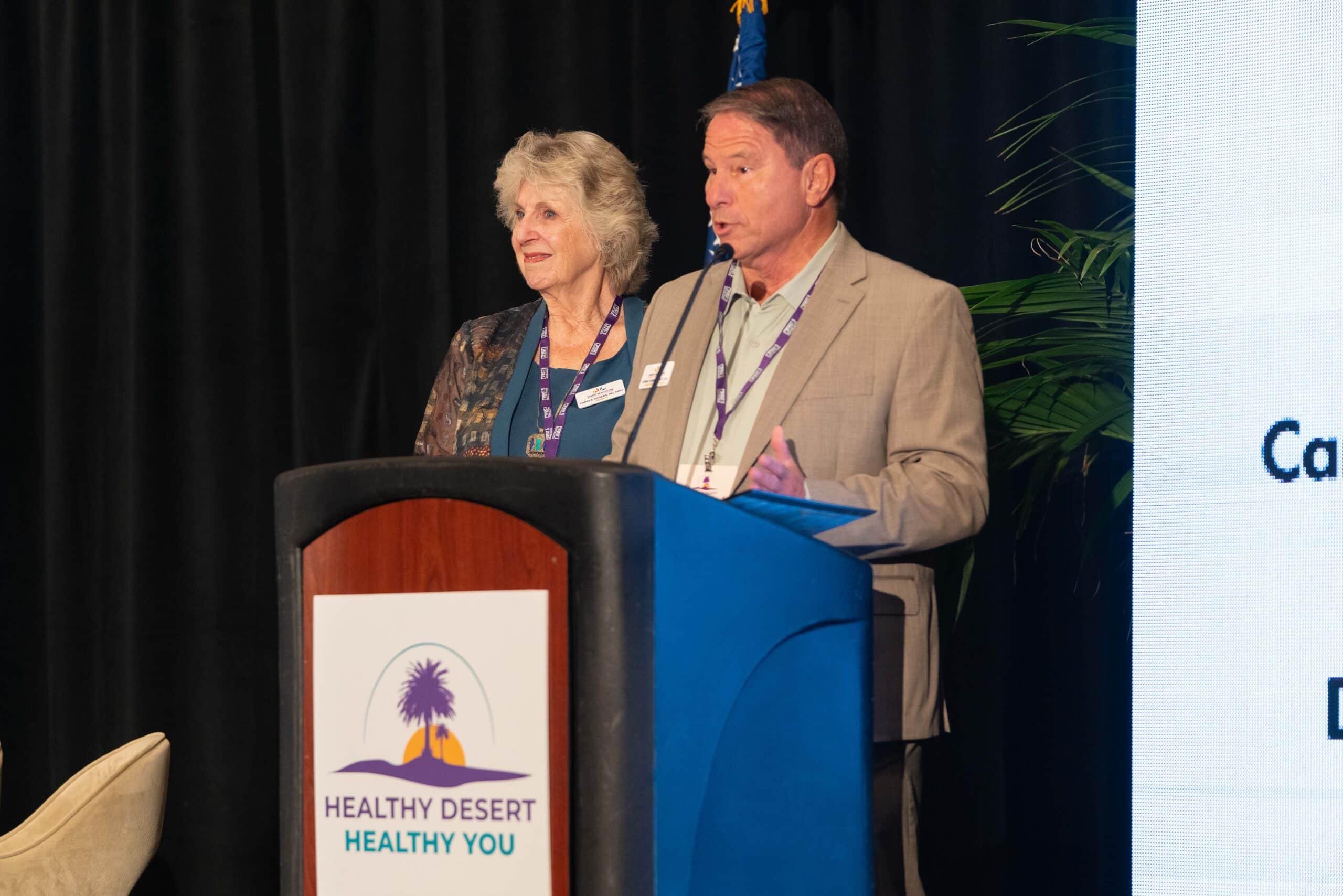
Board President Kimberly Barraza stated, “These decisions are never easy. We wish Mr. Christensen well. The Board remains united in its commitment to serving the healthcare needs of our community.”
Also from the statement, the District noted, “During the Board meeting prior to closed session, Christensen made public statements regarding personnel matters and expressed frustration with Board procedures and Board leadership. While the Board remains committed to respectful and constructive engagement, it unanimously rejects the false allegations made during those remarks.”

Longtime DHCD executive Donna Craig has been named interim CEO.
The District & Foundation Board has appointed Chief Program Officer Donna Craig, a 21-year veteran of the organization, to serve as interim CEO pending the selection of a permanent successor.
A Longtime Administrator Leaves During A Planning Transition
Christensen was promoted to CEO in 2024 after serving as interim CEO following the departure of Dr. Conrado Bárzaga in 2023. At the time, the district framed the appointment as a promotion of an internal administrator with deep knowledge of the agency’s operations, finances and grantmaking structure.
His departure now creates a leadership vacancy at a complex public agency that sits at the intersection of local healthcare funding, hospital policy, nonprofit grantmaking and regional health planning.
The Desert Healthcare District was formed in 1948 and owns the Desert Regional Medical Center campus in Palm Springs. The district and foundation together have become one of the valley’s major healthcare funders, with grants and initiatives aimed at expanding access to primary care, behavioral health, community health services and other supports for underserved residents.
The agency’s role expanded substantially after voters approved Measure BB in 2018, extending the district’s boundaries to include the entire Coachella Valley. That expansion gave the district a larger regional mandate, including communities in the east valley where access to care, poverty, transportation, environmental health and provider shortages remain persistent challenges.
That broader responsibility has made the district’s strategic plan more than an internal planning document. It helps determine how public resources will be directed across the valley and how the district will work with clinics, nonprofits, hospitals and public partners.
Legal Counsel Review Also Moves Forward
Later in the meeting, board members turned to a separate governance issue: how to evaluate Scott, the district’s longtime general counsel, and whether the district should consider issuing an RFP for legal services.
Board member Anyse Smith summarized the background. She said the Finance and Administration Committee had discussed whether to continue with current legal counsel or consider an RFP. She cited board policy stating that professional services, including legal, audit and investment services, should be reviewed and potentially bid every five years.
Smith said an ad hoc committee was formed to review general counsel services. The committee considered how board members could complete an evaluation confidentially, how results could be compiled and whether independent outside counsel should guide the process.
The board discussion suggested that directors were leaning toward completing a formal evaluation before deciding whether to issue an RFP.
Scott told the board that he serves at the pleasure of the board and does not have a fixed term.
“At any point, the board can relieve me of my duties,” Scott said, adding that the decision is at the board’s discretion.
He said it would be reasonable for the board to first gather feedback on the general counsel’s services and then decide whether to seek proposals.
“That’s how you get feedback and see if there needs to be corrective action, or whether or not it’s time to move on and get new counsel, or at least look at some other options,” Scott said.
The discussion also addressed whether the evaluation could be handled in closed session because of confidentiality and privacy concerns. Scott said evaluations of general counsel are treated similarly to employee evaluations for those purposes.
The board did not appear to have made a final decision to issue an RFP, but the direction was significant: the district is now positioned to make an important new hire in executive leadership and consider its legal counsel support at the same time.