Jeffrey Lunak did not set out to build a hot dog company.
He had spent years in the kind of kitchens and hotel food operations where reputations are made slowly, and mistakes are expensive. He worked in high-end, high-volume restaurants and hotels. He helped open major hospitality properties. He worked with “Iron Chef” Masaharu Morimoto’s restaurant group, helped open Morimoto Napa and other projects, and learned what it takes to execute food at a level where the expectations are high and relentless.
But along the way, he also learned something more practical. If he wanted to own the concept, control the product and build something scalable, a traditional chef-driven restaurant with a $10 million or $15 million opening cost was not the right vehicle.
“I wanted to own a new venture,” Lunak said. “I wanted to control what I would do.”
That realization is now at the center of one of the more unusual local business stories in Greater Palm Springs.
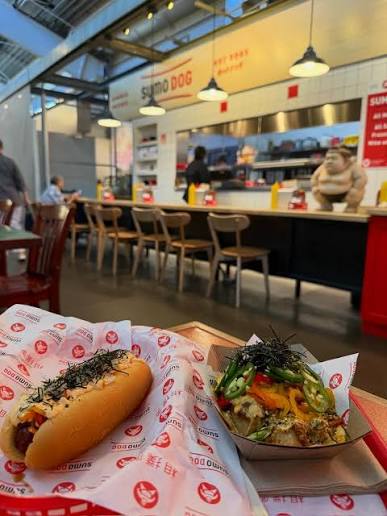
Sumo Dog, the Japanese-inspired hot dog concept that began as a Coachella Valley Music and Arts Festival pop-up, is no longer just a clever food idea that caught fire with festivalgoers. It is becoming a multi-market restaurant brand rooted in the desert, with operating locations, event venues, stadium experience, a growing drive-through strategy and plans for a future national franchise rollout.
The next step is expected to come in Palm Desert, where Lunak said Sumo Dog is preparing to take over a former Jack in the Box location near Gerald Ford Drive and Cook Street. The site places the brand in one of the most active corridors in north Palm Desert, near schools, hotels, new single-family home development, apartment growth, condominiums and the broader development activity that continues to reshape that part of the city.
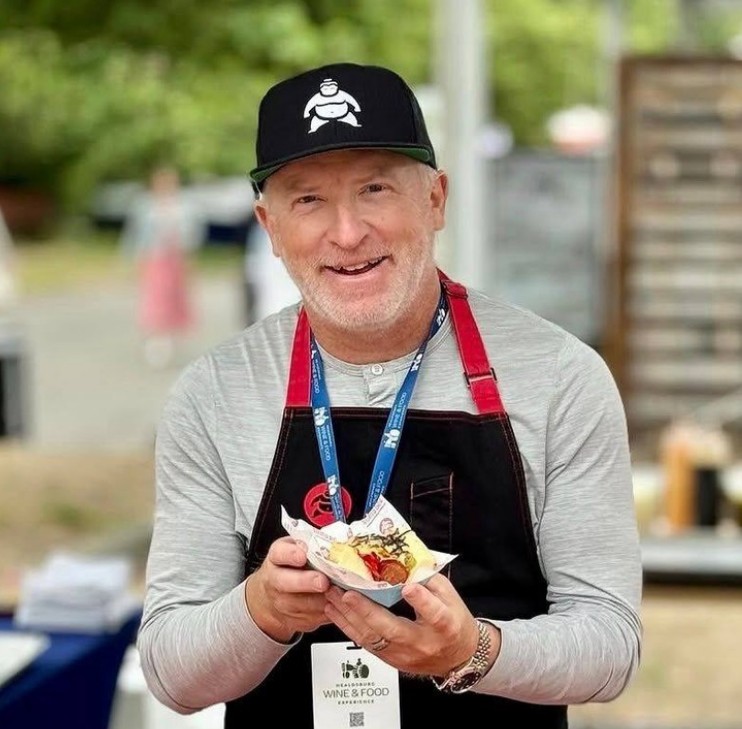
Jeffrey Lunak, founder/president of Sumo Dog.
For Lunak, the location is not just another restaurant. It is part of the proof of concept.
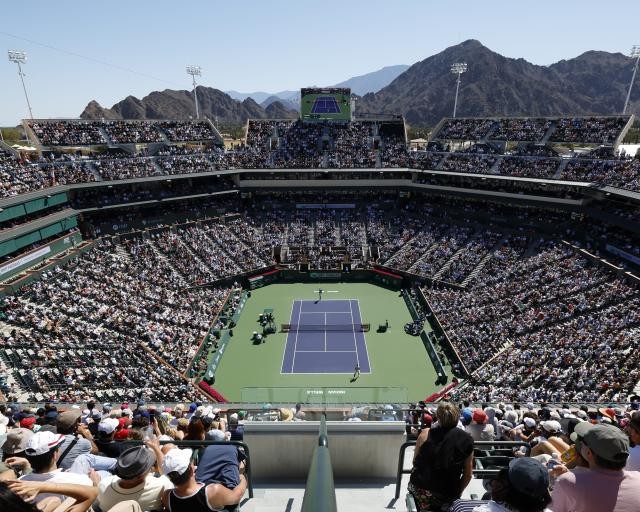
The company already has an Indio location and an Indio drive-through, along with operations or appearances in places such as Anaheim, Napa, San Juan Capistrano, the Indian Wells Tennis Garden, Coachella, Comic-Con, T-Mobile Park in Seattle, and Aspen Snowmass. But the Palm Desert drive-through could become one of the most important company units in the system, because it is local, visible and designed for the kind of everyday customer behavior that can support a larger franchise model.
“We found ourselves with the opportunity to get it, and we took the opportunity immediately,” Lunak said of the Palm Desert site.
He expects the company to gain access to the space in August and, if the conversion remains largely cosmetic, to open roughly 45 to 60 days later. That would put the target opening in October.
The Palm Desert restaurant is expected to carry the broader Sumo Dog menu, not just the original hot dog lineup. Lunak said the location will offer hot dogs, sausages, burgers, chicken sandwiches, all-day breakfast burritos, chopped cheese and, eventually, beer and wine if the licensing is completed in time.
The wider menu reflects a strategic shift. Sumo Dog may have started with the hot dog as the star, but Lunak is increasingly thinking about the company as a broader fast-casual brand built around big flavors, approachable food and hospitality that does not intimidate customers.
The internal mantra, he said, is “all things to all people.”
A Chef’s Background, Rebuilt Around A Smaller Box
Lunak’s path to Sumo Dog runs through some of the most demanding corners of the hospitality industry.
He began in fine dining and large-footprint hotel food operations. His career took him from Cape Cod to Washington, D.C., to Florida and eventually to the Coachella Valley, where he worked on major resort and club properties connected to Blackstone’s hotel portfolio, including La Quinta Resort and PGA West.
He later returned to Morimoto’s orbit, working on restaurant openings and projects in Napa, Maui, India and elsewhere. That background matters because Sumo Dog is not a novelty brand built by someone who simply saw a festival food opportunity. It is a fast-casual concept created by a chef who has spent years working in highly disciplined kitchens, complex hospitality environments and national-level restaurant development.
But Lunak had also watched the economics of celebrity-chef restaurants up close. A chef could be called an owner and still have little meaningful ownership. A glamorous restaurant could draw attention, but require so much capital that control became diluted.
So, he started thinking smaller, but only in one sense.
The box had to be smaller. The ambition did not.
He looked around the fast-casual landscape and saw crowded categories. Burgers had already been elevated everywhere. Chipotle had defined a new era for burritos and bowls. High-end tacos were everywhere. Lunak said he could make a great taco, but the narrative or brand story would not fit him.
A hot dog, though, was different. It was familiar, inexpensive enough to scale, playful enough to reinterpret and, in the right hands, unexpected.
Then came Coachella.
The Festival Pop-Up That Changed Everything
The first version of the concept was not called Sumo Dog. It was Kushiyaki Dog, a festival pop-up Lunak created for Coachella in the mid-2010s.
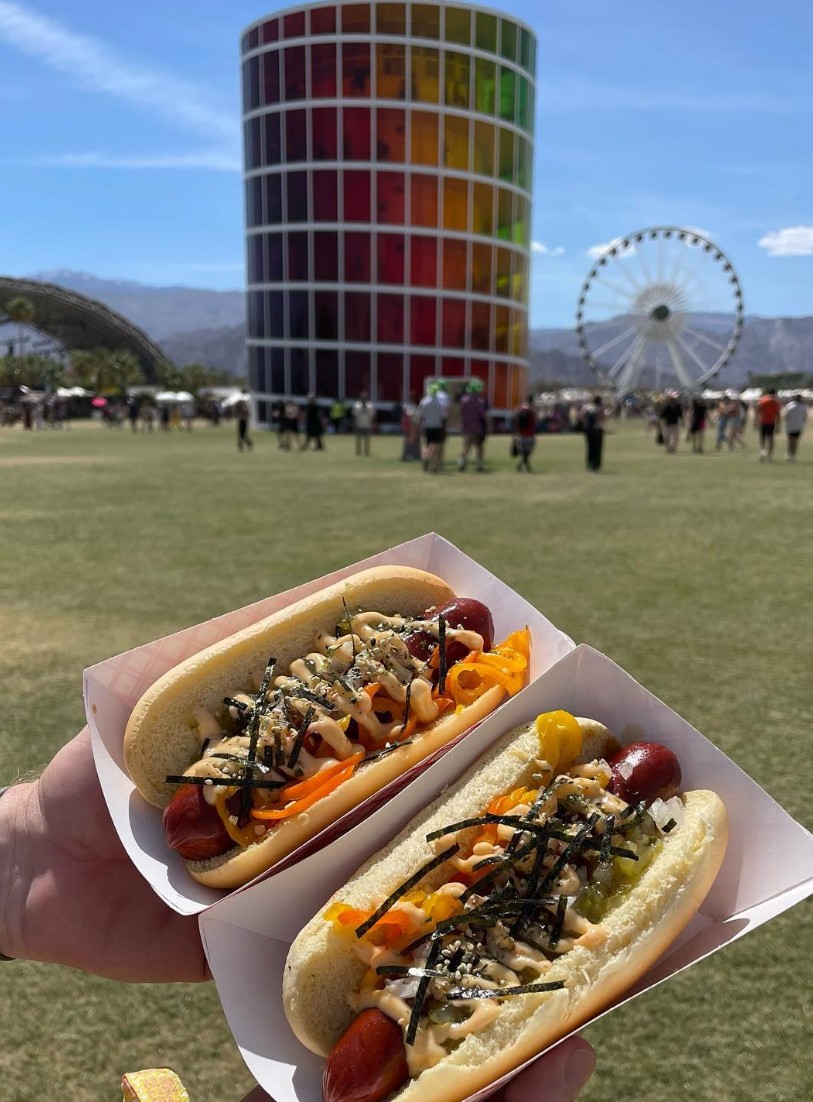
It all started at the Coachella Festival with a pop up that went viral.
He did not yet know exactly what it would become. He built a quick website. He came up with a logo. He got the idea live in a matter of weeks.
The first day was busy. The second day changed the trajectory of the business.
Rolling Stone singled out the Godzilla, the over-the-top footlong that became the brand’s early signature, as one of the standout food items to try at Coachella. The response was immediate.
“It just was crazy how drastically it hit us,” Lunak said. “We sold out at like 2 o’clock the next day.”
He made multiple runs to the grocery store to keep the stand stocked. The temporary website, created mostly because the pop-up needed one, suddenly became a magnet. For the next year, Lunak said, inquiries came in from people asking about franchises.
“I was like, man, this has got some legs to it,” he said.
At the time, he still did not treat it as a full-time company. He was working with a holding company on fast-casual restaurant and technology concepts. Sumo Dog remained an annual appearance, something with buzz, potential and a cult following, but not yet a fully developed business.
Eventually, he opened the first brick-and-mortar location in Koreatown in Los Angeles. He expected the festival momentum to translate immediately.
It did not.
The restaurant had strong press, celebrity-chef attention and a product people liked. But the location had limited parking and weak lunch traffic. It was better suited to nightlife than the steady daily volume a restaurant needs.
“It was definitely a labor of love that didn’t really pay any dividends,” Lunak said.
That experience became one of the first major business lessons of Sumo Dog. Great food and press are not enough. Site selection matters. Daypart matters. Parking matters. Lunch matters. The surrounding customer base matters.
Those lessons now show up in how Lunak talks about Palm Desert.
The Gerald Ford and Cook site has traffic, schools, hotels, housing and visibility. It also sits in an area where North Palm Desert is adding residents, services and infrastructure. For a restaurant operator, those details are not incidental. They are the difference between a location that needs constant support and one that can become a dependable performer.
Control Became The Strategy
After Koreatown, Sumo Dog expanded into other Los Angeles-area opportunities, including Santa Monica and Pacific Palisades. Then the pandemic disrupted the restaurant industry, especially in Los Angeles, where openings, closures and operating restrictions whipsawed food businesses.
Lunak paused.
Then he saw another opening. Stadiums were closed. When they came back, he reasoned, Sumo Dog could become a national stadium concept operated by third-party concessionaires. He would not have to operate each stand himself. He could license the brand. The company could scale quickly.
The brand got into major venues, including Yankee Stadium, SoFi Stadium and AT&T Stadium.
But the strategy exposed another problem. Lunak said the operators were too far removed from the product and did not execute it the way he believed it needed to be executed.
One by one, Sumo Dog began pulling licenses.
That experience pushed Lunak toward a new operating principle: growth is good only if the brand can maintain control.
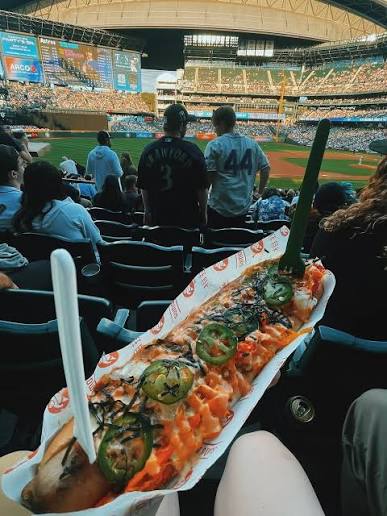
Sumo Dog’s Godzilla Dog is very popular at Seattle’s T-Mobile Park.
It is why he speaks so favorably about T-Mobile Park in Seattle, where Sumo Dog operates in partnership with the Mariners. That operation, he said, has worked because the branding is right, the hospitality is right, and the company executes the food itself.
The baseball model also makes sense financially, he said, because there are more games than in football and customers stay longer. In markets where Sumo Dog has restaurants, stadium opportunities can also provide existing employees with predictable supplemental work.
That is a different kind of growth than simply adding logos to more venues. It is growth built around operational discipline.
Lunak said he is still interested in airports, but those will likely require experienced third-party operators because of the structure of airport concession contracts.
A Franchise Plan, But Not Yet A Franchise Rush
The obvious question about Sumo Dog is whether it can become a national franchise.
Lunak believes it can. But he is not rushing the process.
After opening the second drive-through, he said the company plans to “sit tight” for roughly 12 months, something it has not really done during the last few years of rapid growth. During that period, Sumo Dog expects to prepare the financial reporting and state filings needed for franchising.
Rather than build a full internal franchise sales department immediately, Lunak said the company may work with a third-party firm that already has relationships with experienced franchise operators.
The goal would be ambitious: potentially 200 to 300 signed units within roughly 24 months once the company is ready to pursue deals.
That number is large, but Lunak’s caution is as important as his ambition. The stadium licensing experience showed him the risk of handing the brand to operators who cannot or will not execute the product properly. The Palm Desert drive-through, along with the Indio drive-through, gives Sumo Dog a chance to prove a format that could appeal to franchisees and landlords.
He is also thinking about vertical infrastructure. As Sumo Dog grows, Lunak expects the company may eventually build its first commissary in the Coachella Valley to support franchisees. The company also plans to explore making its own sauces for retail and wholesale sales.
That would add another layer to the local economic story. Sumo Dog would not simply be a restaurant company with a local office. It could become a Coachella Valley-based platform for food production, brand management and franchise support.
Lunak is also interested in a model in which the company identifies land, builds restaurants and places franchisees in those locations, an approach he compares to the old-school McDonald’s real estate playbook.
More Than A Japanese Hot Dog
Sumo Dog’s public identity has long been tied to the Japanese-inspired hot dog. The company’s own description says it redefines the American classic with Japanese ingredients, inspiration and tradition.
That is still true. The menu includes the Sumo Dog, Miso Katsu, Bacon Banh Mi, Loco Moco, chili and cheese options, tots and other items that made the brand visually distinctive and easy to remember.
But Lunak now sees that description as too narrow.
The brand, he said, needs to be understandable and welcoming to a wider customer base. A Napa customer may be more inclined to read a culinary paragraph about Japanese izakaya influence and chef pedigree. A customer in north Indio or north Palm Desert may simply want great food, clear choices and a place that feels comfortable.
That realization is shaping the company’s current narrative. Sumo Dog is still a chef-built brand. It still carries the creative DNA of Morimoto-style fusion and festival food culture. But the company is broadening into a more accessible everyday restaurant.
The product remains specific. Lunak said the company offers a hardwood-smoked certified Angus beef frank with no nitrates or sulfates, a pork sausage from Olympia Provisions and a vegan sausage option. The company fabricates vegetables and makes many components from scratch.
The broader menu allows the restaurant to serve more occasions. A customer may come for the Godzilla once. But a local restaurant needs people to return for lunch, dinner, breakfast burritos, burgers and quick meals that fit regular life.
That is what Sumo Dog is trying to become.
A Local Company With A Larger Map
For Greater Palm Springs, the significance of Sumo Dog is not just that it started at Coachella. It is that the company still sees the Coachella Valley as home while it builds outward.
That matters in a region where many restaurant brands arrive from elsewhere. Sumo Dog is different. Its spark came from the valley’s biggest global stage. Its founder has deep local hospitality experience. Its local stores are part of the company’s operating base. Its future commissary could be here.
Lunak is candid about how hard the business is. Even taking over an existing restaurant space can cost hundreds of thousands of dollars. A ground-up drive-through can become a multimillion-dollar project. A location that merely does “so-so,” he said, can become punishing when a company is funding growth on its own dime.
That is why Palm Desert matters so much. A strong store can support the broader system. A high-performing drive-through can validate the model. A recognizable local location can help Sumo Dog show future franchisees that this is not only a clever brand but an operating business with repeatable economics.
“That’ll be a game changer, I think,” Lunak said.
The story of Sumo Dog is easy to tell as a food story. A chef makes a wild hot dog at Coachella. Rolling Stone notices. Festivalgoers swarm. A brand is born.
And now, a Coachella Valley company is preparing for its next chapter from the same region where the first long line formed.
The hot dog got the attention.
The discipline and business acumen will likely be what makes the company last.

Bob Marra is the CEO/Publisher of GPS Business Insider and GPS Market Intel. He has been studying, writing and giving presentations about business, economic and public affairs news and issues and the local economy in the Greater Palm Springs/Coachella Valley region for more than 20 years.