At first glance, 2026 looks like an unusually strong year for apartment owners in the Coachella Valley.
According to CoStar’s year-to-date multifamily sales data for the Coachella Valley, measured through July 17, sales volume totaled $73.3 million and the average sale price reached $289,759 per unit, compared with a historical average of roughly $169,000 per unit in the same data series.
The underlying transactions tell a more nuanced story. A small number of large, specialized sales have lifted the headline averages, while the operating side of the multifamily business has become more difficult for many owners.
Just as important, the reported average price per unit combines fundamentally different asset types, including a senior independent-living community, an income-restricted housing property and conventional apartments. It should not be viewed as a reliable valuation benchmark for a typical Coachella Valley apartment property.
Asking rents have declined. Effective rents, which account for concessions, have fallen even more. Newly built apartments are competing aggressively for tenants, and some older communities are losing qualified and reliable renters to newer properties with amenities they cannot easily match.
It is another example of why averages can be particularly deceptive in Greater Palm Springs, where very different segments of the real estate market often move independently of one another.
The multifamily market is now providing its own version of that lesson.
Two deals changed the numbers
Two transactions account for most of the dollar volume recorded in my mid-July snapshot.
In March, Cathedral Towne Villas in Cathedral City sold for $12.6 million. The 61-unit complex was built in 2006.
But Cathedral Towne Villas is not a typical older market-rate apartment property.
The City of Cathedral City’s Housing Element identifies Cathedral Towne Villas as a 61-unit family housing property for moderate-income households with affordability controls extending through 2061. That makes the property fundamentally different from an unrestricted five-, 10- or 20-unit apartment building owned by a private investor.
The second transaction was larger and even more specialized.
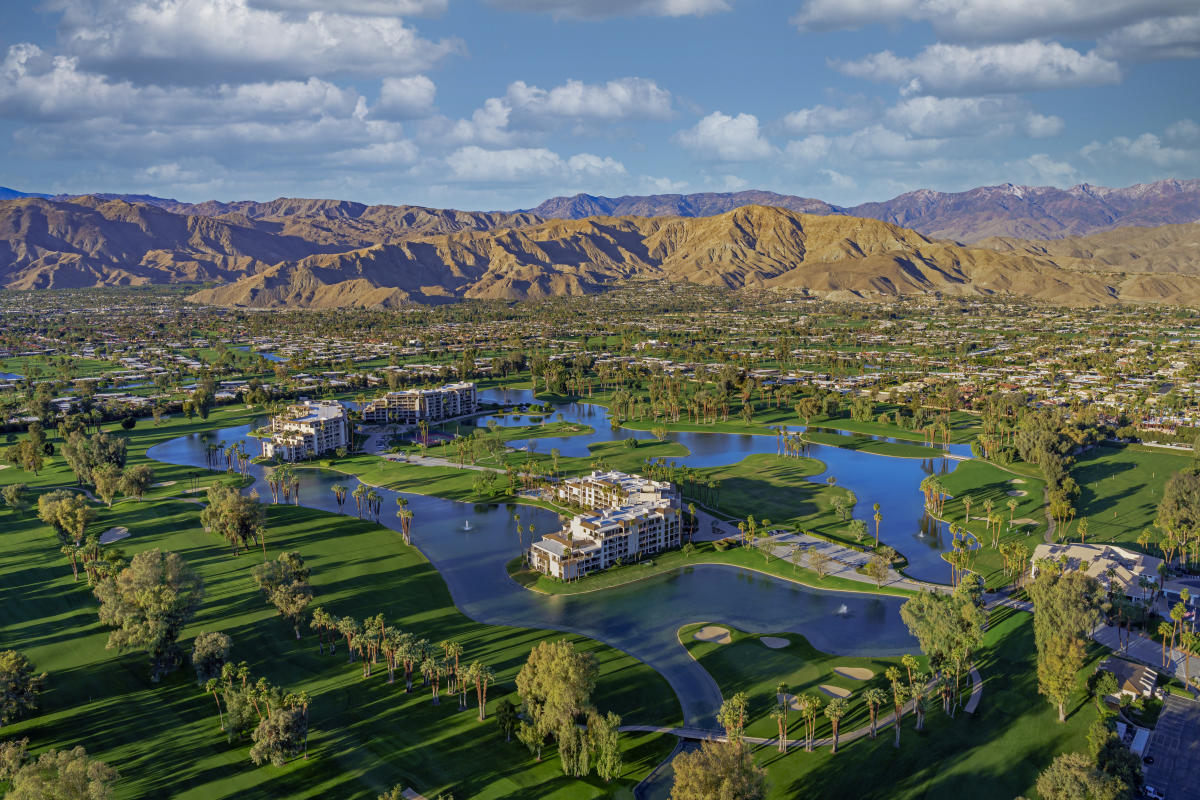
Revel Palm Desert, an upscale independent-living community on Country Club Drive, changed ownership as part of a much larger transaction involving Ventas Inc., one of the nation’s largest owners of senior housing.
Palm Desert city records describe Revel as a senior living development rather than a conventional apartment community.
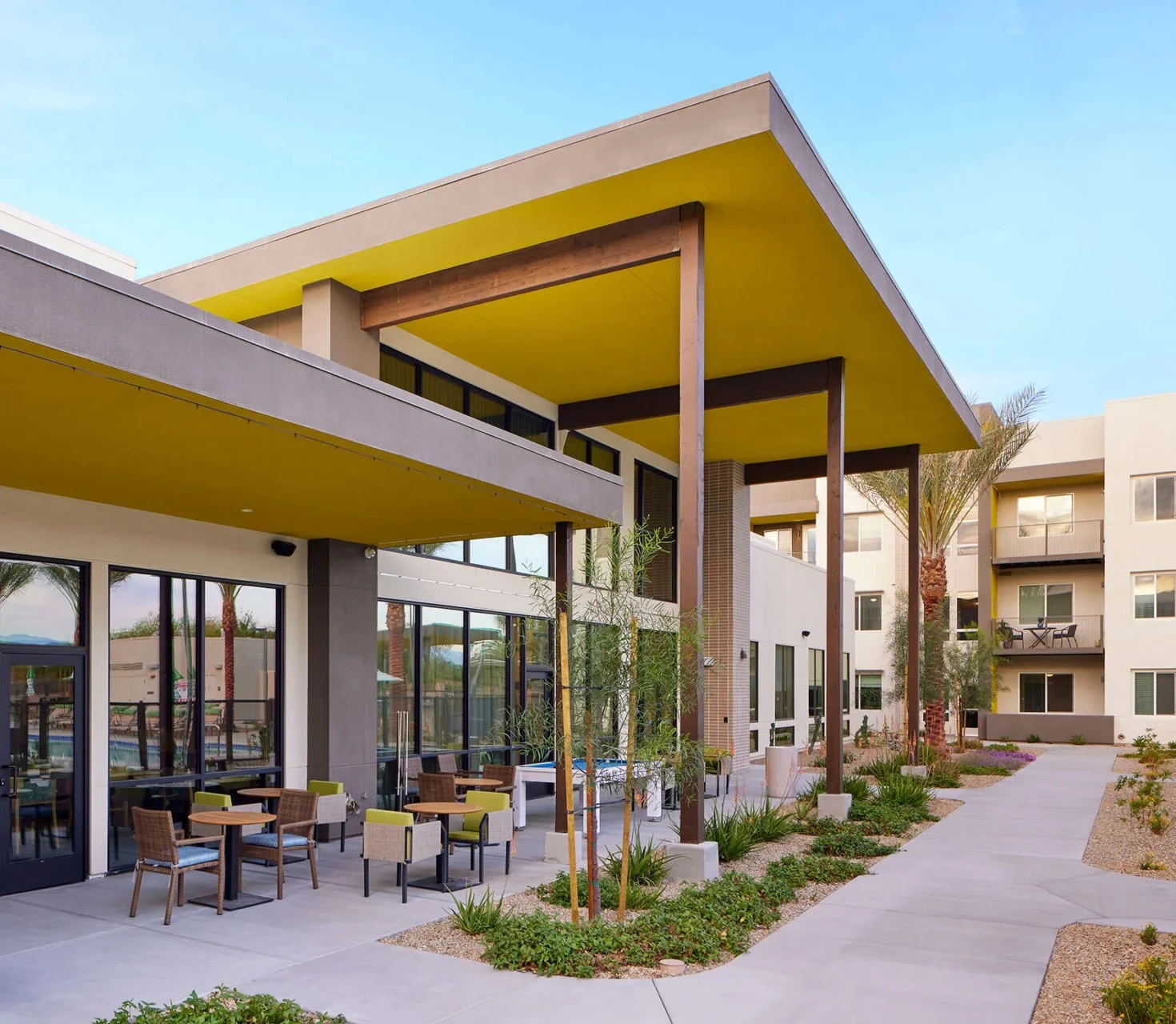
The Revel Palm Desert senior living development on Country Club Drive adjacent to Desert Willow Golf Resort.
CoStar assigns $45.8 million of value to Revel Palm Desert in the year-to-date sales data used for this analysis. That figure is an allocated value from the larger portfolio transaction and should not be interpreted as a separately negotiated sale price for the Palm Desert property.
Ventas described the broader acquisition as a $540 million investment involving 11 newer luxury independent-living communities in the Western United States. The communities continue to operate under the Revel brand, with the former owner retaining a minority interest.
Together, Cathedral Towne Villas and the value allocated to Revel Palm Desert represent nearly four-fifths of the $73.3 million in Coachella Valley multifamily sales volume in the July 17 CoStar snapshot. Their size and specialized characteristics materially influence the average price per unit.
The transactions demonstrate that institutional and specialized capital will pay substantial prices for particular types of Coachella Valley residential assets. They do not establish a new market-wide valuation level for conventional apartment properties.
For owners, investors and lenders, that distinction matters.
The rental market is moving the other way
While sales statistics appear strong, multifamily operations have softened.
The same CoStar Coachella Valley data showed asking rents down 0.7 percent over the preceding 12 months and effective rents down 1.4 percent as of July 17. Those figures reinforce what many local owners are experiencing: less pricing power and more competition for tenants.
That direction is consistent with rental trends GPS Business Insider has been tracking separately.
In May, GPS Business Insider reported that rents had cooled across several Greater Palm Springs cities, including declines for two-bedroom apartments in some of the region’s most active rental markets.
For renters struggling with the region’s housing costs, that provides some relief. For owners, however, lower rents are only part of the equation.
The more important development may be the arrival of newer inventory and the competitive behavior that comes with leasing hundreds of new apartments.
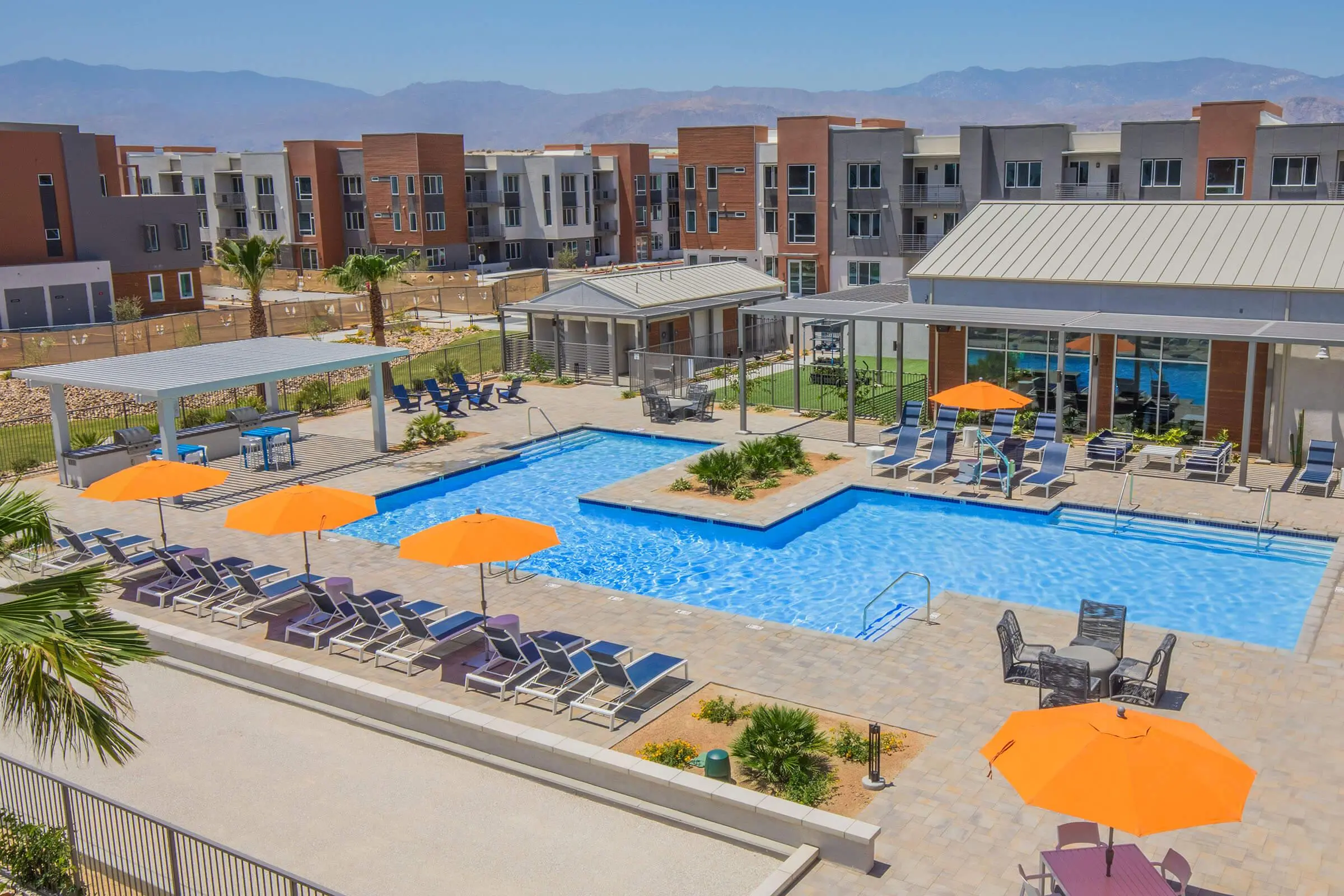
The most visible example is Millennium Apartments in Palm Desert.
The 330-unit community near Interstate 10 and Gerald Ford Drive was completed and opened for leasing in 2025. It includes studios and one-, two- and three-bedroom apartments along with a resort-style pool, fitness center, coworking areas, electric vehicle charging, smart-home technology and other amenities associated with newer Class A development.
The project also recently completed a 977-kilowatt solar system serving the apartments and common areas. Millennium’s property information highlights its extensive amenity package and multiple lease options.
For an older apartment owner, competing with that product is difficult, particularly when a new property uses concessions during lease-up.
In my work in the local market, I think of this as a “poaching effect.” It is not a formal industry metric, but a shorthand for what happens when newer properties attract some of an older building’s most qualified and reliable renters by offering modern amenities and move-in incentives.
The result can be more consequential than the loss of a typical tenant. An owner may face vacancy, turnover costs and concessions while trying to replace a resident with a strong payment history and credit profile.
Vacancy statistics require context, too
CoStar placed overall Coachella Valley multifamily vacancy at 7.8 percent as of July 17. Vacancy among newer Class A properties was substantially higher, at 16.4 percent, reflecting communities still working through initial lease-up.
That distinction matters. A new 300-unit apartment community that is 80 percent occupied still contains 60 vacant apartments, enough to move a regional vacancy rate even if many smaller, stabilized properties remain relatively well occupied.
At the same time, established properties still feel the competitive effects of that new supply. A small owner does not need a dramatic vacancy spike to see operating results change. Losing several reliable tenants, extending the time required to refill units or offering concessions can materially affect income.
The economics are especially consequential in Greater Palm Springs because much of the existing apartment inventory consists of relatively small, aging properties rather than institutional-scale complexes. Owners have fewer units across which to spread increases in insurance, repairs, utilities, property management and other operating costs, while weak rent growth limits their ability to pass those costs on to tenants.
A renter-friendly shift, but not an affordability solution
A softer multifamily market does not mean Greater Palm Springs has suddenly become inexpensive.
GPS Business Insider has repeatedly found that apartment rents remain burdensome for many local workers, particularly those employed in hospitality, retail, restaurants, personal services and other sectors that support the region’s tourism-oriented economy.
Earlier rental research found that two-bedroom apartments remained near or above $2,000 a month in much of the region even as rents began cooling.
Apartment owners can therefore face weaker pricing power even as many tenants still struggle to afford the rents being charged. The apparent contradiction largely comes down to income: rent can be too low to generate the return an owner wants and simultaneously too high for a household earning local service-sector wages.
That tension remains one of the fundamental challenges in the Greater Palm Springs housing economy.
The construction pipeline is thinning
The reduced construction pipeline is encouraging, but it is not by itself a guarantee that operating conditions will improve quickly.
CoStar showed 107 multifamily units under construction in the Coachella Valley as of July 17, a sharp reduction in the immediate pipeline compared with the wave of new inventory that has recently entered the market.
A broader 2026 Inland Empire multifamily forecast points in the same direction.
Institutional Property Advisors, a division of Marcus & Millichap, projected that deliveries in the Palm Springs-Coachella Valley market would decline by roughly 60 percent in 2026 after vacancy moved above 6 percent in 2025.
Still, a thinner pipeline only removes one source of pressure. Existing new communities must absorb their vacant units, concessions need to diminish, and rental demand must remain stable. If those conditions hold while new deliveries slow, the market should have a better opportunity to rebalance.
For older apartment owners, operations matter more than appreciation
Until that rebalancing occurs, many owners may focus less on appreciation and more on the operating fundamentals they can control.
Tenant retention becomes more valuable when replacing a resident may require weeks of vacancy, advertising costs, repairs, upgrades or concessions. Expense management becomes more important when rents cannot be raised enough to offset every increase in operating costs.
Capital improvements also have to become more strategic. An older property is unlikely to transform itself into Millennium Apartments, nor should it necessarily try.
Owners can instead identify improvements that residents actually value, whether that means better air conditioning, upgraded appliances, laundry facilities, security, landscaping, internet service or improvements to common areas.
In a more competitive rental environment, the calculation changes from simply asking how much additional rent an improvement can generate to asking whether it will help retain a good tenant.
That is a fundamentally different operating mindset.

Joe Pradetto is an Associate at Meade Commercial (DRE# 02439582) specializing in multifamily investment sales and advisory services in the Coachella Valley. A Palm Desert City Councilmember and former Planning Commissioner, he previously served as Chief of Staff to a Riverside County Supervisor and as a Supervising Deputy Assessor. He can be reached at pradetto@meadecommercial.com.