The City Council voted 5-0 to place a permanent sales and use tax increase on the Nov. 3 ballot. Officials cited rapidly rising insurance, public safety and road costs, while the city’s substantial reserves are likely to remain central to the campaign.
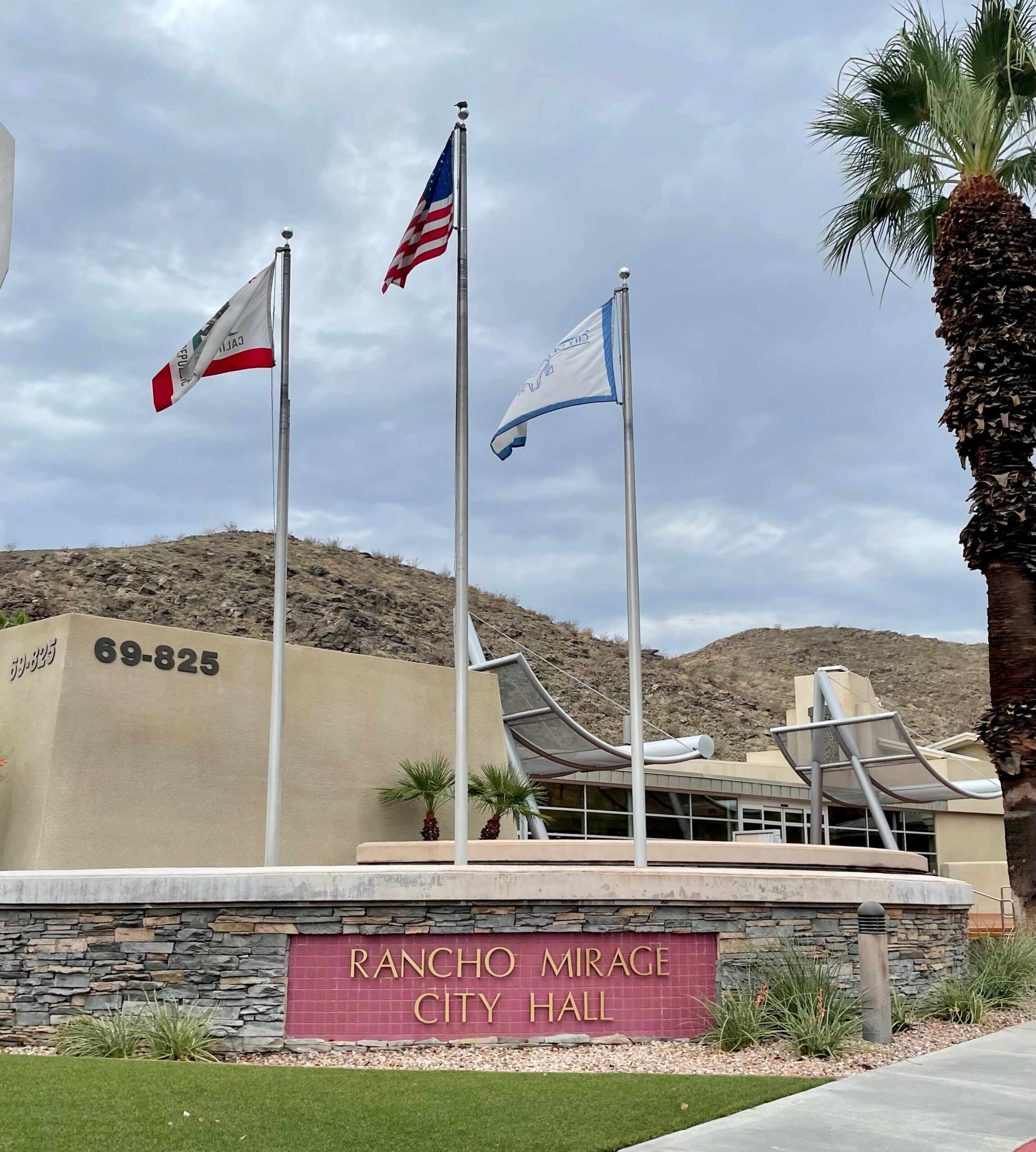
Rancho Mirage voters will decide in November whether to approve a 1% sales tax increase after the City Council unanimously agreed Thursday to place the proposal on the ballot.
The 5-0 vote advances what the city is calling the “Rancho Mirage Public Safety, Roads, City Services Measure,” which would increase the combined sales and use tax rate from 7.75% to 8.75%.
City officials estimate that the increase, equal to one additional cent on every taxable dollar, would generate approximately $7.5 million annually.
The council’s action does not raise the tax. It moves the decision to Rancho Mirage voters in the Nov. 3 general election, where the measure will require a simple majority for approval.
The vote also begins a campaign likely to focus on two competing views of the city’s financial position.
City officials say public safety, insurance, infrastructure and other operating expenses are increasing more rapidly than existing revenues, creating a structural problem that could threaten current service levels within several years.
Residents skeptical of the proposal point to Rancho Mirage’s balanced budget and tens of millions of dollars in accumulated reserves, asking why the city needs a permanent tax increase when it is not facing an immediate financial crisis.
Council members acknowledged both realities during their deliberation. They described the reserves as a product of prudent financial management, but argued that spending one-time resources on recurring costs would not resolve the longer-term imbalance.
Rancho Mirage staff warns of a deficit by 2028
Kofi Antobam, the city’s director of administrative services, told the council that Rancho Mirage has historically maintained balanced budgets while providing extensive public safety, infrastructure, parks and other municipal services.
But several of the city’s largest expenses have accelerated.
Fire and emergency medical service requests have increased approximately 39% since 2020, Antobam said. The combined costs of the Sheriff’s Department and fire services have risen more than 56%.
Insurance has increased even more sharply.
“In the General Fund, insurance costs over the last four years have increased 115 percent,” Antobam said.
Rancho Mirage contracts with the Riverside County Sheriff’s Department and Cal Fire for police, fire and emergency medical services. Those arrangements give the city access to larger public safety systems, but their costs are driven substantially by contracts, labor expenses and other outside factors.
Antobam said many of the city’s principal cost drivers “are not controlled by the city” and cannot be contained solely by reducing the size of Rancho Mirage’s municipal workforce.
The city has already cut staffing by approximately 11% over the past three years, pursued state and federal grants, renegotiated contracts where possible and reviewed spending priorities and operational efficiencies, he said.
Despite those measures, the city projects that “expenditures would outgrow revenues by fiscal year 2028 just to maintain the current level of service.”
That forecast does not mean Rancho Mirage expects to run out of money in 2028. It means annual operating expenditures are projected to begin exceeding annual operating revenue, requiring the city to use reserves, reduce expenses, increase revenue or combine those approaches.
The city is particularly dependent on two economically sensitive sources, sales tax and transient occupancy tax paid by hotel guests. Together, they provide approximately half of General Fund revenue and can decline when tourism, consumer spending or the broader economy weakens.
Council members say voters should make the choice
Councilmember Ted Weill framed Thursday’s action as separate from the ultimate decision on whether the tax should be approved.
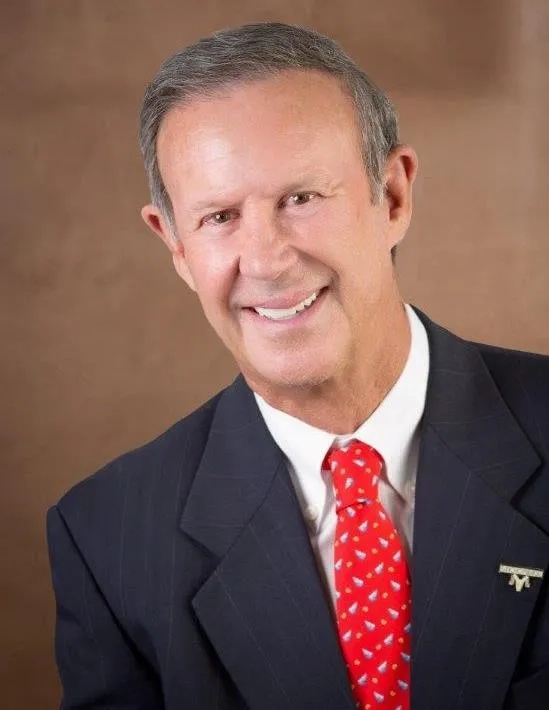
Rancho Mirage City Council Member Ted Weill.
“This is a fairness measure to give the people of Rancho Mirage the right to vote yes or no,” Weill said.
Residents opposed to higher taxes will be able to vote against the measure in November, he said, while supporters should have the same opportunity to approve it.
Weill also pointed to approximately $17 million in road upgrades that he said will be needed over the next several years.
Rancho Mirage maintains approximately 91 miles of streets and roadways. City officials have estimated that complete roadway replacement can cost more than $1.5 million per mile.
Weill said maintaining the condition of Rancho Mirage streets is one of the services residents have come to expect, but it requires a funding source that can keep pace with construction and maintenance costs.
Public safety presents an even larger challenge.
Weill cited projections indicating that annual public safety expenses could reach approximately $32 million within three years while General Fund revenue grows to about $42 million.
That would mean public safety alone could consume roughly three-quarters of operating revenue, compared with approximately half of General Fund expenditures today.
“Do you want us to raise additional revenues, or do you want us to cut expenses?” Weill asked. “We need you to tell us.”
Councilmember Eve Fromberg Edelstein said the city’s roads, public safety services and overall quality of life were among the reasons she chose to live in Rancho Mirage.
“This is about an investment in our future, more so than it is about the investment of today,” she said.
Fromberg Edelstein said placing the measure on the ballot would allow the city to address potential financial pressures before it is forced to make the difficult service and spending decisions confronting other California communities.
She emphasized that her vote did not enact the tax.
“It is really the voters’ decision,” she said.
City reserves remain at the center of the debate
Councilmember Steve Downs directly acknowledged the reserves that some residents have cited in opposing the proposal.
“I want to acknowledge the foresight of our staff and past city councils, who have built the healthy reserves that make Rancho Mirage the successful and stable city that it is today,” Downs said.
The latest audited financial report, covering the fiscal year that ended June 30, 2025, shows a total General Fund balance of approximately $79 million.
That figure does not mean the city has $79 million in unrestricted cash available for any immediate purpose.
Approximately $52.1 million was classified as committed to designated purposes, including a prudent reserve, public safety, the library, capital projects and disaster recovery. About $11.3 million was unassigned, while approximately $15.5 million was classified as nonspendable, largely because it included loans receivable rather than money available for current operations.
The General Fund held approximately $66 million in cash and investments.
Across all governmental funds, the city reported approximately $110.8 million in fund balances and about $100.2 million in cash and investments. Those broader totals include money held outside the General Fund for housing, fire services, the library and other purposes.
The figures explain why online references to the city having approximately $90 million in reserves can vary depending on which funds, classifications and financial periods are being counted.
They also confirm the larger point being made by tax skeptics: Rancho Mirage has considerable accumulated financial resources and is not proposing the tax from a position of insolvency.
The city’s argument is that reserves are finite, one-time resources, while public safety contracts, insurance, road maintenance and municipal operations are recurring expenses. Using reserves to cover an annual operating imbalance could postpone difficult decisions but would not eliminate the underlying gap.
The November debate is likely to turn on how aggressively Rancho Mirage should use those resources before asking residents and visitors to pay more.
Council defends community programs from potential cuts
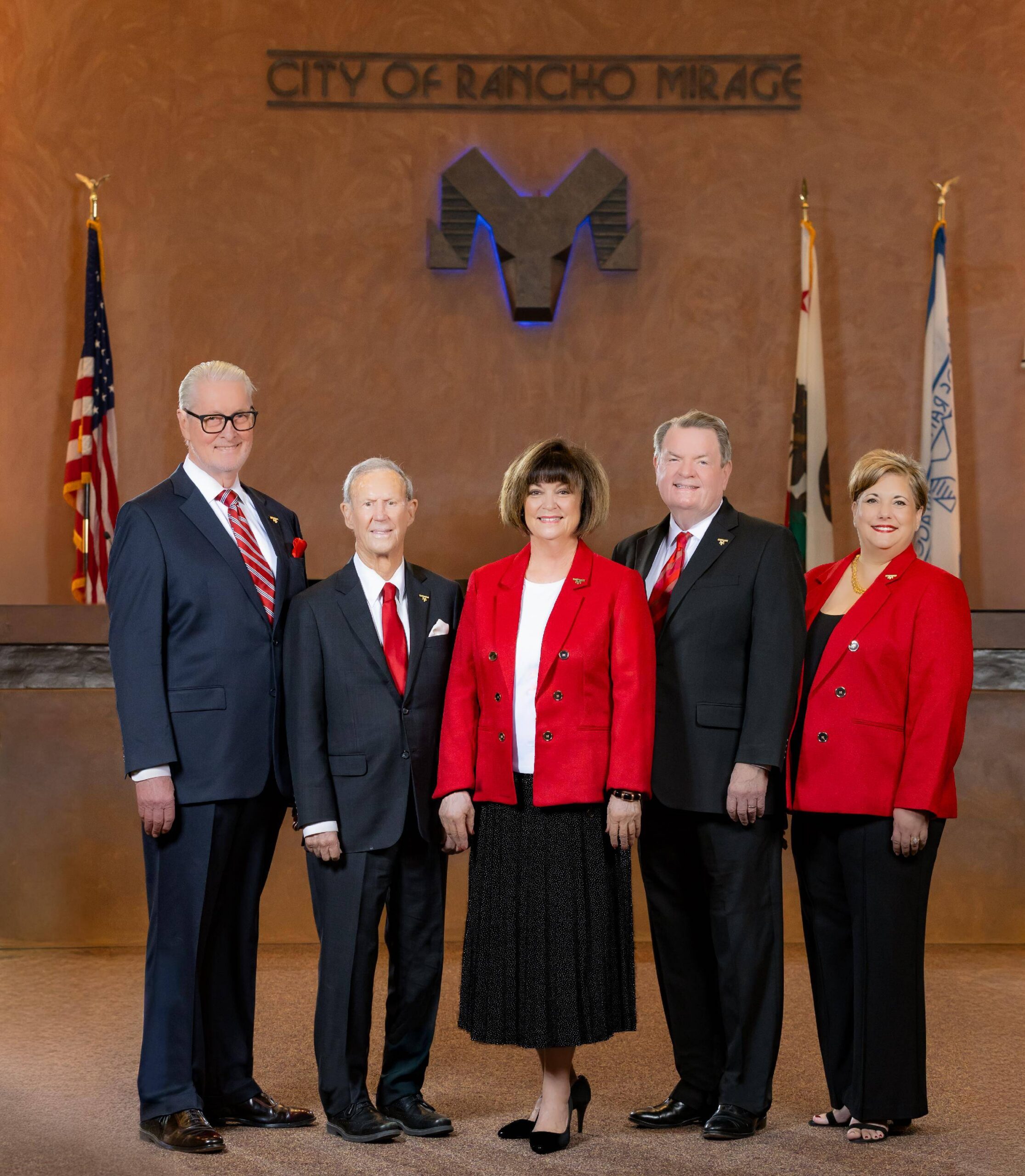
The Rancho Mirage City Council.
Downs also responded to residents who have suggested reducing city support for cultural, charitable and community programs rather than increasing taxes.
He said such programs account for a relatively small portion of the budget and eliminating them would not address the growth in public safety, insurance and infrastructure costs.
Downs cited library reading and computer programs, student scholarships, observatory tours, Citizens on Patrol, senior services, housing programs intended to attract medical professionals, the Rancho Mirage Writers Festival and support for regional nonprofit organizations.
“We could eliminate all of this and still not make a dent in the structural changes that the expenses are representing,” Downs said.
He added that spending reductions should remain part of the discussion, but argued that fiscal responsibility should not mean dismantling programs connected to the city’s identity.
“Our commitments are to safety, to infrastructure, to fiscal responsibility, to culture, to compassion and to opportunity,” Downs said.
What the Rancho Mirage sales tax measure would do
If approved, the measure would raise the combined tax rate to 8.75%.
For a taxable $100 purchase, the additional tax would be $1. Groceries, prescription medications and other transactions exempted under California law generally would not be affected.
Rancho Mirage and Indian Wells currently have the lowest combined rates among the nine Coachella Valley cities at 7.75%.
The increase would place Rancho Mirage at the same rate as Palm Desert, La Quinta, Indio, Coachella and Desert Hot Springs. It would remain below the 9.25% rates in Palm Springs and Cathedral City.
City staff estimates that approximately 75% of Rancho Mirage sales tax revenue is generated by tourists and visitors rather than residents. Officials say a substantial share of the new revenue would therefore be paid by people shopping, dining or staying in Rancho Mirage.
Residents would still pay the higher rate on taxable purchases made or sourced to the city, including some expensive retail and automobile transactions.
The proposal is structured as a general tax. Although its title and ballot language emphasize public safety, roads, parks, the library and other services, the proceeds would be deposited into the General Fund and could be spent for any lawful municipal purpose.
The money would not be legally divided into fixed percentages for roads, police, fire protection or other programs.
The measure would require annual independent audits, public review of the audit results and disclosure of spending. It does not establish a separate citizens’ oversight committee.
It also contains no sunset date. The tax would continue until Rancho Mirage voters acted to end it.
The November campaign begins
Under the election schedule approved Thursday, primary arguments supporting or opposing the measure are due to the city clerk by 5 p.m. Aug. 17. Rebuttal arguments are due by 5 p.m. Aug. 27.
The city attorney will also prepare an impartial analysis explaining the measure’s legal and financial effects for the voter information guide.
Thursday’s unanimous vote shifted the decision from City Hall to the electorate. But it did not resolve the financial question at the center of the proposal.
Supporters will argue that Rancho Mirage should establish a recurring source of locally controlled revenue before higher costs erode its reserves or force service reductions.
Opponents are likely to argue that a city with a balanced budget, comparatively low staffing and substantial accumulated resources has not demonstrated the need for a permanent $7.5 million annual tax increase.
On Nov. 3, Rancho Mirage voters will decide which interpretation of the city’s financial position is more persuasive.
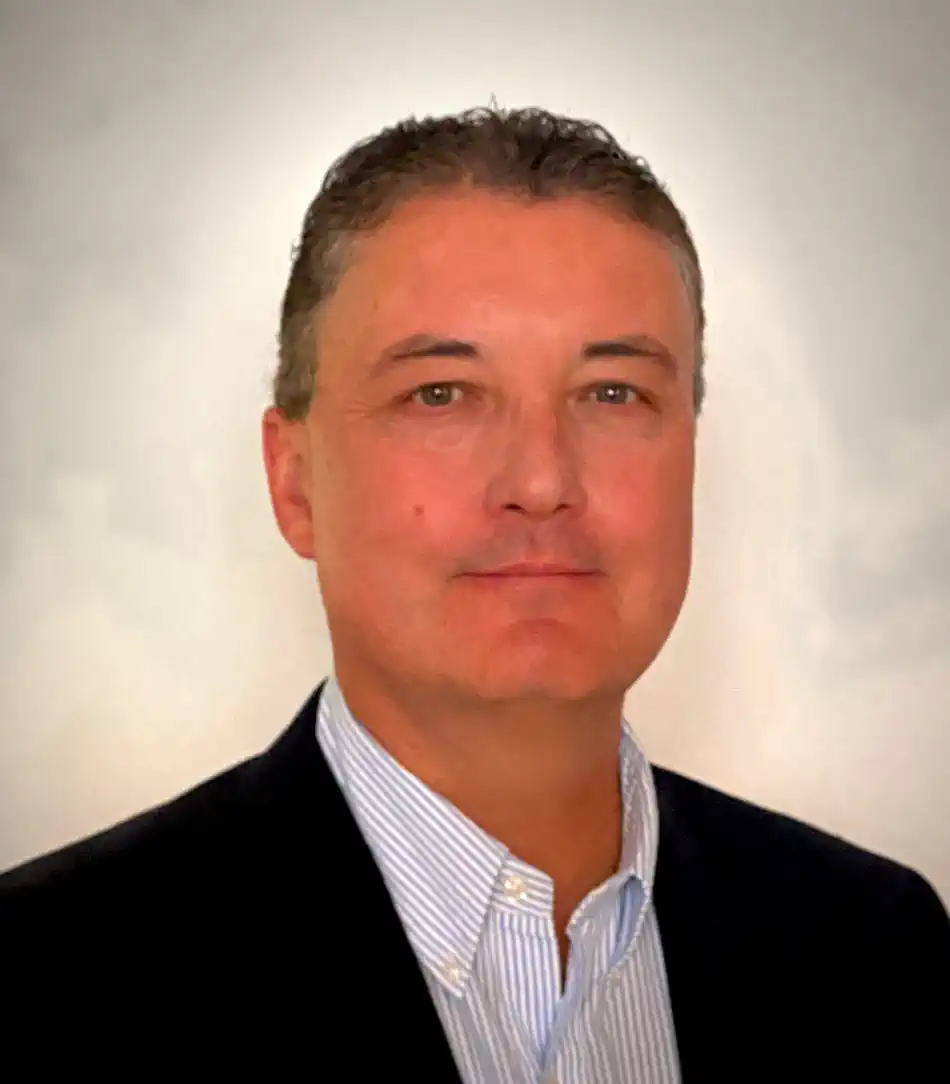
Bob Marra is the CEO/Publisher of GPS Business Insider. He has been studying, writing and giving presentations about business, economic and public affairs news and issues and the local economy in the Greater Palm Springs/Coachella Valley region for more than 20 years.