Riverside County will keep MFI Recovery Center in charge of a small but important piece of the Coachella Valley’s homelessness and behavioral health system for another year, extending a contract that county officials have repeatedly said they intend to put out for competitive bidding.
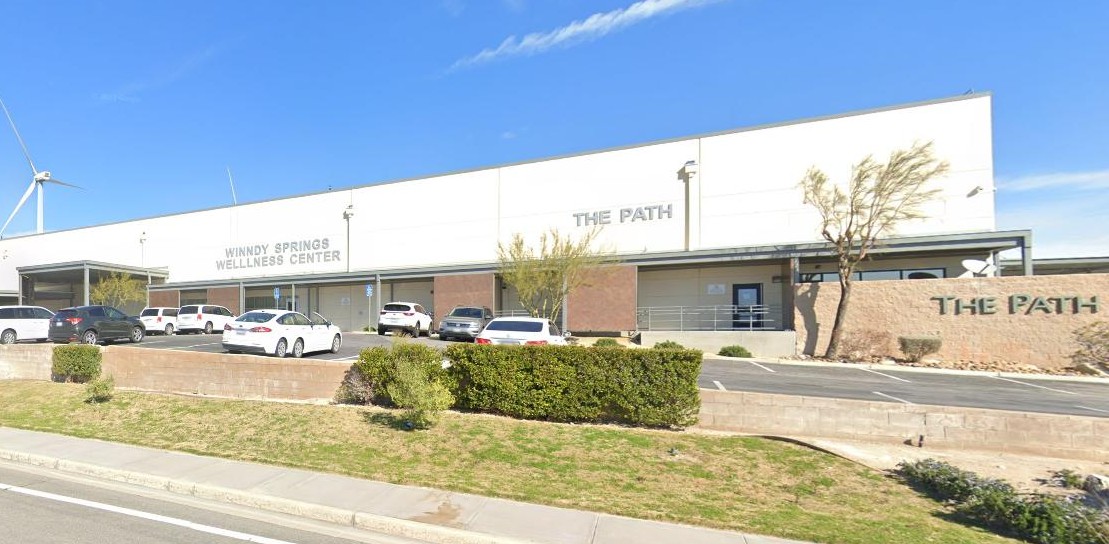
The Riverside County Board of Supervisors voted 5-0 on Sept. 1 to approve a $1.0568 million agreement with MFI to continue operating The Path, a county-owned program on McLane Street in North Palm Springs. The contract runs through June 30, 2027.
The county can increase compensation by up to 10 percent, bringing the agreement to about $1.16 million.
At first glance, the action amounts to a one-year continuation of an established service. The Path provides permanent supportive housing for up to 25 adults along with a 24-hour drop-in center serving people experiencing chronic homelessness, serious mental illness and, in many cases, substance-use disorders.
But the contract’s history raises a broader procurement question.
MFI has operated The Path since 2021. The county approved agreements with the organization without competitive bidding in 2023, 2024 and 2025, each carrying the same $1.0568 million base annual cost.
In its 2025 Board submittal for The Path contract, Riverside University Health System Behavioral Health said it anticipated conducting a competitive procurement identified as RFP MHARC-296 during fiscal 2025-26.
That did not result in a new operator contract before the fiscal year ended June 30.
The latest county documents now say the competitive process will be conducted during fiscal 2026-27. County officials say extending MFI in the meantime will prevent service disruption and displacement of residents while the procurement is completed.
The rationale is significant because The Path serves a population for whom continuity can be especially important. MFI describes the program as a low-demand setting designed to engage chronically homeless adults who have resisted housing or conventional services, providing housing, meals, showers, laundry, peer support and connections to other community resources.
The contract is financed 60 percent with federal funds and 40 percent with state funds. County staff says there is no net cost to Riverside County’s General Fund.
A second MFI contract on the same campus
The Path was not the only MFI agreement before supervisors Tuesday.
RUHS also sought approval of a $2.46 million one-year single-source agreement for MFI to continue operating Roy’s Desert Springs on the same McLane Street campus.
As of early Wednesday, however, Riverside County had not posted certified Sept. 1 proceedings and GPS Business Insider could not independently confirm final Board action on the Roy’s item. It therefore should not yet be counted as an approved contract.
The proposed agreement covers services for 49 behavioral health residents and would allow an additional 10 percent in compensation. Roy’s is funded entirely with state money, with no net county General Fund cost.
If the Roy’s agreement is confirmed as approved, the two MFI contracts would carry a combined base value of about $3.52 million and could reach roughly $3.87 million with the authorized increases.
MFI has operated Roy’s since fiscal 2020-21.
The program is different from The Path. Roy’s is a state-licensed adult residential care facility with capacity for 92 beds, according to MFI, although the current county agreement covers 49 residents. It provides longer-term, but not permanent, supervised living for adults ages 18 to 59 with serious and persistent mental health disorders, including people who have stabilized after acute or long-term psychiatric hospitalization but are not yet able to live independently.
The county says it also intends to competitively procure those services, under RFP MHARC-302, during the current fiscal year.
A changing homelessness system
The extensions come as the western Coachella Valley’s homelessness-services infrastructure has changed substantially.
Palm Springs opened its $40 million Navigation Center in 2024, creating 80 temporary housing units along with emergency shelter and support services. The city subsequently reported a 63 percent decline in its Point-in-Time count of unhoused people between 2023 and 2025.
That does not make The Path obsolete. Its residents and drop-in clients generally represent a more clinically complex segment of the homeless population, particularly people with serious mental illness who may be difficult to place in conventional shelter or housing programs.
It does, however, make performance measurement increasingly important.
GPS Business Insider reported in 2023 on the valley’s growing investment in permanent supportive housing and homelessness programs. With more facilities now operating, the policy question is shifting from whether services exist to how well different programs work, what they cost and which approaches produce durable outcomes.
For The Path, useful measures would include average occupancy, admissions and exits, movement into stable housing, hospital and behavioral health crisis utilization, incidents, actual county payments and cost per client served.
Those data would also give the county something it does not get from repeatedly extending a single-source agreement: a meaningful basis for comparing MFI’s performance and pricing with competing providers.
Riverside County has made clear that it does not want to interrupt care while it changes procurement methods. The next test will be whether MHARC-296 for The Path and MHARC-302 for Roy’s are actually released and completed during fiscal 2026-27.
After several years of extensions, that competitive process may ultimately be more consequential than Tuesday’s contract vote.