BH Properties’ proposed mixed-use project would bring housing, jobs, infrastructure and long-term city revenue to one of North Indio’s most visible undeveloped sites
On a largely undeveloped stretch of land near Interstate 10 and Monroe Street, Indio is weighing a project that could help define the city’s next phase of growth.
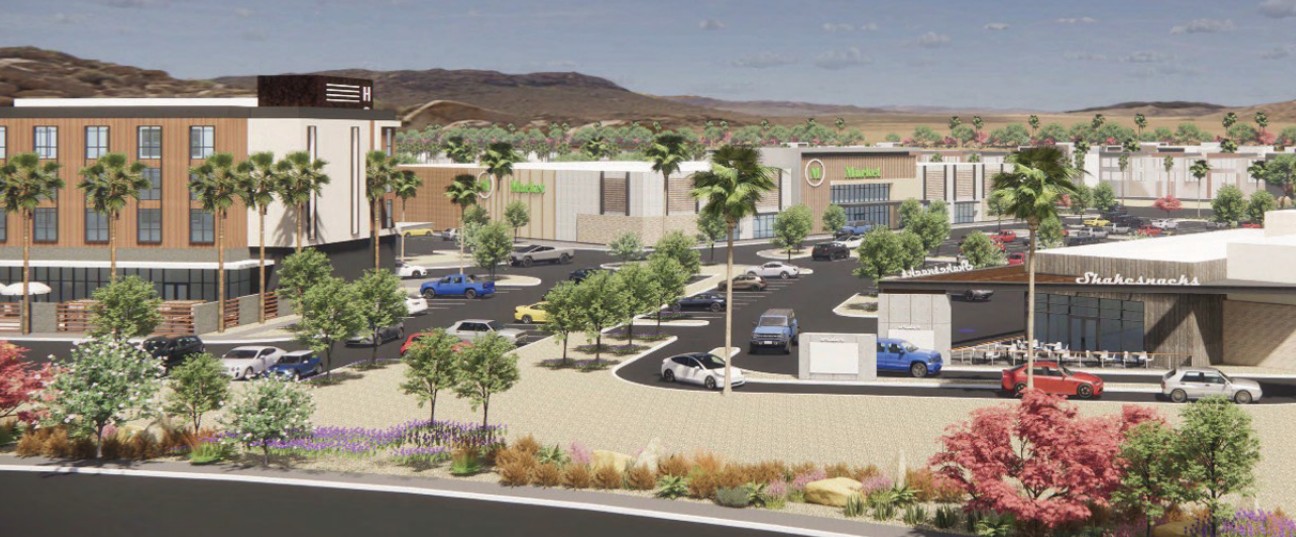
The proposal, known as The Oasis at Indio, would transform roughly 183 acres near Avenue 42 and Monroe Street into a mixed-use district with housing, retail, hotel space and employment-generating industrial uses. The site sits near one of the city’s most important freeway gateways, in an area that has long been positioned for growth but has remained largely underutilized.
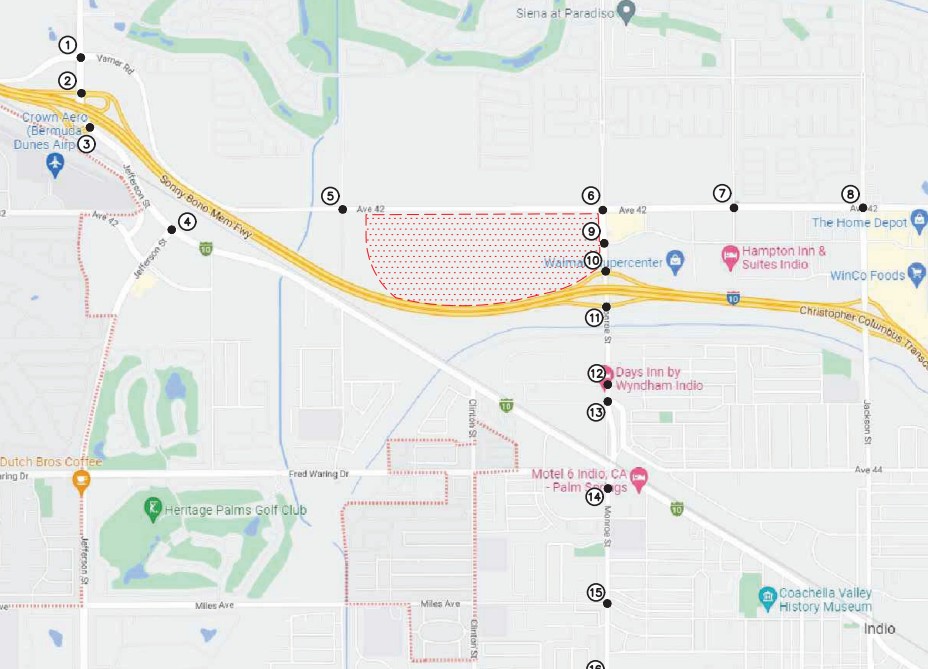
The Oasis at Indio site is located along I-10 adjacent to the Monroe Street interchange.
For Indio, the project represents more than another real estate proposal. It is a test of whether the city can use large-scale private investment to deliver several public priorities at once: more housing, new jobs, expanded infrastructure, stronger municipal revenues and a broader economic base beyond tourism, events and service-sector activity.
The project is being advanced by BH Properties, a Los Angeles-headquartered commercial real estate investment firm with more than three decades of experience acquiring, operating and repositioning real estate assets across the country. Its portfolio includes 115 properties, 3,148 multifamily units, 12.1 million square feet of commercial space and more than 918 tenants across 16 states, including Puerto Rico.
That background matters because The Oasis at Indio is not a conventional single-use subdivision or isolated warehouse proposal. It is being designed as a multi-component specific plan, with different land uses intended to work together over time. The plan includes residential development along Avenue 42, commercial and hotel uses near Monroe Street, and modern employment-generating uses closer to the freeway.
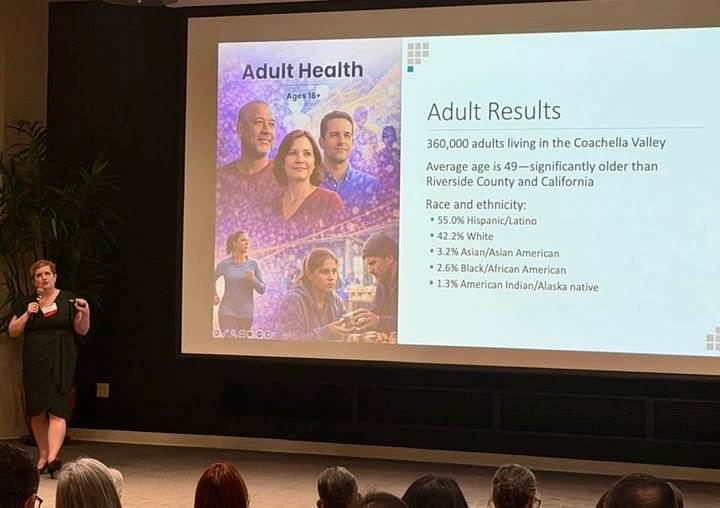
During a presentation at the May 20 Indio State of the Business Community event produced by the Greater Coachella Valley Chamber of Commerce, Jim Brooks, president of BH Properties, said the company has approached the project with a long-running outreach effort that began well before the proposal reached this stage of public review.

Jim Brooks, President, BH Properties.
“We have been engaged with the community from the inception of this project more than three years ago,” Brooks said. “That has meant listening to residents, meeting with stakeholders, working through concerns and trying to shape a plan that responds to what we heard, particularly the need for more housing, more local jobs and infrastructure that supports long-term growth.”
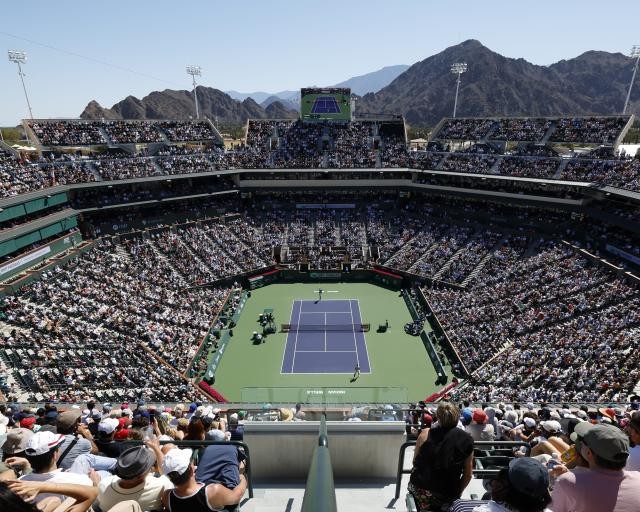
The proposal comes as Indio continues to emerge as the Coachella Valley’s largest city by population and one of its most active growth centers. The city has added population, expanded its retail and hospitality base, invested in downtown revitalization and positioned itself as a year-round business and residential hub in addition to the host city of famous, world-class music festivals.
Brooks said the business climate in Indio is one reason BH Properties views the site as a strong long-term investment.
“Indio has created a pro-business climate that gives developers and employers confidence,” Brooks said. “The city understands that growth must be matched with jobs, housing, infrastructure and public benefit. That is one of the reasons we believe this site and this city are so well aligned.”
The project’s current request is for a specific plan framework, not approval of final building designs or committed tenants. The distinction is central to understanding the proposal. The specific plan would establish the land use framework, development standards, infrastructure obligations and range of allowable uses for the site. Specific building configurations would still have to be returned to the Planning Commission for approval.
BH Properties has advanced a plan that could allow up to 1.8 million square feet of industrial space, but the developer has emphasized that the designation is much broader than warehousing. The proposed industrial land use would allow employment-oriented uses such as research and development, business park space, manufacturing, biomedical operations and food- and beverage-related uses. At GPS Business Insider, we have been hearing lately from commercial real estate brokers that industrial space is nearly maxed out in our region, so the market demand for new space is going to be strong.
That framing is important in a region that has been working for decades on ways to diversify its economy and create higher-wage local jobs. Coachella Valley economic development discussions have increasingly focused on clean energy, advanced manufacturing, logistics-adjacent services, automation, food systems and other innovation-based industries. The Oasis at Indio proposal is being positioned as a site that could accommodate those kinds of modern light-industrial and employment-generating uses, not heavy industrial activity.
Project materials describe the planned industrial component as lower impact than traditional industrial development, with expected uses tied to logistics, operations, equipment maintenance, automation and related business functions. Many of those positions could offer competitive wages ranging from $60,000 to more than $100,000 annually, plus benefits.
The employment numbers are substantial. BH Properties estimates that The Oasis at Indio would support 1,272 permanent jobs across the completed project, along with 2,151 construction jobs at peak activity and at least 968 construction jobs annually during a projected five-year buildout. They say that 97 percent of the projected employment would be tied to the industrial or employment-generating portion of the development.
Housing is another major core component. The conceptual plans place residential uses along Avenue 42. Brooks said that community outreach and city leadership have repeatedly identified new workforce housing inventory as a top priority. The proposal includes a five percent moderate-income, or workforce housing component, intended to create attainable homeownership opportunities for first-time buyers and working families.
That housing element is especially meaningful in a region where growth has placed increasing pressure on workers, young families and public-sector employees. Greater Palm Springs has a persistent affordability challenge, especially for residents whose jobs are tied to hospitality, retail, health care, public safety and other essential local industries. Even a modest workforce housing requirement can be important when tied to a larger project that also creates jobs and infrastructure.
The project’s most immediate physical impact may come through infrastructure. According to planning documents, The Oasis at Indio would fund $27 million to $30 million for the construction of an electrical substation that would benefit the broader community, not only the project. It would widen Avenue 42 along the project frontage from two lanes to four lanes, with a bike lane, enhanced lighting and streetscape improvements intended to improve traffic flow and public safety.
The proposal also includes the construction of a storm drain facility on North Avenue 42 that would benefit city infrastructure, even though it is not directly connected to the project. Other public benefits include a reserved site for a future police substation, funding support for public safety services, a donation of roughly 3 acres of parkland valued at about $1 million, and $3.5 million for the Monroe Street interchange, with half of that amount committed as of the project’s effective date.
Those commitments are a major part of the project’s public value proposition. In fast-growing cities, infrastructure often lags development because the cost of roads, utilities, drainage, public safety and parks can exceed what municipal budgets can absorb. The Oasis proposal attempts to address that gap by tying private development to a package of public improvements that would otherwise require other funding sources or longer timelines.
The fiscal case is also significant. BH Properties estimates $613 million in one-time economic output, including $335 million in construction employee wages and benefits and local business spending. They also estimate $43 million in one-time development fees, which would bolster the city’s budget for public infrastructure, police and fire services, and community benefit projects.
On an ongoing basis, the project is projected to generate $147 million to $159 million in recurring economic output, including onsite business revenue, purchases from local businesses and employee spending within the local economy. There is also an estimated $861,000 net annual general fund surplus for the city after project-related service costs are covered.
Those figures are especially relevant to Indio because the city is trying to accommodate new development while maintaining service levels and improving infrastructure across a larger, more complex municipality. A project that generates a recurring net fiscal benefit can help fund public services after the initial construction cycle ends.
The layout of the project reflects an effort to place uses where they make the most sense from a planning perspective. Retail and hotel uses are shown near Monroe Street, where freeway access and visibility are strongest. Employment-generating uses are oriented toward I-10. Housing is shown along Avenue 42, creating a residential edge on the northern side of the site.
Conceptual site plans show multiple possible configurations. One version includes two large industrial buildings. Another breaks the industrial space into eight smaller buildings. That flexibility could prove important as market conditions evolve and as the city reviews future site plans.
The developer’s outreach timeline shows that the project has been in public discussion for several years. Environmental scoping began in 2023, followed by engagement with the city, community meetings, town halls and additional outreach. BH Properties cites several years of outreach, more than 700 attendees and four public meetings.
The city’s task now is to evaluate whether the specific plan provides the right framework for that next stage. The project is slated for consideration by the Indio Planning Commission on May 27.
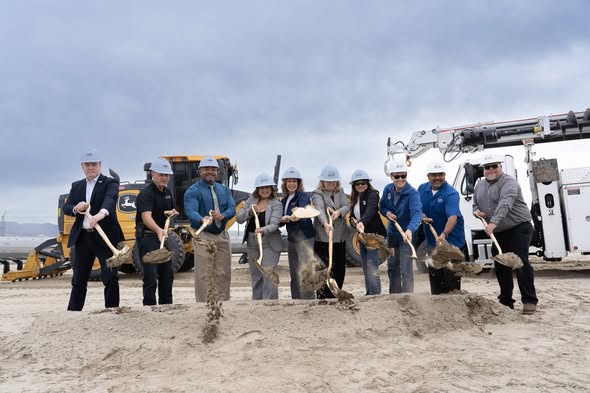
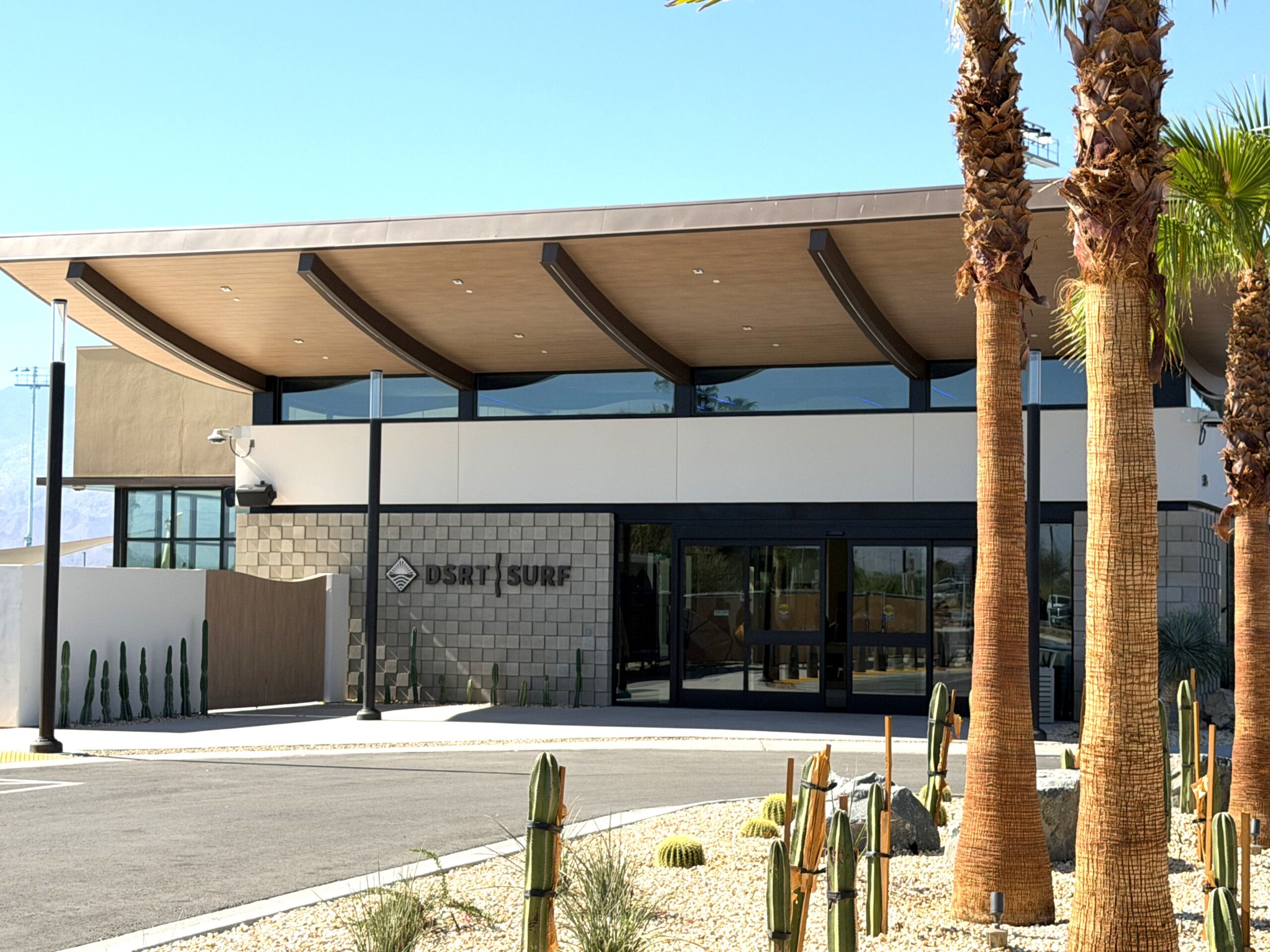
The Indio City Council, seen here celebrating the recent start of construction of a new IID power substation, is used to breaking ground for major, important new developments in the city.
The project’s scale is part of what makes the project so consequential. A smaller development might add homes or retail without changing the city’s economic trajectory. A narrowly focused industrial project might create jobs but miss the opportunity to create a more complete district.
That ambition is also why execution will matter. The promise of The Oasis at Indio is not just in the acreage or the square footage. It is in whether the project can be phased intelligently, attract quality users, deliver infrastructure early enough to matter, and create a development pattern that strengthens North Indio rather than simply filling vacant land.
The proposal is still subject to review, refinement and future approvals. But the direction is clear. These days, Indio is deciding what kind of investment it wants, where it should be located, and how much public benefit it should deliver.
The Oasis at Indio is one of those decisions.

Bob Marra is the CEO/Publisher of GPS Business Insider and GPS Market Intel. He has been studying, writing and giving presentations about business, economic and public affairs news and issues and the local economy in the Greater Palm Springs/Coachella Valley region for more than 20 years.