For more than half a century, the Salton Sea has been studied, modeled, analyzed, litigated, authorized, reconsidered, and studied again. Few public problems have generated more reports. Few have produced less certainty.
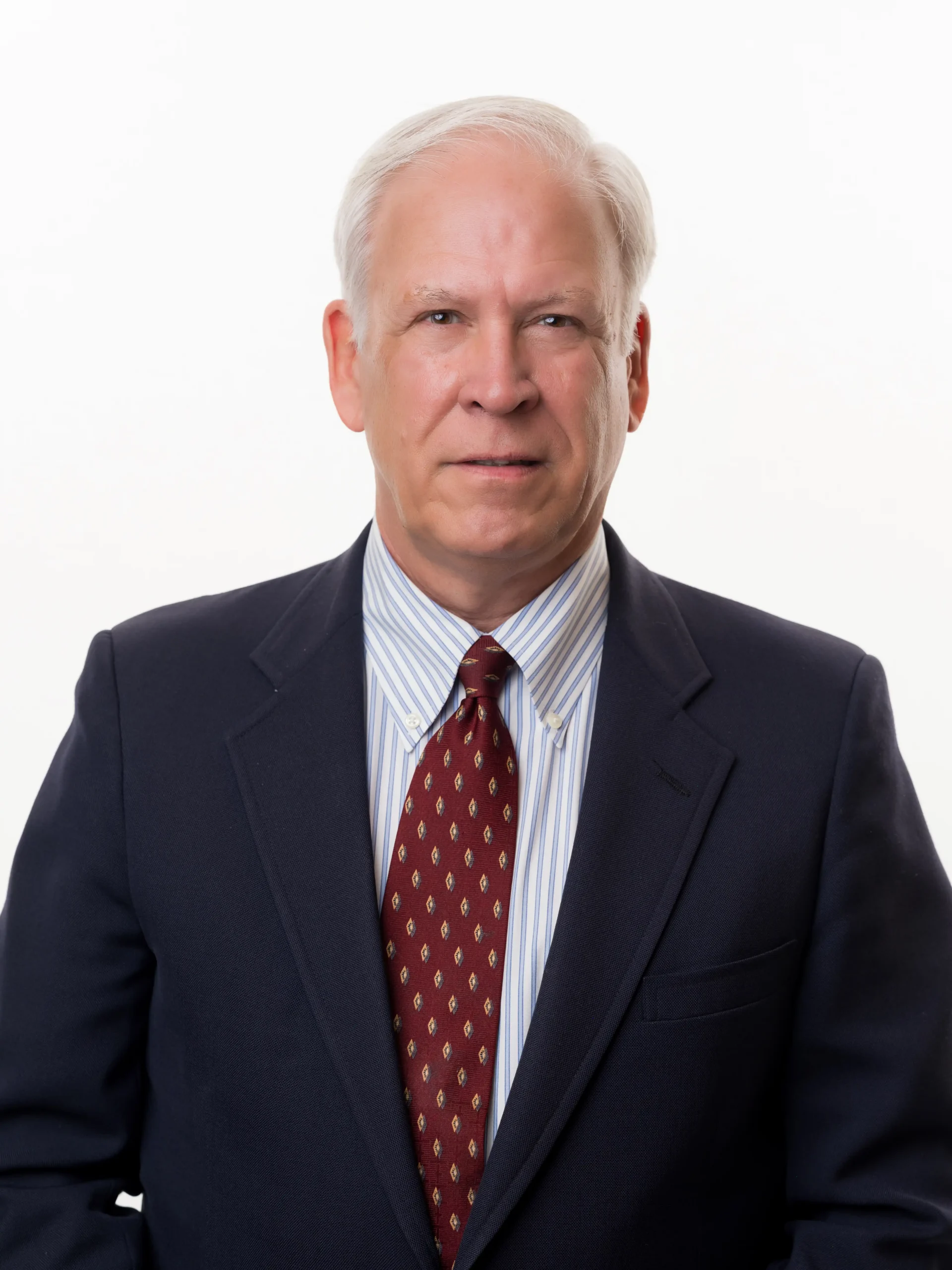
G. Patrick O’Dowd, Executive Director and General Manager of the Salton Sea Authority.
We have produced reconnaissance reports, feasibility reports, environmental reviews, restoration plans, governance studies, benchmarks, pilot projects, and implementation frameworks.
Yet the most important question has remained largely unanswered: how does any of this reduce uncertainty? That question should become the organizing principle for every future decision affecting the Salton Sea.
Uncertainty Is the Common Denominator
The conventional narrative is that the Sea is an environmental problem. Air quality matters. Habitat matters. Public health matters. Water quality matters. But beneath each of those concerns lies a deeper challenge: uncertainty is the common denominator.
Residents face uncertainty about their health and the future of their communities. Businesses face uncertainty about environmental conditions and long-term investment. Public agencies face uncertainty about authority, responsibility, funding, and liability. Elected officials struggle to define success because no enduring framework explains what condition must be achieved, who is responsible for achieving it, or what happens when circumstances change.
The irony is that the Sea’s physical behavior has never been particularly mysterious. Federal scientists documented the Salton Sink as a closed basin in 1853. Engineers who developed the Imperial Valley understood that it would become the receiving terminus for agricultural drainage. By 1950, Imperial Irrigation District Board President Evan Hewes testified that the Sea was a drainage repository whose salinity would inevitably increase.
The physics were not uncertain. What changed was society’s expectations. By the 1960s, the question was no longer simply what the Sea was. The question became what else we expected it to be: a fishery, a wildlife refuge, a recreation destination, an economic asset, and a drainage repository simultaneously.
Each new expectation brought new responsibilities. Each new responsibility introduced new uncertainty.
The Physics Were Clear. Accountability Was Not.
The 1969 Federal-State Reconnaissance Report recognized that the Sea’s primary function remained receiving agricultural drainage, yet no agency possessed responsibility for the whole system. The Sea itself held no priority right to receive water. Five years later, the 1974 Federal-State Feasibility Report reached essentially the same conclusion.
Those reports established something remarkable. The system had a defined purpose. Its dependence on inflows was understood. The consequences of declining inflows were foreseeable, yet no institution was accountable for the outcome.
That is not an environmental failure. It’s a failure of governance.
The reports estimated costs, evaluated alternatives, and recommended action. They did not answer the questions that ultimately determine whether any public commitment can endure: Who is responsible? Who pays? Who operates? Who maintains? Who adapts when conditions change? Who remains accountable after the original assumptions no longer hold?
Why the Salton Sea Authority Was Created
Those unresolved questions help explain why the Salton Sea Authority was created in 1993. The Authority was never intended to assume every responsibility at the Salton Sea. It was created because no single agency could. Its purpose was to provide regional continuity, coordinate institutions with different authorities, and ensure that responsibilities extending beyond any one jurisdiction did not simply disappear between them. That purpose remains just as relevant today as it was more than thirty years ago.
No one understood that institutional challenge better than the Authority’s founding Executive Director, Tom Kirk. In 2002, as the Authority warned that reduced inflows would accelerate playa exposure while increasing restoration costs beyond the commitments being made, Tom reduced the problem to a single question:
“Who will pick up the difference?”
More than twenty years later, the question still resonates because it was never really about money. It was about responsibility.
A Better Measure of Progress
Every proposed action at the Salton Sea should therefore be judged by a different standard. A project should not be measured only by acres constructed. A funding package should not be measured solely by appropriated dollars. A study should not be measured only by the number of pages published. An environmental review should not be measured only by whether it reaches a finding of no significant impact.
The more important question is whether the action reduces uncertainty.
Does it clarify responsibility? Does it establish durable funding? Does it define long-term operation and maintenance? Does it improve predictability for residents, investors, and public agencies? Does it ensure that changing conditions will be monitored, communicated, and managed?
If not, it may accomplish far less than advertised. A project can be completed while uncertainty remains, a study can be published while uncertainty grows, and money can be appropriated without anyone becoming responsible for the result.
Activity is not assurance.
When Inaction Becomes a Decision
Nor should institutional silence be mistaken for neutrality. The conditions confronting Salton Sea communities have never been declared acceptable. They have simply been treated as acceptable whenever a known risk is documented without a corresponding commitment to address it, whenever responsibility is divided until no one remains accountable, and whenever foreseeable consequences are acknowledged but left outside the obligations being undertaken.
No agency has to declare those conditions acceptable. Inaction makes the declaration for them.
Confidence Requires Enduring Commitments
The future of the Salton Sea region will not ultimately be determined by a single restoration project, a lithium boom, or a particular shoreline elevation. It will be determined by whether uncertainty is reduced enough for people to trust the future.
People make decisions about their lives every day without certainty. Families buy homes without knowing exactly what their communities will look like twenty years from now. Businesses invest without knowing every future market condition. Governments invest in infrastructure without knowing every future demand.
They do those things because they believe public commitments will endure. They trust that responsibilities will not disappear with changing administrations, changing priorities, or changing budgets. They trust that someone will remain responsible when conditions change.
That is why governance matters. Good governance does not eliminate uncertainty. No institution can promise that. Rivers change. Climates change. Technology changes. Political priorities change.
What good governance can do is reduce uncertainty enough that people can make informed decisions about their futures. Confidence follows when responsibility is clear, commitments endure, changing conditions are managed, and someone remains accountable long after today’s headlines have faded.
The Work Before Us
That is the work before us. Not eliminating uncertainty, but reducing it enough that people can make informed decisions about their lives with confidence in the institutions that serve them.
Residents can live with uncertainty. Businesses can invest despite uncertainty. Governments can manage uncertainty.
What none of them can afford is uncertainty about who remains responsible.
That is the unanswered question.
G. Patrick O’Dowd is Executive Director and General Manager of the Salton Sea Authority, the joint powers authority representing Imperial County, Riverside County, Coachella Valley Water District, and the Torres Martinez Desert Cahuilla Indians.