The Coachella Valley Water District could leave as much as 90,000 acre-feet of water in the Colorado River system over the next two years and receive up to $29.25 million in federal conservation payments. The decision comes just as the West begins moving into a new and less predictable era of Colorado River management.
The Coachella Valley Water District (CVWD) is extending two major Colorado River conservation programs through 2028, positioning the region as an active participant in an increasingly urgent effort to keep more water in Lake Mead while the federal government rewrites the rules governing the river.
The programs could conserve as much as 45,000 acre-feet of Colorado River water annually in 2027 and 2028. If both reach their maximum levels, up to 90,000 acre-feet would remain in the Colorado River system rather than being used in the Coachella Valley.
Federal compensation could reach $29.25 million.
But the July 28 decision by the CVWD Board of Directors is considerably more consequential than a two-year water transaction.
It involves a trade-off between helping stabilize the Colorado River and temporarily reducing water that would otherwise help replenish the Coachella Valley groundwater basin. It raises questions about how conservation revenue should ultimately benefit local customers. And it comes precisely as the West begins operating under a fundamentally different approach to managing the river.
CVWD Assistant General Manager Robert Cheng described the urgency to directors before the vote.
“Why are we doing this?” Cheng asked.
CVWD, he said, has spent much of the past five years negotiating with other California water agencies and Colorado River Basin states while federal officials work toward a new operating system.
That system is now beginning to take shape.
A new Colorado River era arrives
Three days after CVWD acted, the U.S. Bureau of Reclamation released its long-awaited Final Environmental Impact Statement for post-2026 Colorado River operations.
As GPS Business Insider reported in its broader analysis, The Colorado River Is Entering a New Era, the federal action does not establish a single fixed operating plan through 2036.
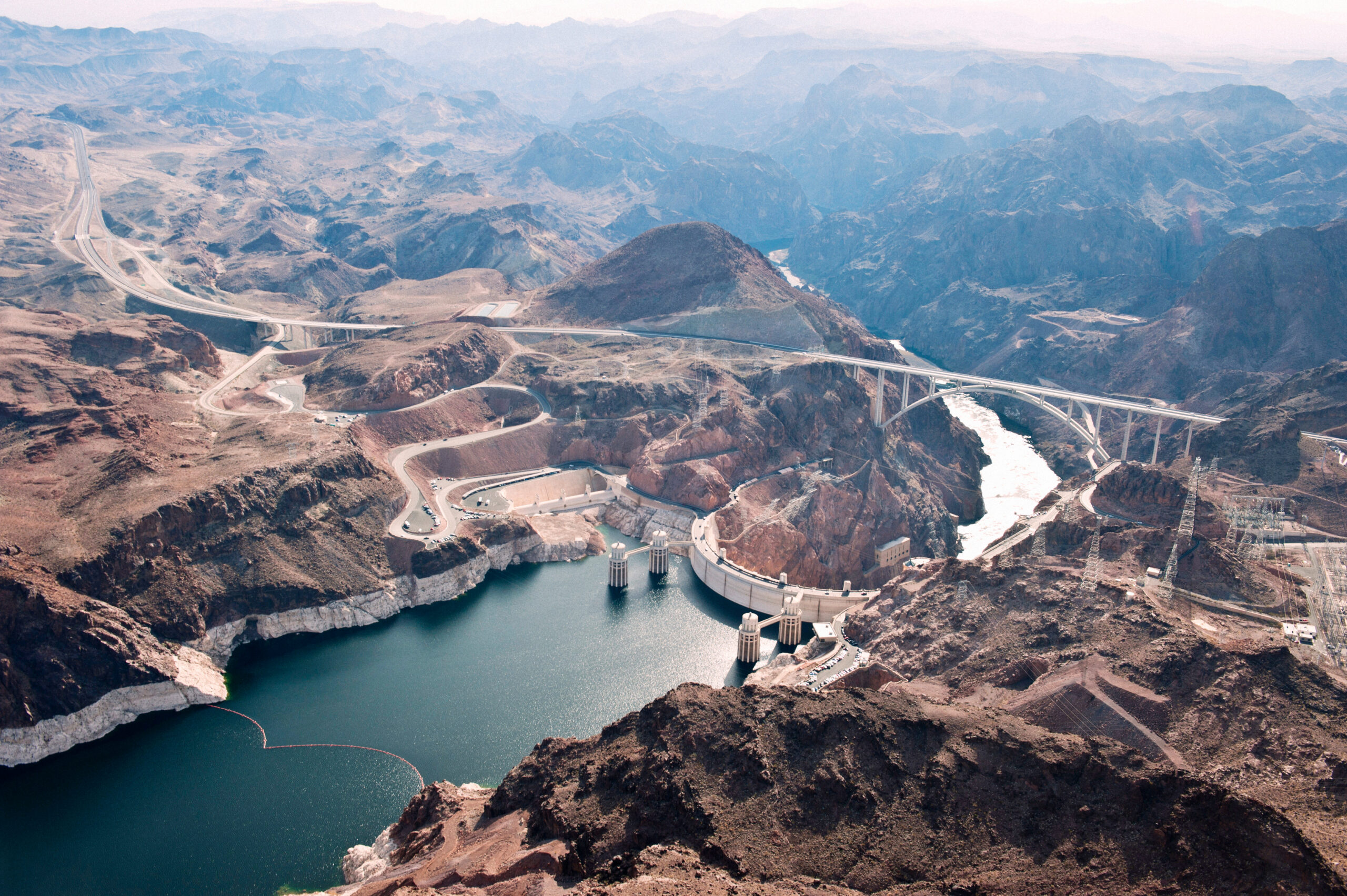
The Lake Mead water level is essentially the same as when the resevoir was first filled.
Instead, it creates a 10-year adaptive framework setting the boundaries within which Lake Powell and Lake Mead can be operated. More specific operating plans are expected to be developed for shorter periods, initially about two years at a time.
That distinction is important for the Coachella Valley.
The framework allows annual Lake Powell releases ranging from 5 million to 12 million acre-feet and Lower Basin shortages of up to 3 million acre-feet under sufficiently severe conditions. Those are operating boundaries, not automatic cuts.
As of Aug. 13, the Final EIS is the latest major federal action publicly posted in the process. Specific 2027-2028 operating rules still must follow.
J.B. Hamby, chairman of the Colorado River Board of California and California’s Colorado River commissioner, summarized the situation after the Final EIS was released:
“This is an important milestone, but it is not the finish line.”
The immediate issue is 2027 and 2028, exactly the years covered by CVWD’s conservation extensions.
California, Arizona and Nevada have proposed 1.25 million acre-feet of annual Lower Basin reductions in each of those years, including 440,000 acre-feet from California, 760,000 from Arizona and 50,000 from Nevada.
The proposal also seeks at least 700,000 acre-feet of additional conservation.
CVWD’s conservation programs therefore sit inside a much greater regional effort, although the final federal operating plan and California implementation agreements will determine how the various commitments fit together.
Two ways to leave water in Lake Mead
CVWD’s strategy has two distinct components.
The larger is the Replenishment Facilities Curtailment Program, under which the district reduces Colorado River water that otherwise would be delivered to replenish groundwater.
The second is CVWD’s Colorado River Water Conservation Program, a voluntary agricultural program that compensates participating growers for temporarily fallowing irrigated farmland.
The replenishment program could conserve up to 35,000 acre-feet annually in 2027 and 2028.
Agricultural fallowing could add another 10,000 acre-feet annually. The federal government will compensate CVWD at $325 for each acre-foot actually conserved, down from $400 under the existing programs.
Cheng emphasized the word “actually.”
If CVWD signs agreements covering the full 90,000 acre-feet but later determines that it cannot or should not conserve that much, the district is not obligated to reach the maximum.
“You only get paid for how much you actually conserve,” Cheng told directors.
That flexibility is particularly important because most of the proposed conservation comes from water that historically has helped protect the eastern Coachella Valley groundwater basin.
The groundwater tradeoff
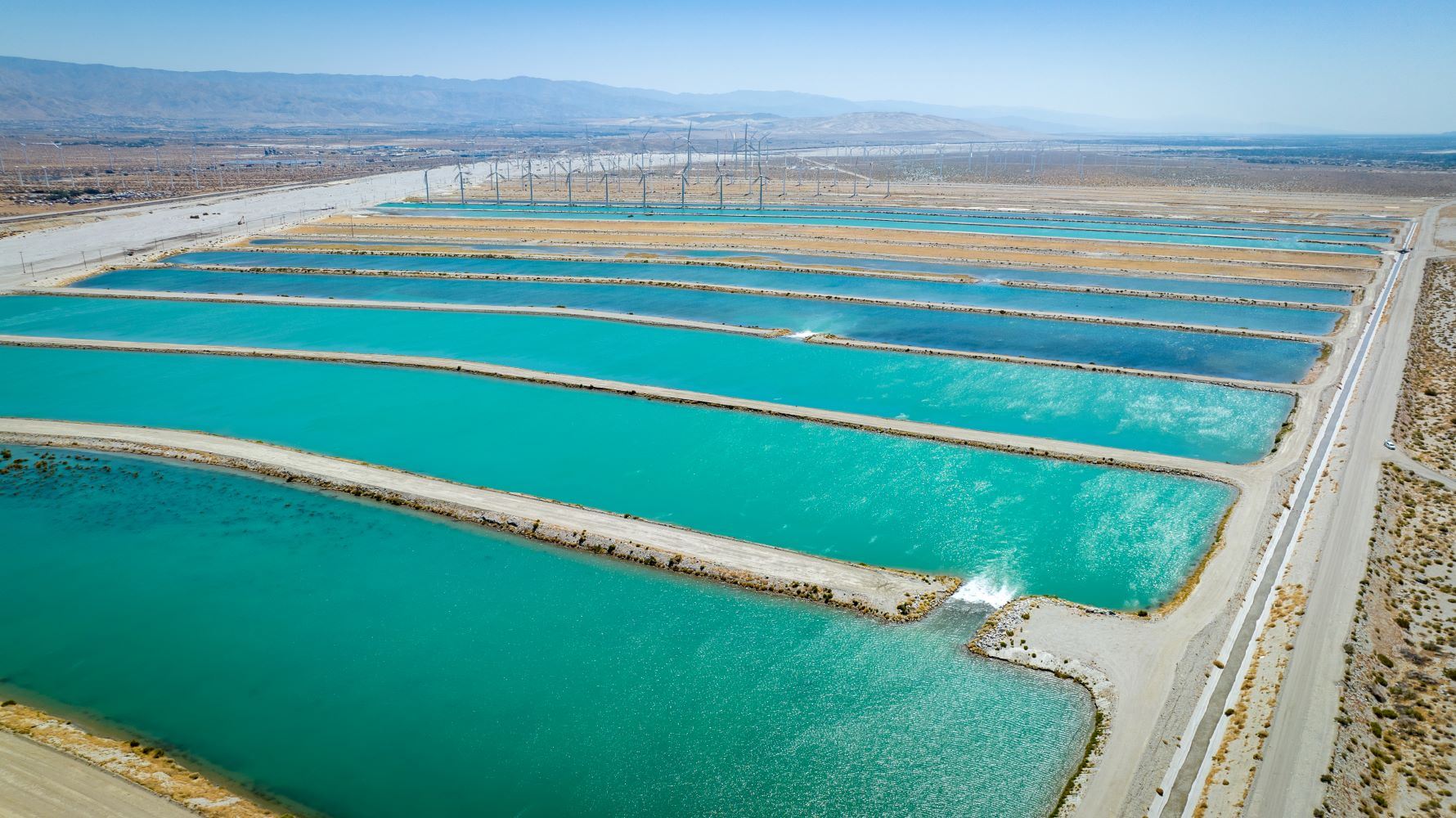
CVWD has long used imported Colorado River water to replenish the valley’s aquifer.
At the Thomas E. Levy Groundwater Replenishment Facility, the district historically recharged more than 37,000 acre-feet annually on average.
Under the conservation program, recharge there has been sharply reduced, allowing as much as 35,000 acre-feet each year to remain in the Colorado River system.
From 2023 through 2026, CVWD expects the program to conserve as much as 140,000 acre-feet. Extending it through 2028 would bring potential conservation under the agreement to 210,000 acre-feet.
The effect underground is being watched closely.
CVWD has measured localized groundwater declines, including a maximum cumulative decline of 41.4 feet at monitored locations. District staff says those declines remain localized, groundwater elevations are projected to stay above minimum thresholds and no threshold exceedances have occurred or are anticipated.
Another reason CVWD believes the program remains workable is its Oasis in-lieu project.
Instead of pumping groundwater for irrigation, participating agricultural properties receive Colorado River water from the canal system. CVWD says the Oasis project can supply up to 32,000 acre-feet annually, reducing groundwater pumping and creating the functional equivalent of recharge by leaving water underground.
One director emphasized during the July 28 discussion that the program’s temporary nature remains critical. If groundwater levels begin falling in ways the district did not anticipate, CVWD can change course.
Cheng agreed that the district retains that flexibility.
Why the Colorado River matters across Greater Palm Springs
The groundwater issue also explains why the Colorado River matters far beyond eastern Coachella Valley agriculture.
Nearly all drinking water in the Coachella Valley comes from groundwater. But imported water has helped sustain that aquifer for decades.
CVWD says more than 5.1 million acre-feet of imported water has been placed into the aquifer since 1973.
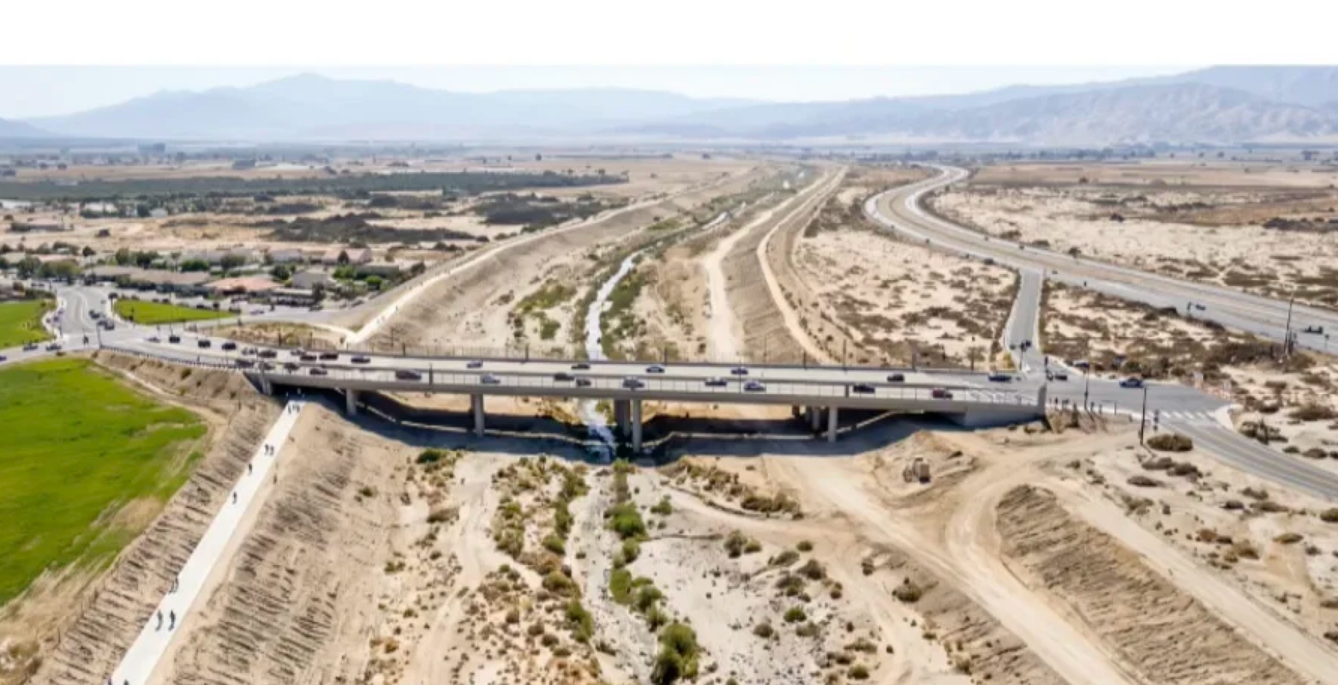
Colorado River water also travels through the Coachella Canal to more than 1,200 farms and 36 golf courses. Every acre-foot supplied directly for irrigation reduces the need to pump an acre-foot from underground.
The western valley is connected differently. CVWD and Desert Water Agency hold State Water Project entitlements, but State Water Project water does not physically flow into Palm Springs. Through exchange arrangements, Metropolitan Water District receives those supplies and Colorado River water is delivered through the Colorado River Aqueduct for groundwater replenishment in the Coachella Valley.
That is why a Colorado River shortage would not necessarily show up first as residential faucets running dry.
It could appear instead through reduced groundwater recharge, greater reliance on stored groundwater, additional conservation, more recycled-water investment and higher long-term water costs.
CVWD also enters the new federal era with an important legal advantage.
Its Colorado River supply includes a 330,000-acre-foot Priority 3(a) base entitlement, placing it among California’s senior Colorado River users.
Nothing in the new federal Final EIS assigns CVWD a specific 2027 or 2028 cut, and California’s proposed 440,000-acre-foot reduction is a statewide commitment, not a 440,000-acre-foot reduction imposed on the Coachella Valley.
But senior water rights do not eliminate the underlying physical problem. The river is producing substantially less water than the system historically expected.
Reclamation’s latest available hydrologic study puts estimated 2026 unregulated inflow into Lake Powell at only about 3.5 million acre-feet, 36 percent of average.
A deadline on federal conservation money
There is also a reason CVWD moved when it did.
Cheng told directors that the federal conservation funding comes from the Inflation Reduction Act, which originally included about $4 billion for Colorado River and related drought programs.
Approximately $350 million remained available, he said, and the federal authorization expires Sept. 30.
“After that, the money, if you’re not encumbering it or have it in the budget, it’s gone,” Cheng said.
Director John Aguilar asked whether committing before that deadline would secure funding for the full two-year agreement.
Cheng said yes.
The federal government would set aside funding for the potential 70,000 acre-feet of replenishment curtailment and 20,000 acre-feet of agricultural conservation, while CVWD would still be paid only for conservation actually verified.
Farmers can participate, but the savings must be real
Under the agricultural program, eligible growers can voluntarily stop irrigating qualifying farmland and receive compensation.
Reclamation will pay CVWD $325 per verified acre-foot. Growers will receive $275, while CVWD retains $50 for administration and related program costs.
If the full 20,000 acre-feet is conserved, federal payments could total $6.5 million, with up to $5.5 million going to growers.
Participants cannot simply replace canal water by pumping groundwater.
“There will be no groundwater pumping that will be substituted for this,” Cheng told directors.
CVWD establishes historical water-use baselines, Reclamation verifies fallowed acreage, and participants remain responsible for dust and weed control.
Actual participation may be considerably below the authorized ceiling. Although the existing program allowed up to 30,000 acre-feet of agricultural conservation from 2024 through 2026, CVWD estimates actual conservation at only about 11,100 acre-feet.
A controversial federal provision disappears
Cheng also disclosed a significant last-minute change to the agreements.
Federal language had contemplated allowing the Secretary of the Interior, at the Secretary’s discretion, to store or use the conserved water for federally determined purposes.
Cheng said the provision raised concern because it could imply that water placed in the conservation pool might ultimately be moved across state lines.
Because of the controversy among basin interests, the language was removed shortly before the CVWD meeting.
The agreements instead provide that the conserved water will remain in Lake Mead to protect the Colorado River system.
Cheng called the deletion “a change in the good direction.”
The episode illustrates how valuable conserved water has become. Increasingly, the debate is not only about who conserves water but also about who controls it afterward and how the benefit is allocated.
Estrada asks where the money should go
That same question surfaced locally when CVWD Vice President Cástulo Estrada shifted the discussion from conserving water to spending the proceeds.
“I think we really need to have some type of dedicated study session item on the agenda for us to really have some conversation and input on what we’re going to do with all this money,” Estrada said.
His concern focused particularly on replenishment revenue.
Agricultural participants are directly compensated because they forgo water they would otherwise use. Estrada questioned how customers who historically helped pay for groundwater replenishment should benefit when CVWD is instead compensated for leaving that water in Lake Mead.
“It’s just a lot of money, and I’m trying to figure out what the public benefit is for that money, especially if it’s coming out of replenishment,” Estrada said.
He asked how the proceeds should ultimately be reflected to customers.
Cheng said a study session examining CVWD’s various funds and potential uses of the conservation revenue could be appropriate. District officials said the funds currently sit in the Canal Fund and that the board has been informed when money has been used.
That discussion may become increasingly important.
The replenishment extension alone could generate up to $22.75 million in gross federal payments in 2027 and 2028. CVWD estimates substantial foregone canal revenue but also millions of dollars in energy and water-purchase savings.
The Board approved the extensions 4-0, with one director absent.
Buying time in a changing river system
For Greater Palm Springs, the significance of the decision ultimately comes down to reliability.
The Coachella Valley has important advantages: substantial groundwater storage, senior Colorado River rights, State Water Project entitlements, decades of groundwater-replenishment experience, recycled-water systems and increasingly sophisticated conservation programs.
But maintaining that reliability is becoming more complicated.
The federal government is moving from a relatively fixed long-term rulebook toward an adaptive system that can change every few years as reservoir storage, runoff, conservation, and interstate negotiations evolve.
That brings Colorado River decision-making increasingly close to the timetable on which cities prepare budgets, farmers plan crops, water agencies invest in infrastructure and developers finance projects.
CVWD’s 2027-2028 agreements do not solve the Colorado River’s long-term imbalance. They do something more immediately.
They leave more water in Lake Mead, generate federal revenue for the Coachella Valley, and preserve flexibility as the rules governing the West’s most important river are rewritten.
The next challenge will be deciding how to use that flexibility, and the money that comes with it, to strengthen the valley for whatever follows after 2028.

Bob Marra is the CEO/Publisher of GPS Business Insider and GPS Market Intel. He has been studying, writing and giving presentations about business, economic and public affairs news and issues and the local economy in the Greater Palm Springs/Coachella Valley region for more than 20 years.