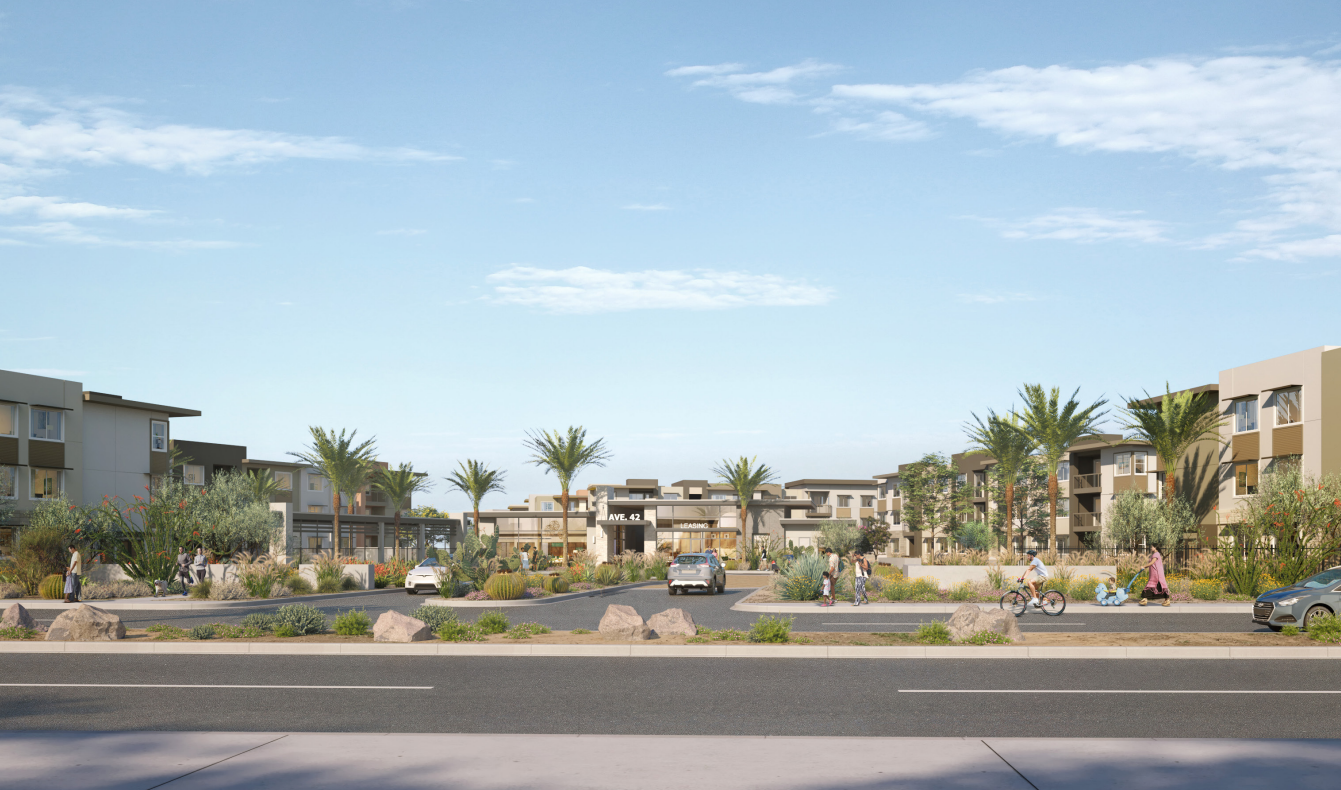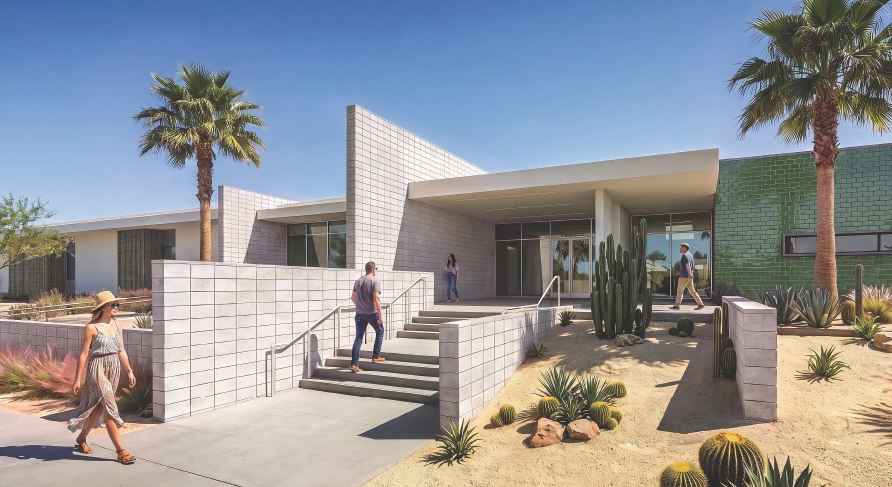
A revised campus plan adds a 60-bed residential pavilion and new dining hall while preserving and renovating existing residential buildings.
The Betty Ford Center has disclosed the next major phase of a $40 million campus transformation that will add a 60-bed residential treatment pavilion, a new dining hall and later community and wellness facilities, significantly expanding the institution’s physical capacity in Rancho Mirage.
The project is more than a renovation of one of Greater Palm Springs’ best-known health care institutions. City planning records show that the revised plan would increase the center’s on-campus residential treatment capacity from 100 beds to 160, while shifting away from an earlier strategy that called for more demolition and substantially more new construction.
The Hazelden Betty Ford Foundation, the nonprofit organization that operates the center, said the new residential pavilion and dining hall are targeted for completion in the third quarter of 2027. The foundation said the residential building will provide more space for personalized addiction treatment and include counseling and group areas designed for patients with co-occurring mental health conditions.
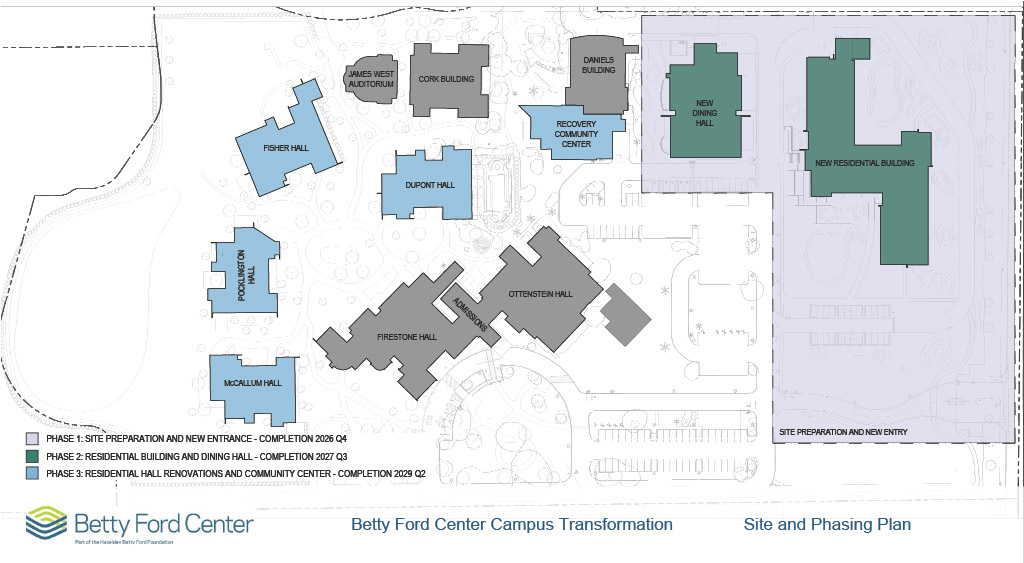
Site plan for the Betty Ford Center’s $40 million campus transformation in Rancho Mirage, showing the planned new 60-bed residential treatment pavilion, dining hall and other phased improvements across the property.
The new pavilion is planned at about 29,980 square feet. A separate 14,490-square-foot dining hall would bring the two new buildings to 44,470 square feet of construction, according to the environmental documents approved by the City of Rancho Mirage in March.
Those filings provide a clearer picture of how the project has evolved since Rancho Mirage approved a larger redevelopment plan in 2020.
The 2026 modification takes a different approach. Four residential halls slated for demolition will instead remain and be renovated. The two planned 46-bed buildings have been replaced by a single 60-bed residence hall, while the proposed day-treatment building has been removed from the plan. The result is less new construction, but a slightly higher eventual on-campus bed count of 160.
The new dining hall is planned immediately east of the Daniels Children’s Pavilion. City documents call for a full kitchen, indoor and outdoor seating, a staff lounge, children’s dining rooms and an outdoor children’s play area. The dining hall is expected to seat 168 people and include a separate family dining room and coffee shop.
Once food service moves into the new building, a portion of the existing Daniels facility is planned for conversion into a roughly 100-seat auditorium. The foundation says a later phase will go further, redeveloping current dining areas into a community center for meetings, outreach and education while expanding fitness and wellness space for patients, families, alumni and the broader recovery community.
That later phase reinforces a larger shift in the role Hazelden Betty Ford wants the Rancho Mirage campus to play. The institution, co-founded in 1982 by former First Lady Betty Ford and Leonard Firestone, has long been known primarily as a destination for residential addiction treatment. The current transformation is designed to create more space for behavioral health services, family involvement, alumni engagement, education and long-term recovery support.
The Betty Ford Center became part of the Hazelden Betty Ford Foundation after the Betty Ford Center and Minnesota-based Hazelden Foundation merged in 2014. Hazelden Betty Ford now operates treatment centers and telehealth services nationally while maintaining Rancho Mirage as one of its flagship campuses.
For Rancho Mirage, the project also represents a sizable private nonprofit capital investment in a city whose economic identity includes a major concentration of health care services. The Betty Ford Center’s approximately 26-acre campus sits near Eisenhower Health‘s main medical complex, creating a cluster of medical and behavioral health activity around the city’s central corridor.
The expansion could also have an employment effect, although Hazelden Betty Ford has not publicly released a current estimate of permanent jobs that will be added as the new capacity comes online. The environmental review anticipates more patients and employees on the campus at full buildout, but does not provide a current project-specific hiring forecast that can be cleanly separated from earlier plans.
The same is true for the construction budget. The foundation has placed the broader campus transformation at $40 million, but has not publicly broken out how much of that total is assigned to the 60-bed pavilion, dining hall, renovations of the existing residential halls and the later community and wellness work.
What is clear is that philanthropy is helping finance the effort. The foundation’s campus transformation campaign identifies a $4 million gift from the Daniels Fund, the Denver-based foundation created by cable television pioneer Bill Daniels, as a major contribution to the project. Daniels was himself treated at the Betty Ford Center in the 1980s and became a longtime supporter of addiction treatment and recovery programs.
The foundation also said trustees have provided lead gifts for the transformation.
Completed campus work includes a new public entrance on Vista Del Sol Road and related site and infrastructure improvements. The revised development plan also calls for new and reconfigured parking, expanded desert landscaping and additional outdoor areas intended to support patient and family use.
City documents identify Abramson Architects as the source of the 2025 master site plan for the revised development. Abramson joined Perkins&Will in 2025, combining its Los Angeles and San Diego operations with the larger firm.
The March approval was structured as a minor modification to the center’s existing development entitlement and an addendum to the environmental impact report prepared for the 2020 plan. Rancho Mirage determined that the revised project would not create new significant environmental effects beyond those previously analyzed.
The center’s decision to preserve and renovate existing residential halls also reduces the scale of demolition contemplated under the prior plan. That gives the transformation a notably different development profile from the one the city approved six years ago, even as the eventual bed count edges higher.
Hazelden Betty Ford unveiled the latest plans shortly after the Rancho Mirage center was again recognized in Newsweek’s 2026 ranking of residential addiction treatment centers, where it was listed No. 1 in California. The ranking is based on a combination of professional surveys, accreditation and certification data, treatment services and patient experience.
Bob Marra is the CEO/Publisher of GPS Business Insider and GPS Market Intel. He has been studying, writing and giving presentations about business, economic and public affairs news and issues and the local economy in the Greater Palm Springs/Coachella Valley region for more than 20 years.