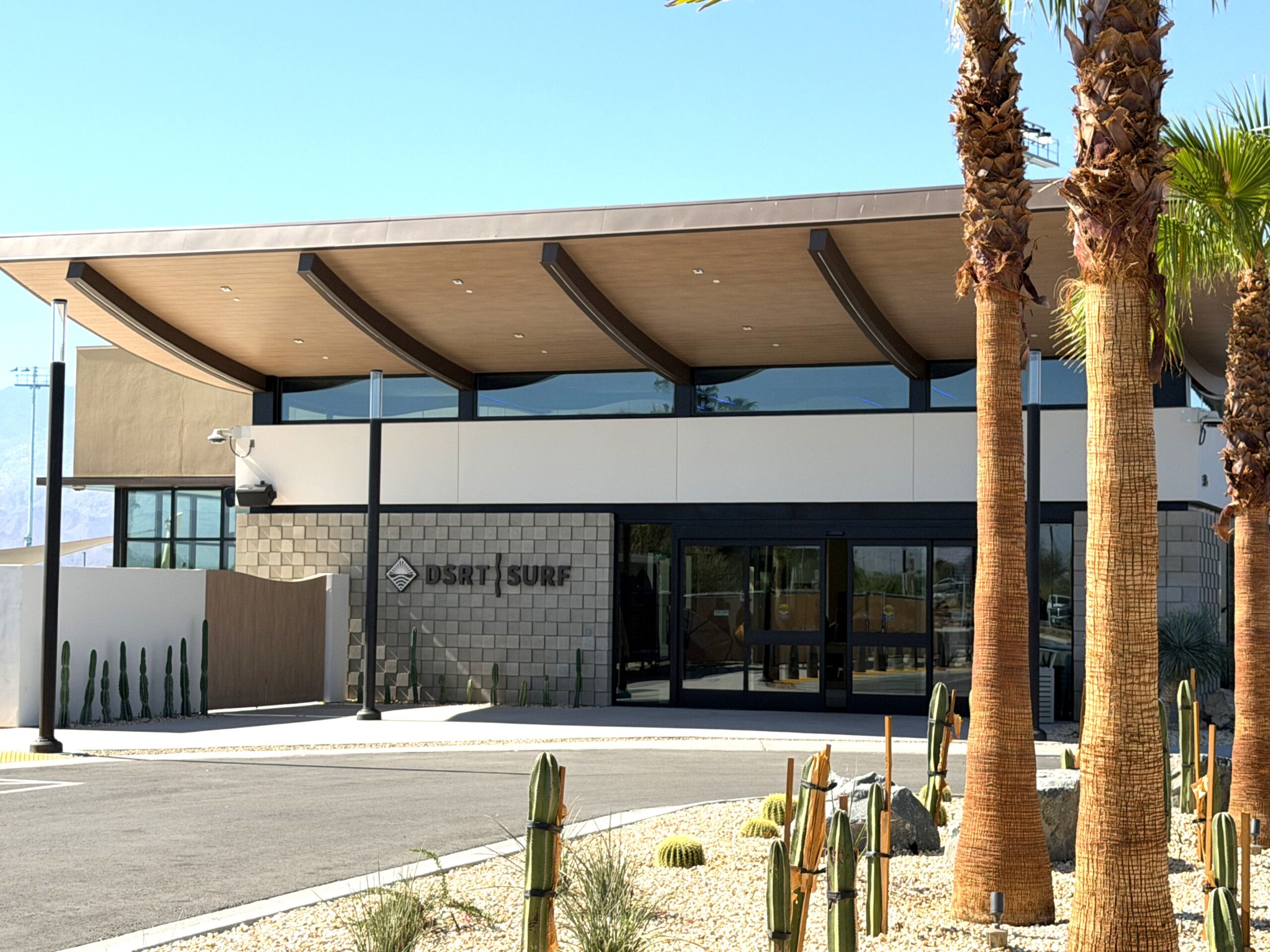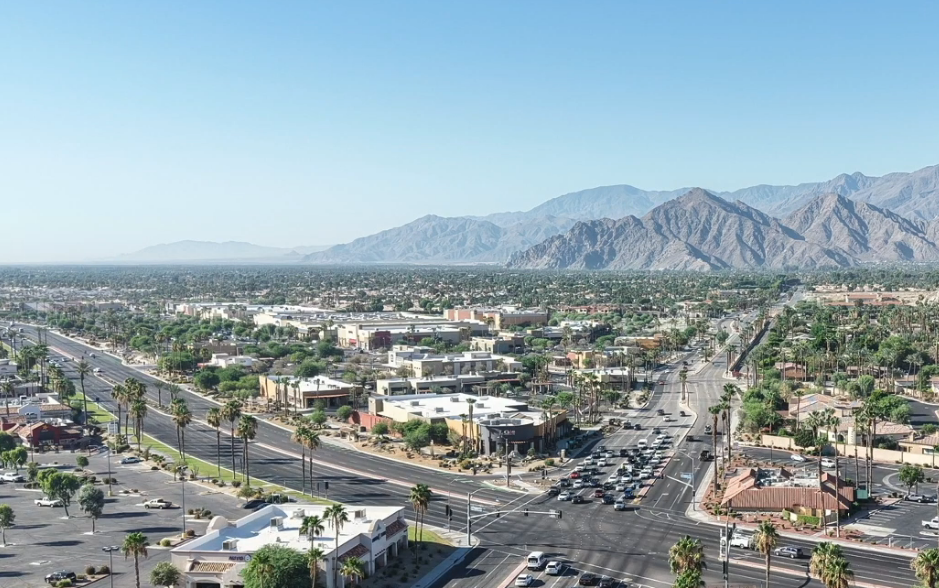
At its State of the City presentation, La Quinta outlined 433 planned hotel rooms, 659 housing units and a SilverRock restart, with electrical capacity still a central condition for new development.
La Quinta is preparing for hundreds of new hotel rooms and homes, but one of the city’s most consequential development investments will happen at an electrical substation.

La Quinta Mayor Linda Evans.
At the city’s annual State of the City presentation, Mayor Linda Evans outlined a pipeline of 433 hotel rooms and 659 housing units, including 453 intended for workforce or affordable housing. She also described how La Quinta is advancing money for electrical equipment and sharing costs with developers to make that growth possible.
The Sept. 30 event at La Quinta Resort & Club, presented with the Greater Coachella Valley Chamber of Commerce, offered a detailed look at the city’s development priorities. Alongside hotels and housing were a $16.5 million bridge, a planned $19 million maintenance yard and the first visible steps toward restarting the long-delayed SilverRock resort development.
The projects are at different stages, and the housing figures cover development expected over several years. Together, they show where city officials are directing public investment and seeking private investment, while trying to preserve the community’s scale and character.
La Quinta Power Upgrades Address a Development Bottleneck
Evans said growing demand for electricity comes from both new development and the increasing use of electric vehicles and electric building systems. When substations reach their limits, cities and developers must resolve capacity constraints before otherwise viable projects can move forward.
“It takes electricity to do commercial buildings. It takes electricity to do homes,” she said.
The largest project she described is a $23.25 million expansion at the Imperial Irrigation District substation near Avenue 58 and Monroe Street. It would add another transformer bank to an existing facility, increasing its ability to serve development in the southern part of the city and surrounding area.
La Quinta approved up to $10 million in advance funding to help move equipment procurement forward, Evans said. Developers will contribute based on their electrical needs, with the city advancing funds for the remaining share and expecting reimbursement as additional development participates.
That arrangement makes the timing of public spending important. Electrical equipment must be ordered well before a project needs service, and waiting until every development is ready to pay can prolong the delay for all of them.
Evans also identified upgrades at the Marshall substation near Washington Street and Avenue 50 and at the Jefferson substation. Improving those facilities can increase reliability and allow IID to redistribute available capacity across its network, she said.
The work is part of a wider regional effort. La Quinta, Indio and Riverside County are the founding members of the Coachella Valley Power Agency, established to give the area a coordinated role in electrical service planning and governance. Evans credited City Manager Jon McMillen with working with IID to advance local projects.
Three Hotel Proposals Would Add 433 Rooms
The hotel pipeline outlined at the event would expand lodging in both the Highway 111 commercial corridor and the Village area near Old Town.
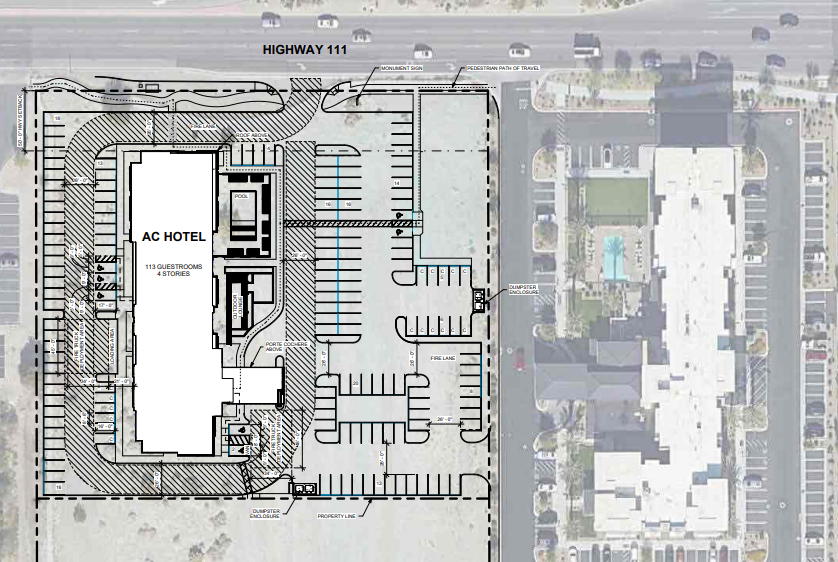
The site layout for the Marriott AC Hotel along Highway 111.
The proposed AC Hotel by Marriott would have 113 rooms beside the existing Residence Inn at Highway 111 and Dune Palms Road. On Sept. 15, the City Council approved a roughly $2.09 million agreement to sell three acres to Indian Wells Hospitality Group, a Sunridge subsidiary, for the hotel.
The city’s account of that vote describes a four-story building with a lounge, meeting areas, a pool and a separate retail or restaurant pad. Land south of the hotel site is earmarked for affordable housing through a separate transaction with Pacific West Communities.
The hotel land agreement moves the proposal forward, with development approvals and other conditions still to be completed. GPS Business Insider’s earlier coverage details the hotel and adjoining housing plans.
Evans also described a proposed 140-room Hampton Inn and Home2 Suites project in the Adams Street area near Lake La Quinta.
The third proposal is Gather Capital’s hotel near Old Town La Quinta, which Evans described as approximately 180 rooms. The site is part of the gravel-covered land between the civic campus and Old Town La Quinta.
The council approved a purchase agreement in August for approximately 3.55 acres at an anticipated price of $2.55 million. Gather’s concept calls for an upscale hotel with dining, meeting space and recreational amenities, along with a pedestrian connection through the property.
That location could put additional overnight visitors within a short walk of Old Town restaurants and shops. The transaction also requires work on electrical capacity, parking, financing and entitlements before the proposal can become an operating hotel.
Evans said the lodging projects would support nearby businesses, create employment and generate additional hotel tax revenue. The 433-room total she presented covers those three proposals, with SilverRock discussed separately.
SilverRock Demolition Precedes a New Resort Plan

La Quinta Mayor Pro Tem Kathleen Fitzpatrick.
At SilverRock, the immediate activity is demolition of unfinished residences left from the former Talus development.
Mayor Pro Tem Kathleen Fitzpatrick said Turnbridge Equities had mobilized crews to remove 13 partially constructed Montage residences. Demolition was starting around the time of the presentation and was expected to continue for four to five weeks, she said.
Turnbridge acquired the property in December 2025 and has been assessing existing conditions with engineering and design consultants while preparing a revised master site development plan.
Fitzpatrick said the plan was expected to enter public review in December or January through a site development permit application. After permit approvals and construction document preparation, the team hoped to begin construction in the second or third quarter of 2027.
“All of the things that you’ve been waiting to see, you’re going to see soon,” she said.
For a project that has spent years missing deadlines and changing ownership, the demolition is a tangible step. The next major test will be the proposed plan and its approval process. The construction timetable Fitzpatrick described remains dependent on that work.
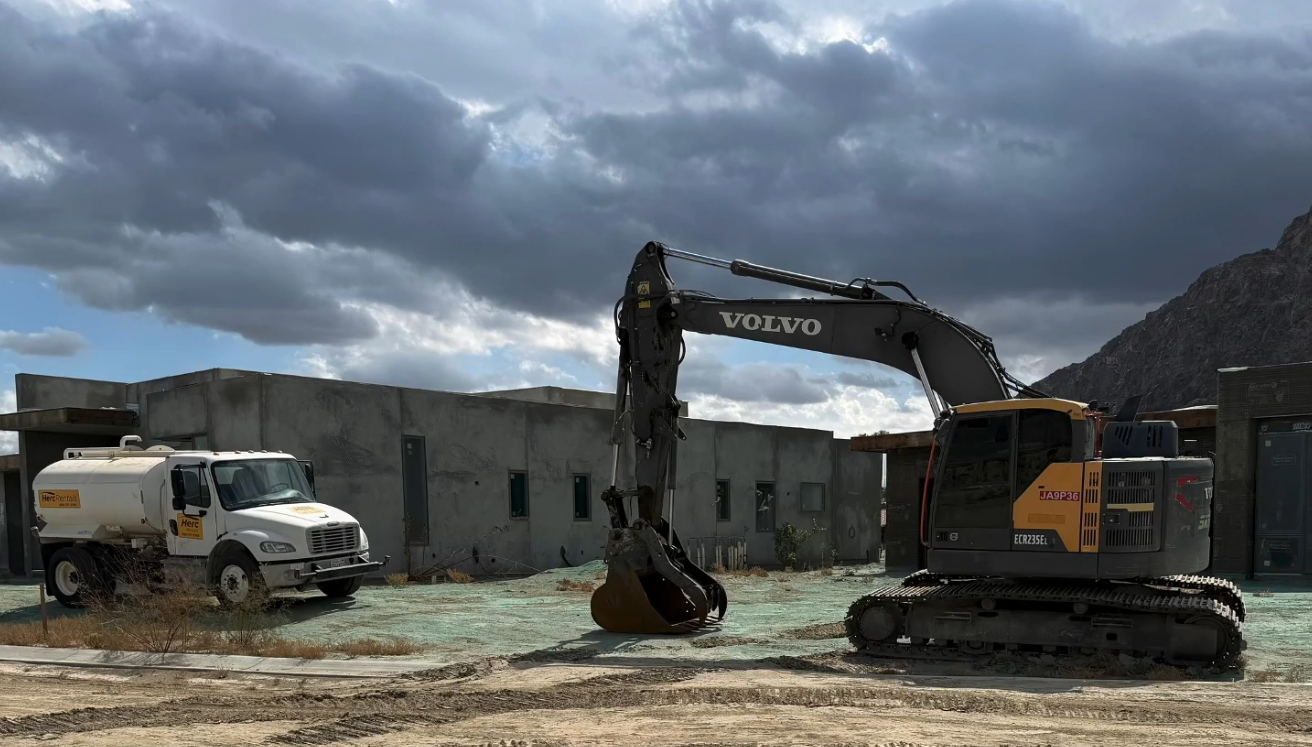
Demolition of the structures at the failed Talus project started on Sept. 30.
Workforce Housing Makes Up Most of the Announced Pipeline
Of the 659 housing units Evans identified, 453 would be designated for workforce or affordable housing, approximately 69 percent of the announced total.
She said the developments would serve households across income categories, including families, seniors and veterans. The city also expects additional market-rate development and infill construction, including in the Cove.
The emphasis on workforce housing connects the residential pipeline to the city’s business priorities. Hotels, restaurants, retailers and other employers need workers who can find housing within reach of their jobs. Adding visitor capacity without expanding housing options can put more pressure on that relationship.
Evans pointed to city-owned land near Highway 111 as an opportunity to bring lodging and affordable housing into the same area. The AC Hotel site and the separate housing parcel to its south illustrate that approach.
The announced figures are a development outlook over the next several years. They do not establish a common completion date for the units, and individual projects will proceed through their own approvals, financing and construction schedules.
Highway 111 and New Retail Remain Central to City Revenue
Evans said the Highway 111 corridor between Washington and Jefferson streets generates about 75 percent of La Quinta’s sales tax revenue. Its performance therefore affects the city’s ability to pay for services well beyond the shopping district.
The city’s work on the corridor includes pavement and median improvements, more consistent landscaping and better connections among commercial centers and nearby routes. Evans described the effort as a way to make the retail area function more cohesively while improving its appearance.
Councilmember Deborah McGarrey said more than 50 businesses had opened in La Quinta during 2026 by the time of the presentation.
“Every new business that chooses La Quinta is a vote of confidence in our future,” she said.
McGarrey also identified planned Dollar Tree and AutoZone stores next to Grocery Outlet. She cited a retail analysis indicating that approximately 43 percent of Grocery Outlet shoppers also travel to Highway 111 for additional shopping. The proposed stores, she said, could meet more of those everyday needs nearby.
The event also recognized local businesses. Integrity Agents Insurance Services was named Business of the Year, DSRT CLUB received the restaurant award, and 1/2sies Co. was honored as the new business award winner.
Bridge and Road Investments Support La Quinta Growth
Fitzpatrick identified the planned $16.5 million Avenue 50 bridge as a public safety investment that would help maintain access during flooding or heavy rain.
The city’s project description calls for replacing the low-water crossing over the La Quinta Evacuation Channel with an all-weather bridge. Fitzpatrick emphasized the importance of keeping emergency vehicles able to reach neighborhoods when water disrupts road access.
She also described roughly $25 million in additional road improvements moving forward, including work on Fred Waring Drive, Miles Avenue, Adams Street and Washington Street. Separately, the city has spent about $9.5 million since 2021 maintaining existing streets outside its major improvement projects, she said.
A planned $19 million permanent maintenance yard next to Fritz Burns Park would give Public Works employees a fixed facility and add parking near the park. The project was in final design and utility coordination, with bidding anticipated in December and construction expected to begin during 2026-27.
The city’s capital improvement program distinguishes the current capital budget from projects planned for later years, which require future expenditure authorization. That distinction matters as the city advances a range of projects with different schedules and funding needs.
Parks and Cultural Facilities Expand Community Amenities
The presentation also tied public amenities to La Quinta’s appeal as a place to live and visit. Council members emphasized public safety as a condition for attracting businesses and visitors, and financial planning as the means of maintaining services through economic downturns.
Officials highlighted approximately $7 million in improvements at Fritz Burns Park, including pool upgrades, shade, seating and changes to the tennis, pickleball and dog park areas. McGarrey described resident pool passes that provide free visits through punch cards issued at the Wellness Center.
Fitzpatrick outlined a cultural campus project with improvements to the museum and exhibit areas, an archive building and work across the campus to improve public access.
McGarrey said a La Quinta mobile library would begin serving parks, schools and businesses this fall, with an Oct. 7 ribbon cutting. Its services would include book checkout, library cards, internet access and pop-up activities. The city’s youth collaborative and skate programming at X Park were additional examples of partnerships intended to broaden access to community programs.
Evans framed parks, trails, walkable streets and the Wellness Center as part of the city’s economic appeal as well as its public health priorities. The event’s setting at La Quinta Resort, approaching its centennial, reinforced the connection between recreation, tourism and the community’s development.
Vista Santa Rosa Planning Tests the Limits of Expansion

La Quinta city councilmember Steve Sanchez.
Beyond projects within its existing boundaries, La Quinta is studying how it might eventually incorporate parts of Vista Santa Rosa, the rural community to its east.
Councilmember Steve Sanchez described the area’s ranches, large residential lots and equestrian traditions as features the city wants to preserve through any future annexation process.
“We want to preserve what’s there,” he said.
The city awarded a contract to Sargent Town Planning in July to prepare a Vista Santa Rosa master plan based on input from residents, property owners and businesses. The plan is intended to guide land use and development standards for any future annexation application.
Vista Santa Rosa’s inclusion in La Quinta’s sphere of influence identifies it as an area for possible future expansion and service planning. It does not place the community inside the city. Annexation would require a separate process through the Riverside County Local Agency Formation Commission.
The city’s planning solicitation calls for preserving the area’s rural character while addressing infrastructure, housing and services. It also specifies that any future annexation must avoid creating a revenue drain on La Quinta.

Bob Marra is the CEO/Publisher of GPS Business Insider and GPS Market Intel. He has been studying, writing and giving presentations about business, economic and public affairs news and issues and the local economy in the Greater Palm Springs/Coachella Valley region for more than 20 years.