With nearly $650 million expected over 30 years from the Desert Regional Medical Center lease-purchase agreement, the Desert Healthcare District & Foundation’s new five-year plan shifts the agency from traditional grantmaking toward a broader role in workforce development, access, social determinants of health and data-driven accountability.
The Desert Healthcare District & Foundation is preparing for the most consequential strategic shift in its 78-year history, moving from a largely grantmaking organization into what its new five-year plan calls a “Health System Amplifier” for the Coachella Valley.

The change is being driven by two forces arriving at the same time.
One is need. Across the valley, residents continue to face long waits for care, physician shortages, uneven access to behavioral health, language and transportation barriers, food insecurity, housing instability and environmental health pressures tied to extreme heat, air quality and water concerns.
The other is money. The voter-approved lease-purchase agreement with Tenet Healthcare for Desert Regional Medical Center is expected to bring nearly $650 million to the public healthcare district over 30 years, including an initial $100 million payment beginning in May 2027. For a district that has long been one of the valley’s major health funders, the agreement creates a level of financial capacity it has never had before.
The new strategic plan report for fiscal years 2027 through 2031 makes clear that the district does not intend to simply increase the size of its grants. It proposes a more ambitious role, one that would use funding, data, convening power and partnerships to knit together a fragmented health system that often leaves residents navigating care on their own.
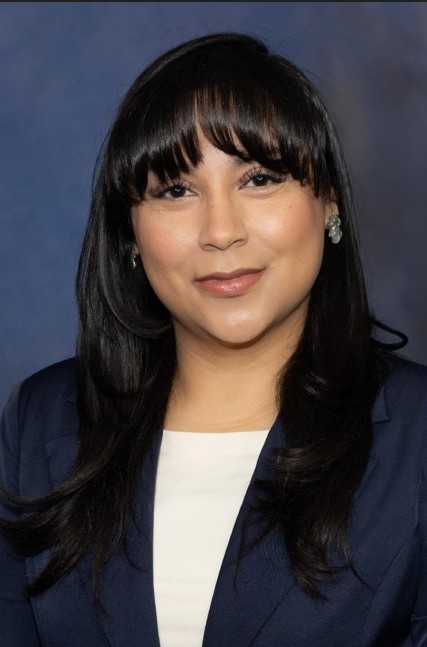
Kimberly Barraza, president of Desert Healthcare District
“The approval of the new lease agreement for Desert Regional Medical Center marked a transformational moment for the District and Foundation,” Board President Kimberly Barraza wrote in the report. “With this opportunity comes an important responsibility: to steward these public resources thoughtfully, transparently, and in ways that create meaningful, measurable impact for the communities we represent.”
Part of the message emerging from the district board is that the district’s role will continue to evolve from supporting individual programs to “strengthening the broader system, bringing partners together, aligning resources, and investing in solutions that create lasting, measurable change.”
Founded in 1948 to help bring hospital care to the western Coachella Valley, the district expanded east of Cook Street after voters approved the change in 2018. It now serves the entire valley, from Palm Springs to the North Shore, through a seven-member board elected by geographic zones.
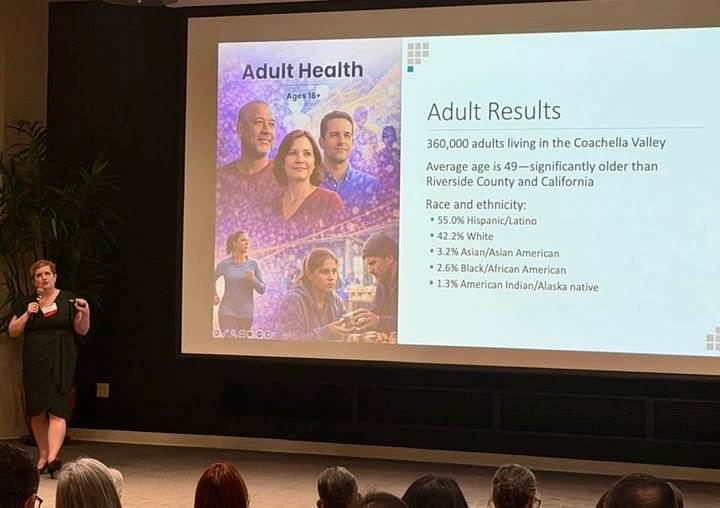
That expansion brought a more complete picture of the valley’s health divide into the district. The new report describes a region of nearly 420,000 people with sharply different conditions depending on where residents live. Mid-Valley communities are characterized in the report as generally older, wealthier and better served by health infrastructure, while many Eastern and Western Coachella Valley communities include younger families, lower incomes, faster population growth and fewer healthcare resources relative to need.
The report cites HARC’s 2025 Community Health Survey in noting that about 28 percent of adults live at or below the poverty line. That reality gives the district’s new plan a high level of urgency. The Coachella Valley’s health challenges are not only clinical. They are tied to housing, wages, transportation, language access, food, air quality, heat, immigration fear and the availability of doctors, nurses and other healthcare workers.
The report repeatedly returns to that broader definition of health.
“Funding the full picture of health” is one of the district’s stated commitments in the new strategic plan. The plan says the district will invest not only in healthcare services, but also in the social and environmental factors that shape health outcomes.
Four Pillars for a New Era
The strategic plan is organized around four pillars: workforce development, awareness and access, engagement around social determinants of health, and data-driven decision-making.
The first pillar addresses one of the valley’s most persistent healthcare problems: too few providers.
The report cites a 2023 physician needs assessment conducted by Huron Consulting Group, which identified a gap of approximately 236 physicians relative to community need. The shortage is concentrated in family medicine, internal medicine, pediatrics and obstetrics and gynecology.
The district’s plan calls for both recruitment and retention. That includes a “grow-your-own” healthcare workforce pipeline, recruitment incentives, professional support, cultural empathy training, peer support and community integration strategies designed to help providers stay in the region.
The grow-your-own concept could prove especially important in the Coachella Valley, where students raised in the region may be more likely to return to serve our communities if pathways into healthcare careers are built early and supported financially.
One community comment included in the report captured that point: “Not only do the scholarships help put higher education within reach for many of our students going into health care pathways, but they also cover the high cost of transportation and living.”
Another was more direct: “Getting doctors to relocate out here is a big problem.”
The second pillar focuses on awareness and access. The report says residents are often blocked not only by the absence of services, but also by the difficulty of understanding what exists and how to use it.
That problem is familiar across the valley. A resident may have insurance but still face months-long waits, referral confusion, language barriers, transportation problems, digital access limitations or uncertainty about whether a service is available. In some parts of the valley, the practical result is delayed care, preventable emergency room use or residents seeking care outside the region.
The plan proposes a connected care navigation strategy to help residents better understand and reach available services. It also calls for in-person care infrastructure, high-need access expansion and digital access enablement. That could include support for physical spaces, mobile clinics, nontraditional service models, telehealth and digital navigation.
The third pillar extends beyond the healthcare system itself to the conditions that shape health. The district identifies three areas of focus: neighborhood and built environment, social and community context, and economic stability.
The initiatives include healthy housing and stability, environmental health and climate resilience, nutrition, community safety and wellbeing, policy alignment and expanded pathways to economic vitality.
For Greater Palm Springs, that is not an abstract framework. Extreme heat, Salton Sea-related air quality concerns, rising housing costs, food insecurity and the economic vulnerability of farmworkers, hospitality workers and low-wage service workers all shape health outcomes.
The report says that addressing housing instability, environmental exposure, nutrition, isolation, policy awareness and economic opportunity will require coordinated, cross-sector collaboration. In practice, that means the district sees its role as helping align public agencies, healthcare providers, nonprofits, schools, employers and community organizations around shared goals.
The fourth pillar may be less visible to residents, but it could become one of the plan’s most important pillars. The district wants to become a stronger data organization internally and a shared data hub externally.
The plan calls for better data governance, impact measurement, reporting expectations for funding relationships, shared data platforms, analytic tools and regional learning efforts.
The goal is to make data more than a compliance exercise. The district says it wants to use data to guide funding decisions, evaluate results and help partner organizations understand where needs are greatest.
That could matter significantly in a region where many nonprofits and agencies collect information separately, often without a shared infrastructure for comparing needs, outcomes or gaps.
From Grantmaker to System Builder
The phrase “Health System Amplifier” is central to the new plan. It signals that the district wants to do more than distribute money.
For years, the district has funded organizations delivering services across the Coachella Valley. The report says that work remains valuable, but it also says the region’s nonprofit, healthcare and public agency ecosystem has grown in ways that are often fragmented.
Organizations may be working on related problems without enough coordination. Residents may fall through gaps between programs. Data may be collected but not used consistently. Funding may support valuable work without necessarily changing the larger system.
The new role would position the district as a backbone organization, helping set priorities, convene partners, build shared infrastructure, drive access and innovation, align the broader system and bring more accountability to public investment.
The shift will require internal change as well. The report says each strategic pillar must be supported by a dedicated team with subject-matter expertise, as well as a new cross-functional role to improve collaboration and communication across the organization.
“This plan reflects our commitment to improving access to healthcare, advancing equity, and addressing the evolving needs of our communities,” President Barraza said. “It provides a clear path for collaboration, accountability, and long-term impact as we continue investing in the health and well-being of the residents of the Coachella Valley.”
To assist with the implementation of the plan, the Board also approved, during the May 26 meeting, a service agreement to continue working with Sowen consultants, the firm that helped the board develop the new strategic plan, through Dec. 31, 2027.
At the same time, the district board must recruit a new CEO after recently parting ways with Chris Christensen, who served in the position for the past several years and previously served the organization as CFO.
The report also acknowledges weaknesses and risks. The district says its impact measurement has not always been used consistently in decision-making, that brand awareness remains limited, that internal collaboration between the board and staff needs strengthening, and that current staffing levels are not sufficient for the scale of the new plan.
Those are significant admissions for a public agency about to manage an unprecedented level of capital.
The report also identifies external threats, including possible federal Medicaid cuts, immigration enforcement that may suppress healthcare utilization, staff capacity constraints, rising grant requests and increased public scrutiny of special district funds.
That scrutiny is likely to grow as the Tenet money begins flowing.
The hospital deal was approved by voters in November 2024 as Measure AA. Under the agreement, Tenet will continue operating Desert Regional Medical Center, with the hospital ultimately transferring to Tenet at the end of the 30-year lease term in 2057. The district has said the agreement also requires Tenet to maintain seismic compliance at the hospital campus by the state’s 2030 deadline.
Supporters viewed the agreement as a way to preserve uninterrupted hospital operations while creating a major funding stream for health needs across the valley. Critics during the public debate raised questions about hospital ownership, long-term control, the role of a large for-profit healthcare company and restrictions connected to the agreement.
The new strategic plan is the first major test of how the district intends to use the resources generated by that decision.
Measuring What Changes in People’s Lives
One of the strongest themes in the plan is measurement. The district says success should be judged by “what changes in people’s lives,” not simply by how much money is distributed or how many programs are funded.
That is an important distinction. A public agency can spend more money without necessarily improving access, reducing disparities or strengthening the system. The report says the district will build a formal impact measurement framework with metrics tied to every pillar, goal and initiative.
The plan’s financial sustainability section makes the same point in fiscal terms. It says sustainability is not simply about preserving capital, but about stewarding public resources in a way that advances health today while protecting the district’s ability to serve future generations.
That balancing act will define the next several years.
If the district spends too cautiously, it may fail to meet the moment’s urgency. If it moves too quickly without clear metrics, staff capacity, legal review and public transparency, it risks undermining the very trust the plan says it must protect.
The report argues for the middle ground: disciplined capital deployment, community-centered purpose, legal compliance and a data function capable of tracking return on investment, community outcomes and capital effectiveness over time.
A Valleywide Moment
The strategic plan is also part of a broader civic story in the Coachella Valley.
The region is growing, aging, diversifying and becoming more economically complex. Its visitor economy depends heavily on service workers, many of whom face housing and healthcare affordability challenges. Its eastern communities remain central to agriculture and environmental health concerns tied to the Salton Sea. Its western and mid-Valley cities include large older adult and LGBTQ+ populations with distinct healthcare needs. Its public agencies and nonprofits are increasingly being asked to address problems that do not fit neatly within a single jurisdiction or funding stream.
In that context, the Desert Healthcare District’s new plan represents more than an internal planning document. It is a blueprint for how one of the valley’s largest public health funders intends to use a once-in-a-generation financial opportunity.
The plan does not promise quick fixes. Provider shortages, access barriers, poverty, food insecurity, heat exposure and health disparities are not five-year problems. But the report does suggest that the district believes its old model is no longer sufficient for the scale of the challenge.
The next question is execution.
Beginning in fiscal 2027, the district will be judged not only by the size of its grants but also by its ability to build the partnerships, staff capacity, data systems and public confidence necessary to translate the Tenet lease money into measurable gains for residents.
For a region that has often described its healthcare system as fragmented, the district is now positioning itself as the entity that can help connect the pieces.
The stakes are considerable. So is the opportunity.
As the report puts it, the district’s task is to move from responding to individual funding requests toward “identifying gaps, setting direction, and making strategic investments that strengthen the system as a whole.”

Bob Marra is the CEO/Publisher of GPS Business Insider and GPS Market Intel. He has been studying, writing and giving presentations about business, economic and public affairs news and issues and the local economy in the Greater Palm Springs/Coachella Valley region for more than 20 years.