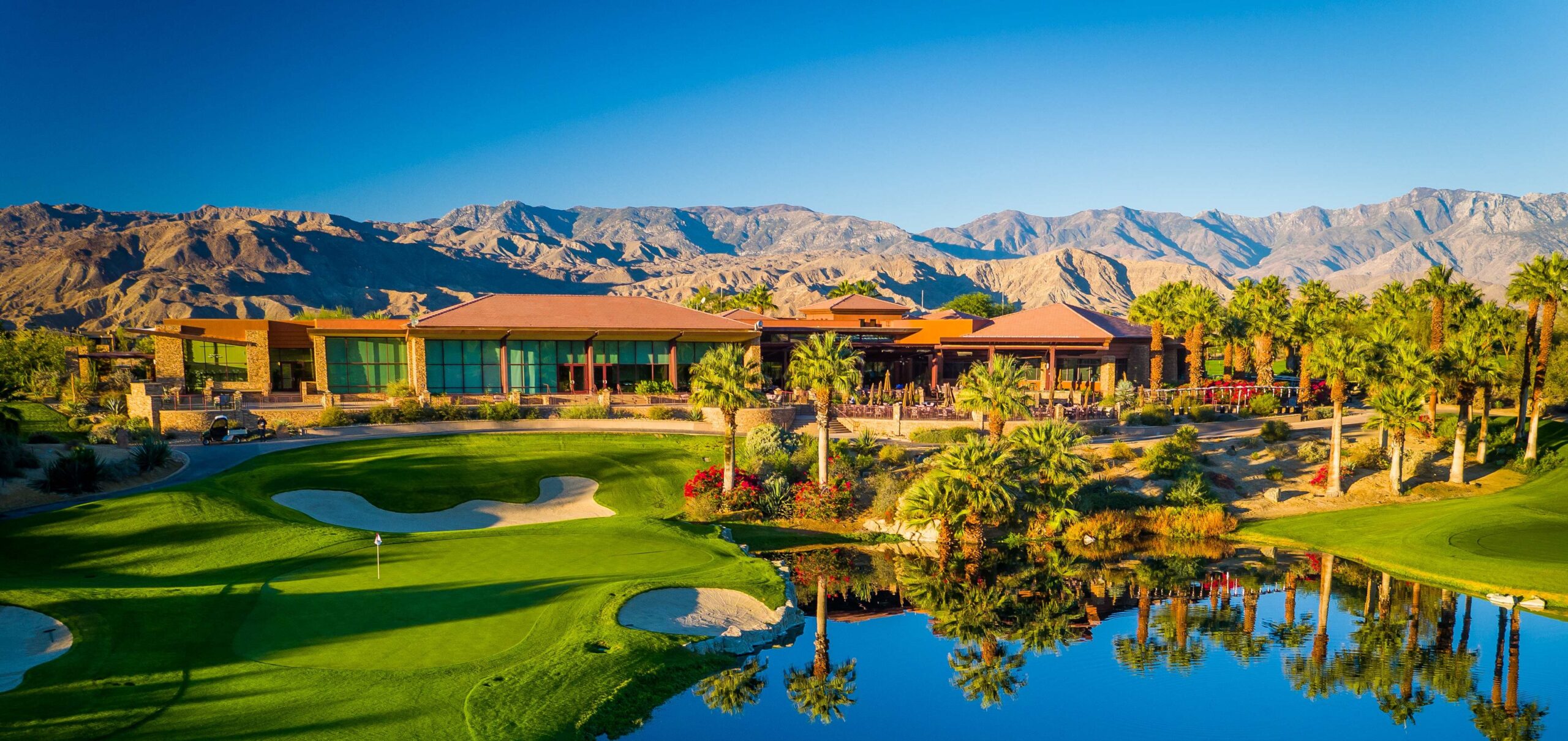
Palm Desert’s city-owned golf resort finished a strong fiscal year with $18.3 million in revenue, $2.6 million in EBITDA and rising cash reserves. General Manager Derek White says the financial results begin with something that does not appear on an income statement: the experience delivered to every guest.
The most important numbers in Desert Willow Golf Resort’s annual financial report, Derek White says, are not necessarily the ones printed in bold.
Not the $18.3 million in annual revenue. Not the $2.6 million in earnings before interest, taxes, depreciation and amortization. Not even the $609,000 in net income that substantially exceeded what Palm Desert had budgeted for its municipal golf resort operation.
White, the longtime general manager of Desert Willow Golf Resort, looks first at a different set of measurements: customer reviews, mystery-shopper evaluations, course conditions and whether employees are delivering the experience guests expect.
“The way we look at it as a team here is it’s really just a result of a measurement of our guest experience,” White said. “Most of the metrics we’re looking at don’t show up on those reports.”
His philosophy is uncomplicated.
“If we focus on those, the good financial results happen,” White said.
In fiscal year 2025-26, it did. Desert Willow generated $18.28 million in revenue during the 12 months ended June 30, up 7.6 percent from $16.99 million a year earlier and about $668,000 above budget.
Green fees and cart fees reached $10.74 million, food and beverage revenue approached $5 million, and merchandise sales rose to $1.32 million. Revenue from other golf academy operations climbed to $579,000.
At the same time, expenses were controlled closely enough that total expenses of $15.64 million came in slightly below budget. EBITDA reached $2.63 million, about 43 percent above the $1.84 million budget and nearly 32 percent higher than the previous year.
The bottom line was even more striking. Desert Willow reported $608,969 in net income, compared with just $32,443 the previous year and a budget that had anticipated a $423,739 loss.
For a city-owned recreational property that must serve residents while competing with some of the Coachella Valley’s best-known private clubs and resort courses, the numbers tell a story larger than golf.
They suggest that nearly three decades after Palm Desert created Desert Willow as both a public amenity and an economic-development asset, the formula is working.
More revenue without simply packing the tee sheet
One of the more revealing numbers in the report is the one that did not rise dramatically.
Rounds.
Desert Willow recorded 90,386 total rounds during the year, up about 3.5 percent from 87,288. Paid rounds increased by a similar amount. Revenue, however, rose more than twice as fast. Revenue per paid round increased to $208 from $200. Green fee and cart revenue per paid round reached $122, compared with $118 the previous year.
The distinction matters in a golf business where the physical inventory is finite. There are only so many daylight hours and so many tee times that Firecliff and Mountain View can sell. Growth therefore increasingly depends not just on putting more golfers on the courses, but on managing who plays, when they play, what they pay and what they spend once they arrive.
One increasingly important piece of that equation is group business. Group rounds jumped from 18,780 in 2024-25 to 21,983 last year, a gain of about 17 percent. Revenue associated with those rounds increased even faster, from roughly $2.73 million to $3.39 million, a 24 percent increase.
Group outings now account for about one-quarter of Desert Willow’s paid rounds but nearly one-third of its golf revenue. White said the growth has exceeded his expectations.
“I thought we had gotten to maybe a ceiling, and then we just keep pushing through the next ceiling,” he said.
Desert Willow hosts more than 400 group events a year, White said, defining a group as 12 or more rounds. Corporate and charitable business has become particularly important as corporate travel and events have recovered from pandemic disruption. And the higher volume has not required sacrificing price.
“We’re continuing to garner a higher average rate, which is the whole point of that sector,” White said.
The outlook remains strong. White said group booking pace for the coming six to 12 months is running ahead of last year.
A $5 million business beyond the fairways
Desert Willow is also increasingly difficult to describe simply as a golf course operation.

The food & beverage side of the Desert Willow business model continues to bolster the resort’s revenue and profitability.
Food and beverage revenue reached $4.97 million in fiscal 2025-26, up more than 9 percent from the prior year. Merchandise revenue increased by about 18 percent. The detailed food and beverage results show how broad the business has become. The resort served more than 77,000 dining covers during the year, while catering covers increased 26 percent to more than 20,000. Catering generated $1.85 million in revenue.
Revenue from food and beverage outlets serving golfers reached $808,510, up 22 percent, while spending per round at those outlets increased 18 percent.
That becomes particularly important in Palm Desert, where tourism remains a core economic driver and golf is part of a much larger visitor ecosystem encompassing hotels, restaurants, events and group travel. The resort also works with Visit Greater Palm Springs on group opportunities and destination marketing.
White said Desert Willow does some targeted marketing in markets such as the Pacific Northwest, but the resort does not need to rely heavily on broad advertising campaigns during its high-demand season.
Much of its group business comes through word of mouth, repeat customers and people who experience the resort while participating in another event. The resort also puts considerable emphasis on maintaining its own customer database and communicating with people who already know the property.
The service awards help explain the numbers

Desert Willow Golf Resort general manager, Derek White (second from left) and members of his award-winning team.
Earlier this year, GPS Business Insider reported on Desert Willow’s first Gold Flag Designation from 59club USA, a national golf and hospitality benchmarking organization that evaluates properties through detailed mystery shopping and customer-service measurements.
Desert Willow had earned Silver recognition in each of the previous two years before reaching Gold. The recognition was not limited to the property.
Director of Food & Beverage Keith Sansone was named Food & Beverage Manager of the Year. Brian Lind received Retail Manager of the Year honors. Ryan Szydlowski earned the Leading Individual Golf Visit Experience award, and Chris Bien was named Golf Course Superintendent of the Year in the public-course category.
The breadth of those awards matters because White does not describe service as the responsibility of one customer-facing department. It is the operating model.
Desert Willow’s own customer data reinforce the point. In June, 171 respondents produced a Net Promoter Score of 86.5, well above Kemper Sports’ benchmark of 70. Guests rated their overall experience 9.5 out of 10, value perception 9.6, service satisfaction 9.7 and course conditions 9.4.
The resort’s June 59club evaluation also showed Desert Willow outperforming the industry average across each of the customer-experience categories presented in the City’s report. White believes the connection between those scores and financial performance is direct.
“Making sure that our team stays 100 percent focused on the guest experience and the guest that’s in front of them that day, we think that that’s the most important part,” he said.
A team built for the long term
White also credits something harder to replicate: continuity.
He has been at Desert Willow for about 20 years. The director of golf has been there for more than 15 years. The chef has been with the operation since the clubhouse renovation in 2010. Other senior members of the team have similarly long tenures.
White describes that group less like a management roster than a family.
“We just have kind of a litany of superstars that have been around here forever,” he said. “Love to work together, love the industry, love Desert Willow, and we just make it happen.”
That continuity has allowed the team to manage through dramatically different business cycles.
White was there through the 2008 housing and financial crisis, a brutal period for golf and corporate travel. The business eventually recovered, only to be disrupted again by the pandemic.
Then came the unexpected golf boom that followed.
Through those swings, White said management tried to resist decisions designed only to solve immediate problems.
“We’ve worked on doing the right things and making decisions that are the best for the property long term,” he said.
What makes him proudest, he said, is that Desert Willow did not succumb to short-term thinking.
“We’ve built something that’s supposed to last.”
Palm Desert has also continued investing in the asset.
The City’s financial analysis shows more than $10 million in golf-course renovation expenditures during fiscal years 2023-24 and 2024-25. Another $1.52 million was spent through the capital improvement program during 2025-26.
That willingness to reinvest helps sustain the course conditions and customer experience on which Desert Willow’s pricing power depends.
A public golf course with two missions
The financial success also presents an unusual balancing act.
Desert Willow is a business, but it is not simply a business.
It is owned by the City of Palm Desert.
Palm Desert began constructing the two-course golf resort in the late 1990s as part of a broader vision for its northern area. City planning documents describe the original Desert Willow development as encompassing roughly 515 acres, with the golf courses surrounded by land intended for resort and residential development.
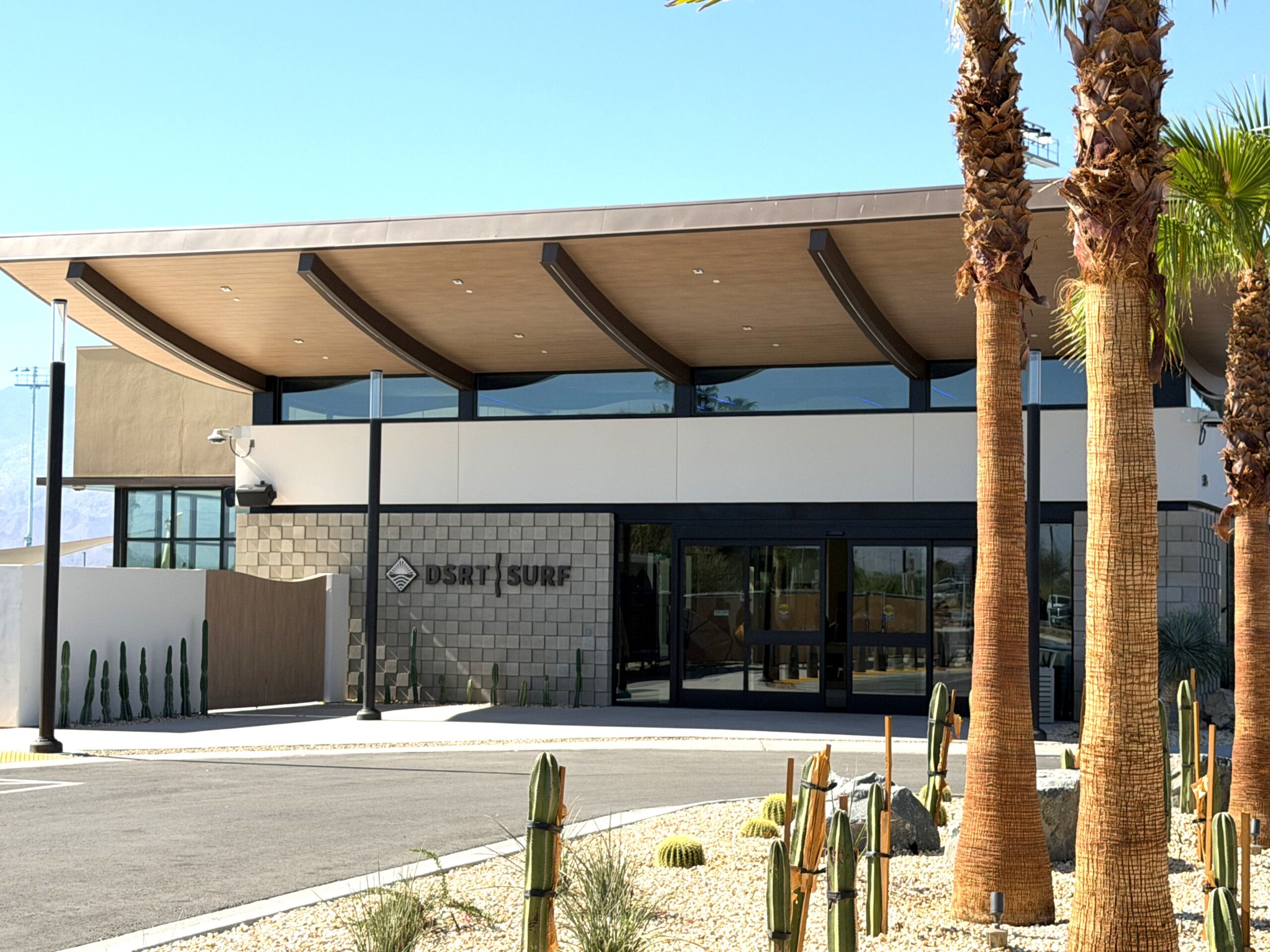
That larger vision is now visible on the ground, from the Westin Desert Willow Villas to continued development around the North Sphere and the arrival of DSRT Surf adjacent to the golf resort.
White believes Desert Willow has helped make that development more attractive. But the City also created a municipal golf course for its residents, and that means management cannot simply sell every available tee time to the highest bidder.
Residents accounted for approximately one-fifth of Desert Willow’s paid rounds last year.
White pointed to the Champions Club as one example of how the resort preserves access, with approximately 70 tee times set aside on Wednesday mornings for participants who must be Palm Desert residents.
But he sees the public mission more broadly. The City wants Desert Willow to be useful even to people who never pick up a golf club.
Concerts, holiday buffets and other events are intended to draw the larger community onto the property.
“We really try to make this feel like it’s a country club that’s accessible to any resident here in Palm Desert,” White said.

Bob Marra is the CEO/Publisher of GPS Business Insider and GPS Market Intel. He has been studying, writing and giving presentations about business, economic and public affairs news and issues and the local economy in the Greater Palm Springs/Coachella Valley region for more than 20 years.