The Coachella Valley Water District has approved a water agreement reaching nearly six decades into the future, seeking to protect the imported supplies that replenish the region’s aquifer while accepting higher costs and a provision allowing its partner to reclaim water during dry years.
The board’s Oct. 27 action authorizes an expanded exchange arrangement with the Metropolitan Water District of Southern California and Desert Water Agency through Dec. 31, 2085. CVWD’s maximum annual State Water Project entitlement would rise roughly 31 percent, to 180,630 acre-feet.
The transaction carries no upfront acquisition payment to Metropolitan. But CVWD would assume the ongoing state charges associated with its larger share, with staff estimating about $25 million in additional annual costs in the near term. Staff said the district’s existing State Water Project property-tax rate could cover the projected expenses without an increase.
For Greater Palm Springs, the stakes extend beyond a water purchase. The agreement supports the groundwater reserves on which residents, businesses and future development depend. It also preserves the means of receiving supplies from a state system with no direct pipeline into the valley.
How the CVWD water exchange works
The arrangement rests on a geographic workaround dating to 1967. CVWD and the Desert Water Agency hold entitlements to Northern California water through the State Water Project. Metropolitan uses those supplies in its service area and delivers an equivalent amount of Colorado River water to the valley’s Whitewater and Mission Creek replenishment facilities.
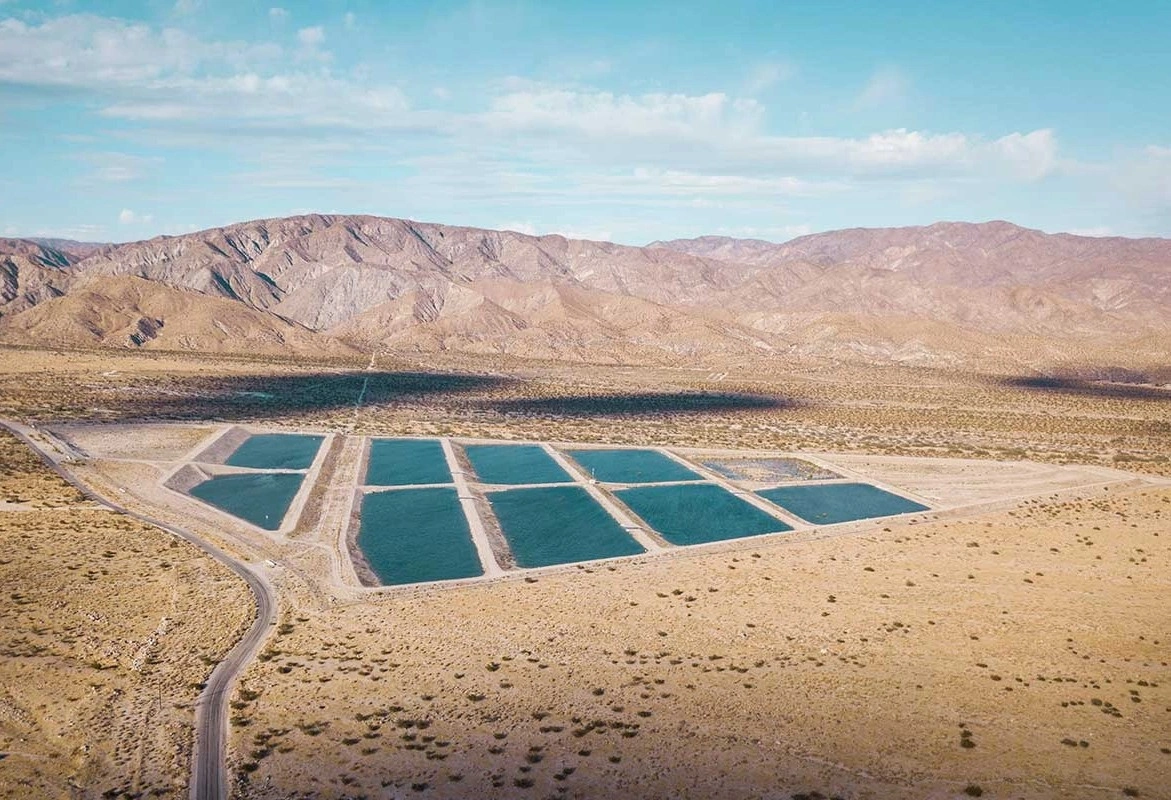
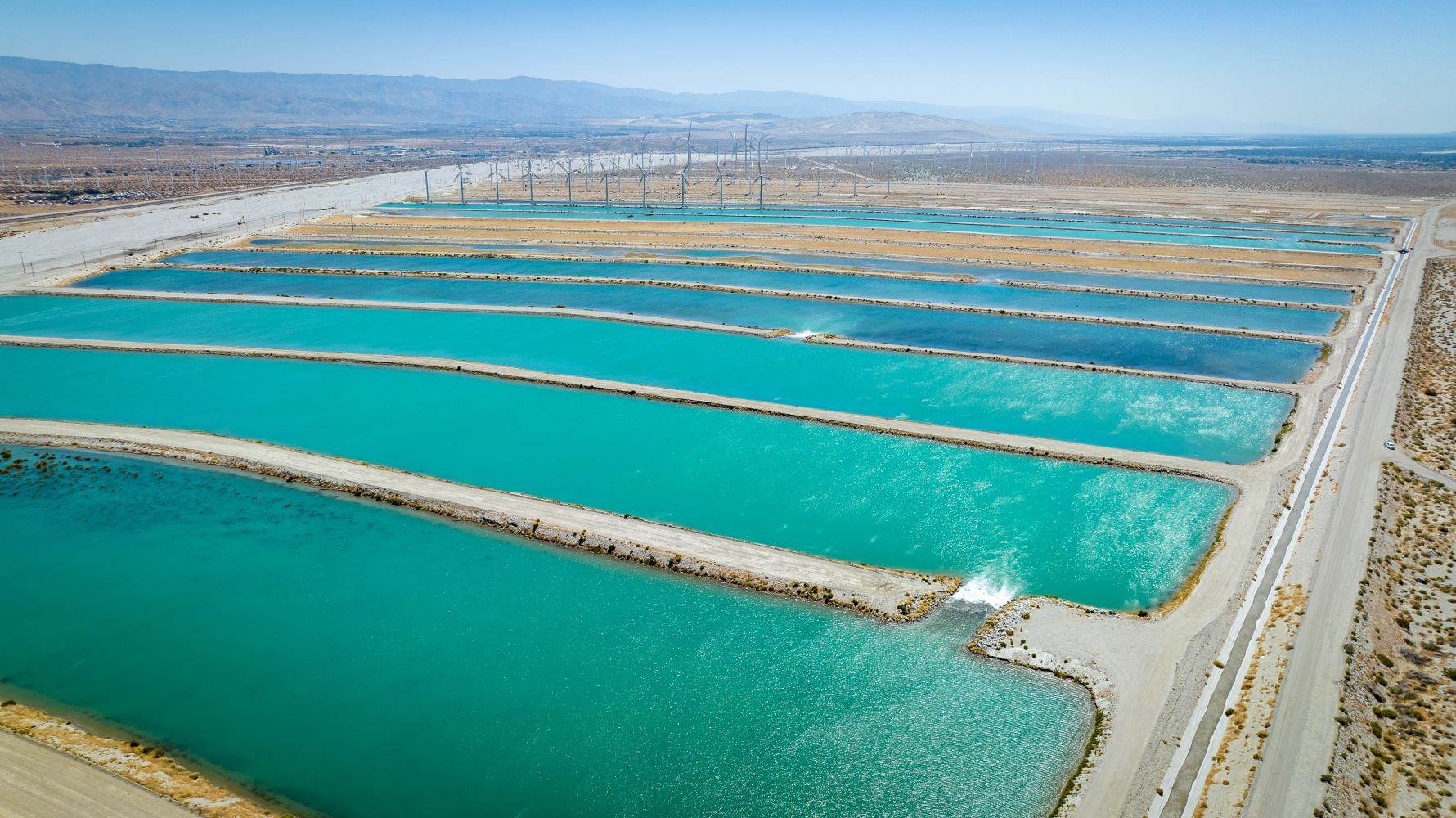
The Mission Creek Groundwater Replenishment Facility uses imported water to recharge the aquifer near Desert Hot Springs. Desert Water Agency and CVWD exchange State Water Project allocations for Colorado River water delivered through Metropolitan’s aqueduct.
That water seeps underground, helping replace water pumped from local wells. The groundwater replenishment system allows the valley to store water when supplies are available and draw on reserves when deliveries decline.
The revised agreement would increase Metropolitan’s long-term transfer of State Water Project entitlements to the two local agencies from 100,000 to 150,000 acre-feet annually. CVWD would receive 42,280 acre-feet of the additional entitlement; Desert Water Agency would receive 7,720.
These amounts are known as “Table A” water. They represent maximum contractual amounts, not guaranteed annual deliveries. The state determines each year’s allocation based on available supplies and operating constraints.
“We’re buying capacity in the system that provides us the ability to move that water,” Assistant General Manager Robert Cheng told directors.
The board’s action was CVWD’s approval, not completion of every agency’s authorization. At the meeting, staff anticipated Desert Water Agency consideration in November and Metropolitan consideration in December. Additional water could begin arriving as early as January 2028, subject to implementation.
More water entitlement, with a buyback provision
Metropolitan would retain the right to buy back up to 50,000 acre-feet in as many as five of any 10 consecutive years. That would help it serve areas dependent on the State Water Project when supplies tighten.
For the valley, the provision could sharply reduce exchange deliveries in individual years. If the local agencies’ available allocation is insufficient to satisfy a buyback, Metropolitan could receive credit against future deliveries. The agreement caps that accumulated purchase-credit balance at 50,000 acre-feet.
Metropolitan would reimburse the agencies under a formula tied to their water costs. Payment, however, would not replace the water entering the aquifer that year.
CVWD’s modeling illustrates the difference between entitlement and expected supply. Across the combined local supply portfolio analyzed for 2028 through 2085, average annual deliveries were projected at about 107,000 acre-feet with the expanded transfer and no buybacks. With maximum buybacks, the estimate fell to about 84,000, slightly below the 85,500 projected under a continuation of the existing transfer.
Those figures include other supplies, including assumed future Sites Reservoir water. They are planning scenarios, not delivery commitments. The analysis assumed long-term Table A reliability of 45 percent and excluded potential Delta Conveyance Project benefits.
Cheng said staff did not anticipate customer-service interruptions during buyback years because the aquifer provides a buffer. He described it as “a big savings account.”
What the agreement would cost property owners
CVWD’s written staff report puts recent annual State Water Project payments at approximately $50 million to $65 million and says payments could reach approximately $100 million after the additional transfer.
Those payments include fixed, operating and transportation charges. The absence of a purchase price does not eliminate the continuing obligation to pay for the system.
The district’s State Water Project tax is 11 cents per $100 of assessed property value. For a property assessed at $500,000, that equals $550 annually for this tax alone. Assessed value can differ substantially from market value.
The staff report says the existing rate is sufficient for anticipated expenses over the next five years. The presentation showed longer-range revenue projections exceeding modeled costs through 2045, including estimates for other water investments.
That is a forecast, not a commitment to hold the tax rate unchanged through 2085. Cheng acknowledged that Delta Conveyance Project cost estimates could rise. Directors also discussed whether the district might eventually reduce the tax rate, but the exchange approval did not establish a reduction.
Protecting an existing supply partnership
Much of the agreement’s value lies in retaining supplies already embedded in the valley’s water planning.
Staff warned that losing Metropolitan’s existing 100,000-acre-foot transfer would substantially weaken replenishment. Its modeling projected average annual deliveries in the analyzed portfolio falling to about 42,500 acre-feet without that transfer, roughly half the existing-transfer scenario.
The exchange also provides a framework for future supplies. The agreement includes a placeholder for Sites Reservoir, with detailed exchange terms still to be developed. Approval does not itself deliver Sites water or settle every future project commitment.
The negotiations come as CVWD balances aquifer replenishment against wider Colorado River pressures. In a separate action, the district extended its Colorado River conservation program through 2028, accepting compensation for temporarily reducing certain replenishment deliveries.
Water quality and delivery flexibility remain concerns
The board also approved an environmental addendum addressing additional recharge at the Whitewater River facility. It found no new significant environmental effects or substantial worsening of previously identified impacts.
The underlying water-quality concern remains: Colorado River water contains dissolved salts that can increase groundwater salinity. The earlier environmental review identified that effect as significant and unavoidable. Staff’s presentation estimated that the additional recharge would increase average basinwide dissolved-solids loading by about 0.21 percent through 2085.
The proposal does not expand the facility’s recharge footprint or its permitted annual capacity of 511,000 acre-feet.
Directors also questioned whether a decades-long agreement would leave enough flexibility to move water as demand shifts across the valley. The agreement identifies Whitewater and Mission Creek as delivery locations; a new turnout would require separately negotiated terms.
Cheng distinguished those deliveries from a separate 35,000-acre-foot Metropolitan exchange that offers more flexibility. Extending that arrangement’s Whitewater deliveries through 2077 would require further negotiations.
Bob Marra is the CEO/Publisher of GPS Business Insider and GPS Market Intel. He has been studying, writing and giving presentations about business, economic and public affairs news and issues and the local economy in the Greater Palm Springs/Coachella Valley region for more than 20 years.